Discover the weirdest, most beautiful, and utterly delightful words in the English language. Perfect for trivia, writing, or just impressing your friends.
The earthy scent produced when rain falls on dry soil.
Did you know?
Coined by two Australian scientists in 1964, this word comes from Ancient Greek "petra" (stone) and "īchōr" (the fluid that flows in the veins of the gods). So it literally means "the essence of stone."
Have you ever felt something but didn't have the word for it? You do now.
Noun
The realization that each random passerby is living a life as vivid and complex as your own.
Noun
The subtle but persistent feeling of being out of place, as maladapted to your surroundings as a seal on a beach.
Noun
The amniotic tranquility of being indoors during a thunderstorm.
Noun
The strange wistfulness of used bookstores, which are somehow infused with the passage of time.
Noun
A recurring thought that only seems to strike you late at night.
Noun
The bittersweetness of having arrived here in the future, where you can finally get the answers to how things turn out.
When two words combine to create something entirely new.
When being hungry makes you irritable or angry.
A meal eaten late in the morning, combining breakfast and lunch.
A digital audio file made available on the internet for downloading.
Old-fashioned words that sound completely bizarre today. Use them to confuse your enemies.
A shrewd, unprincipled person, especially a politician. (Popular in 19th century America).
A person who insists on continuing to make an error even after being corrected.
A foolish or insignificant person. A man who cares too much about his clothes and appearance.
To spray with a foul or nasty liquid. (Often used in medieval medical contexts).
A person who finds fault in everything, or someone who is always complaining.
A clumsy, awkward person who is always tripping over their own feet.
Words and phrases that read exactly the same forwards and backwards.
Racecar
r-a-c-e-c-a-r
Kayak
k-a-y-a-k
Rotator
r-o-t-a-t-o-r
Level
l-e-v-e-l
Chosen not for their meaning, but purely for the way they roll off the tongue.
/ɪˈθɪərɪəl/ - Extremely delicate and light.
/ɪˈfɛm(ə)rəl/ - Lasting for a very short time.
/sɛr(ən)ˈdɪpɪti/ - A pleasant surprise.
/luːmɪˈnɛs(ə)ns/ - The emission of light.
/ˈsɒlɪtjuːd/ - The state of being alone.
/ɪˈpɪf(ə)ni/ - A sudden realization.
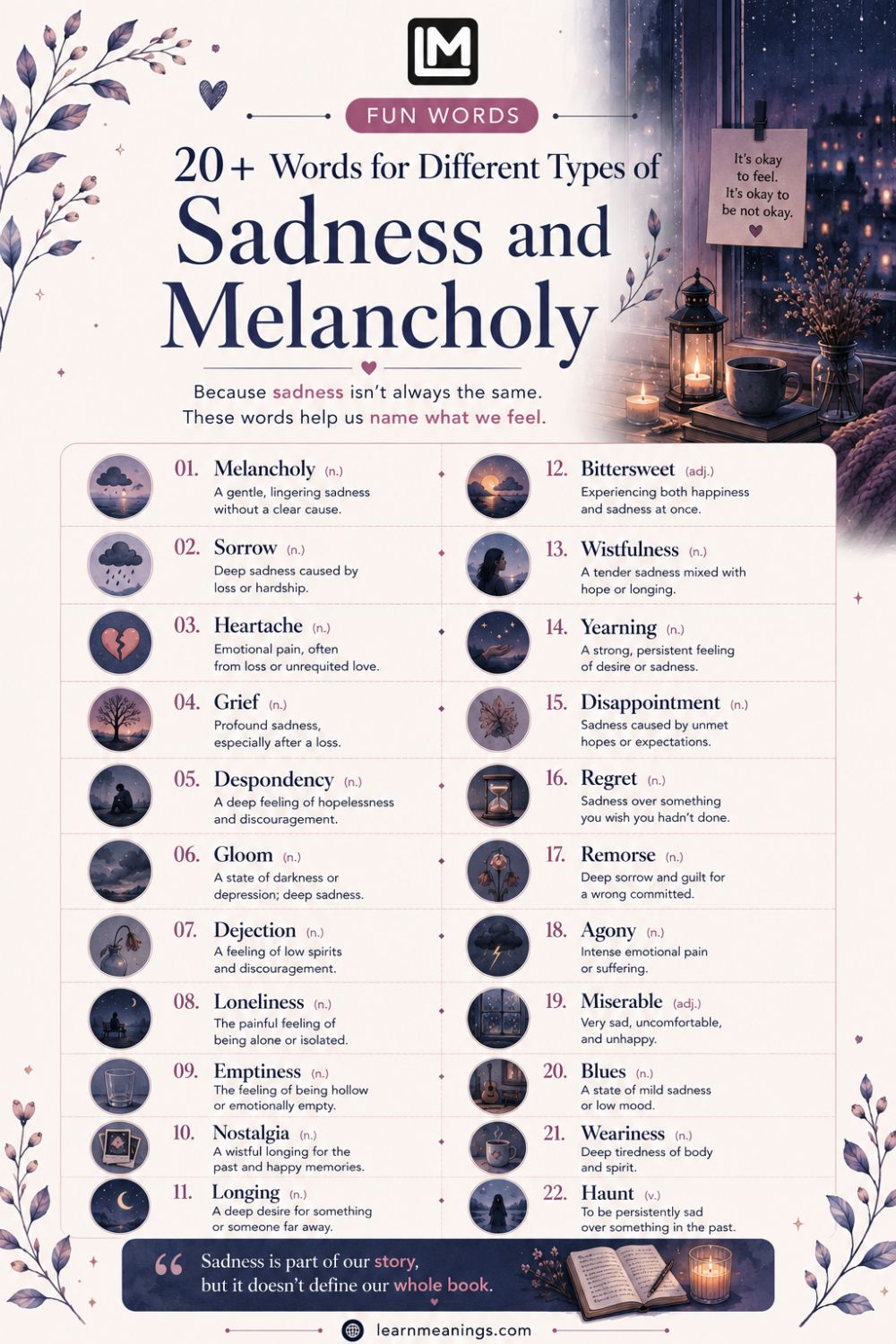

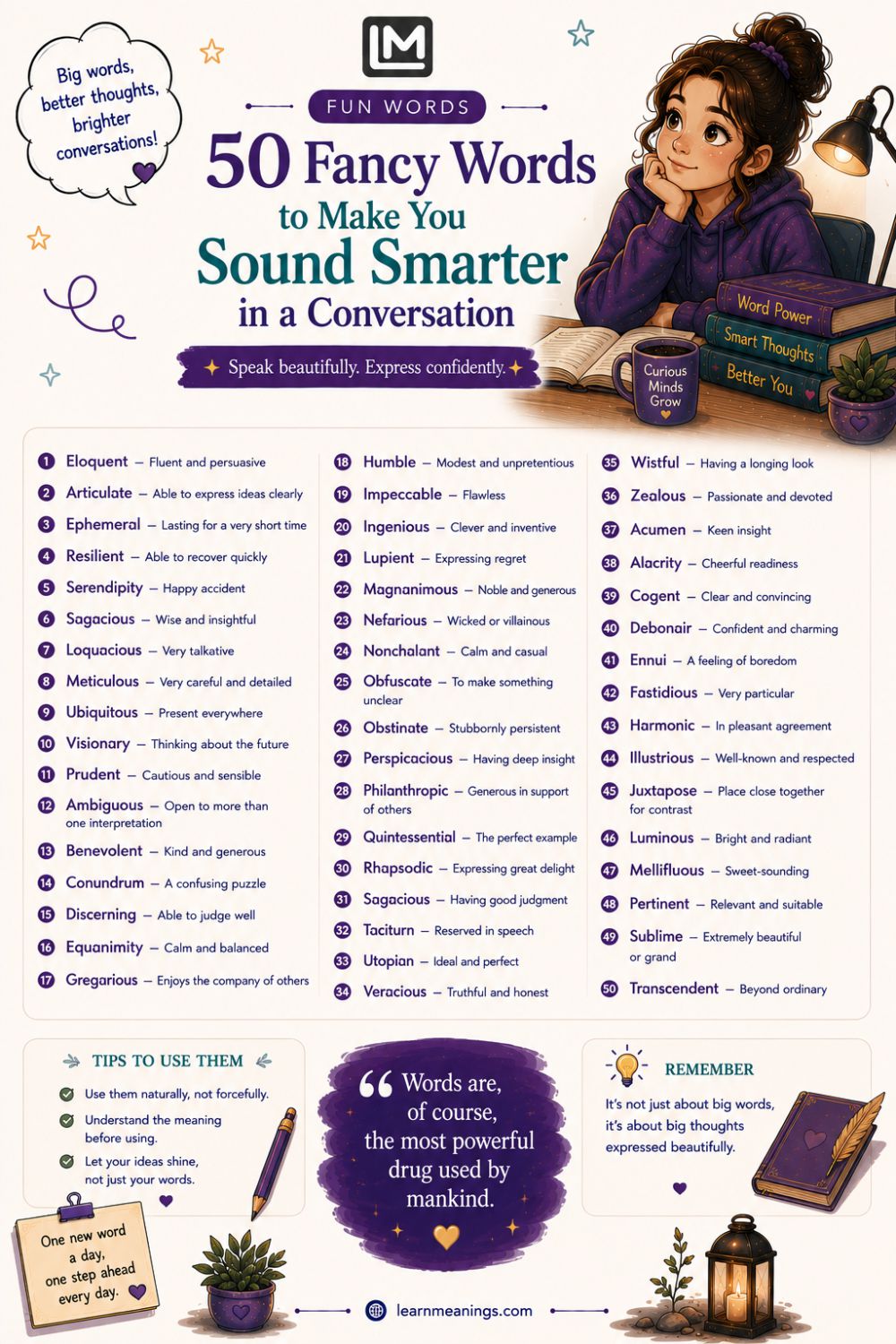
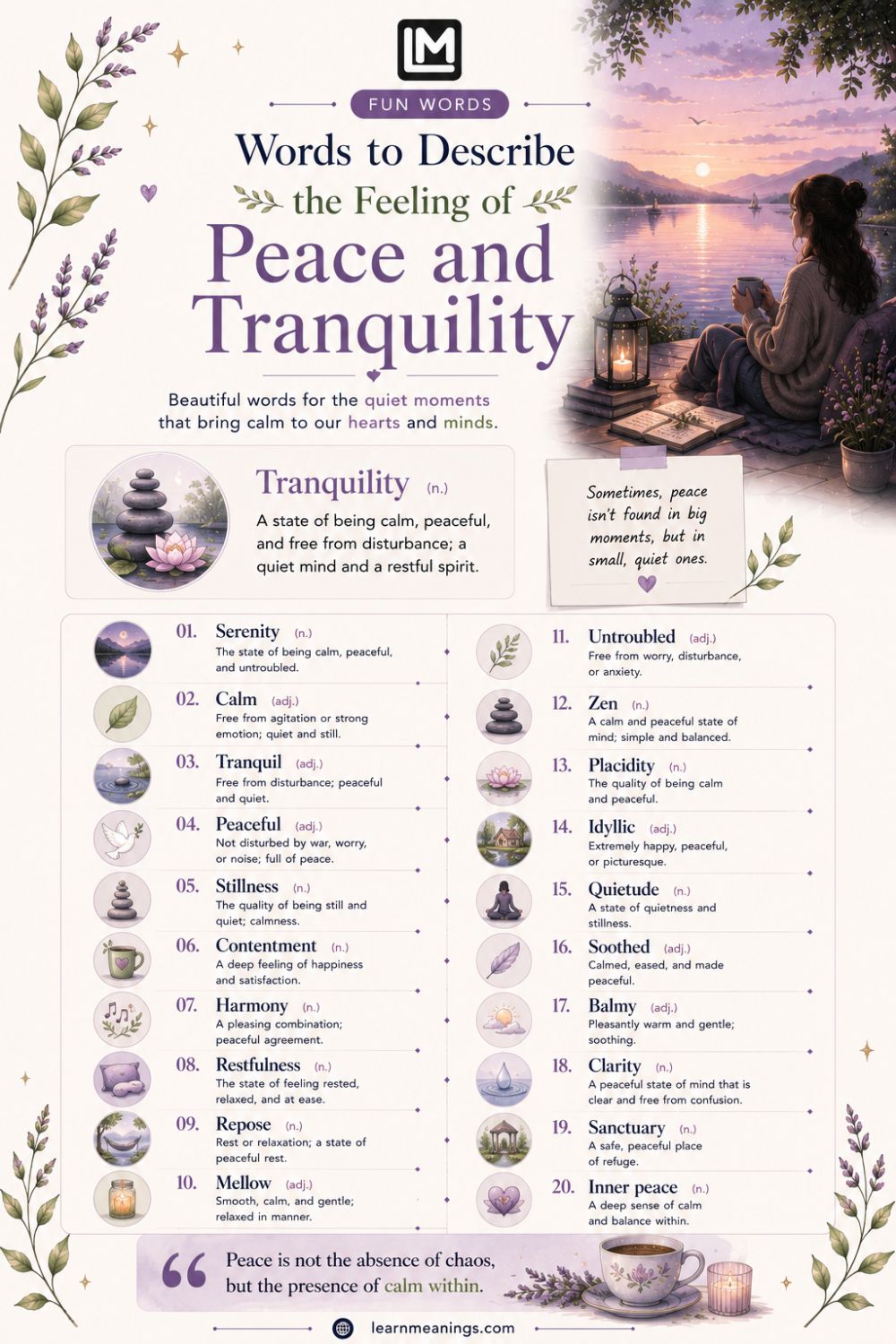
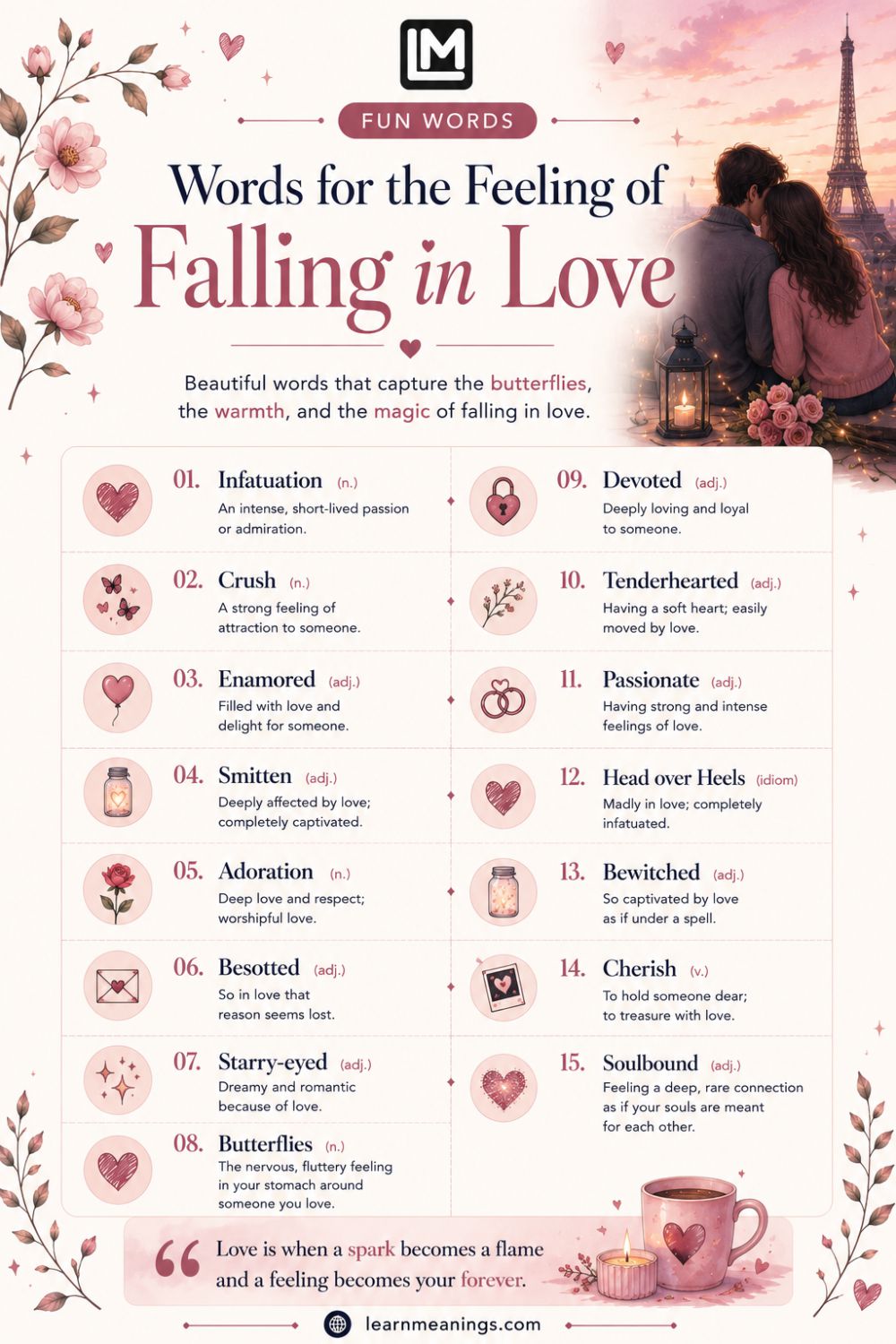
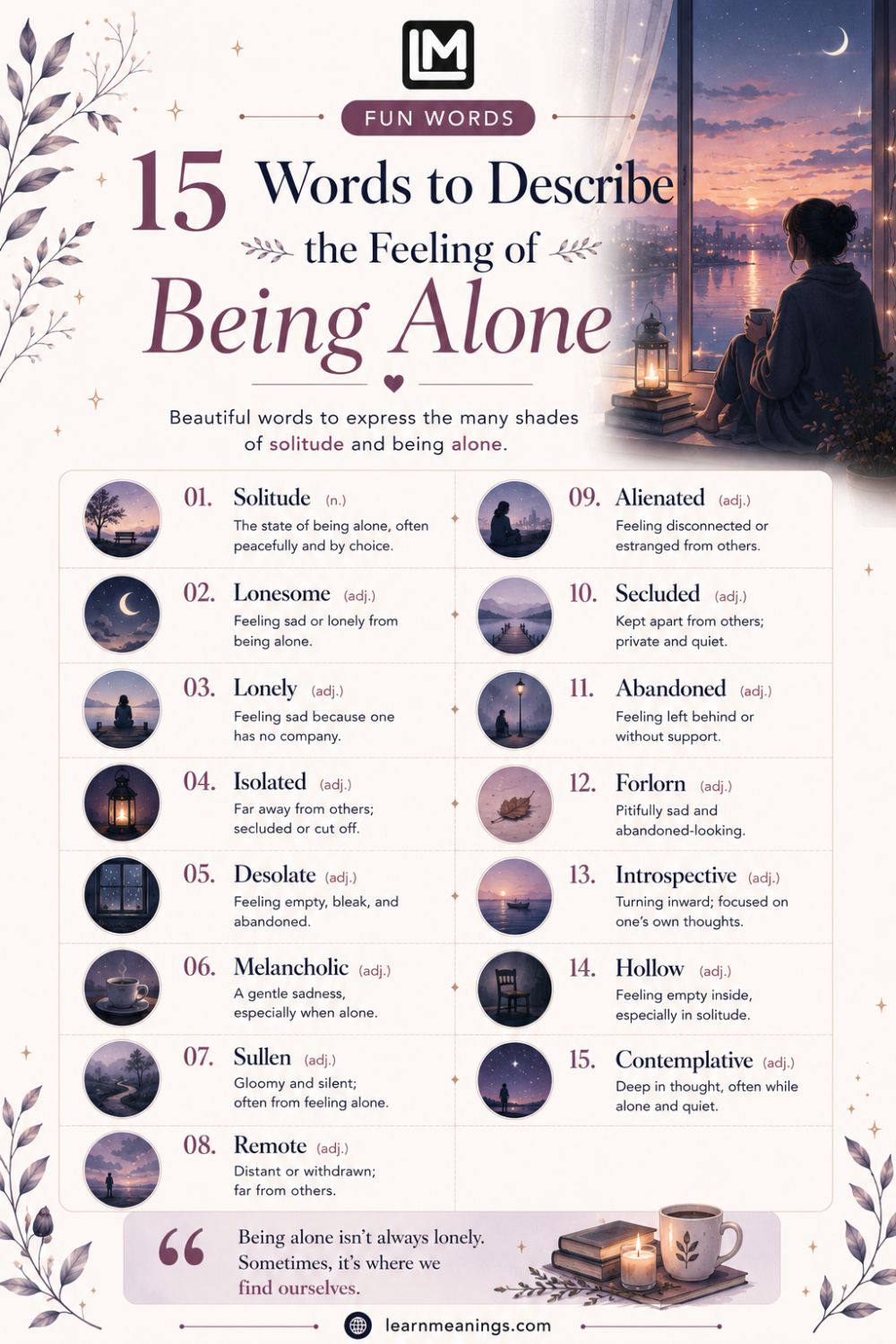
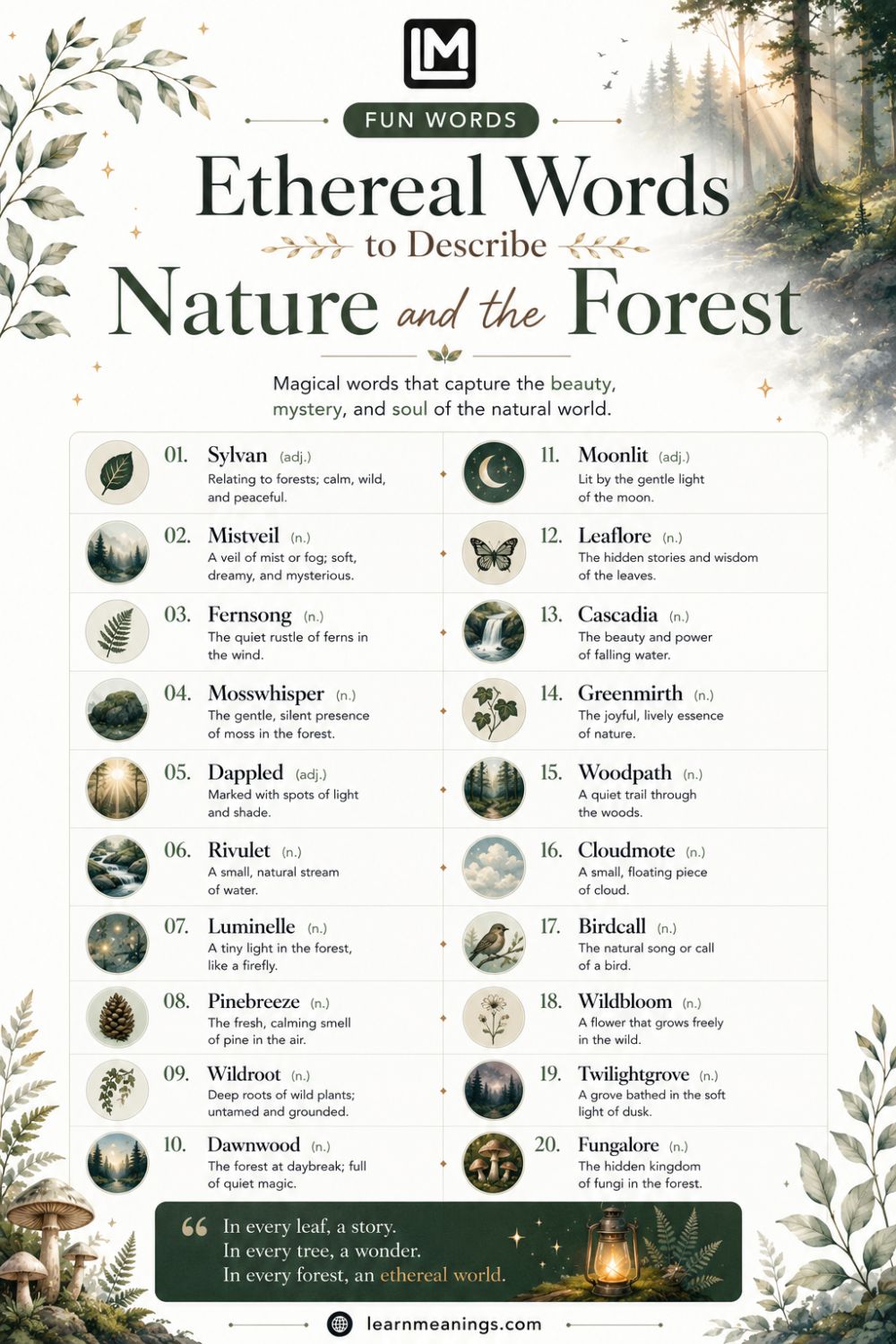

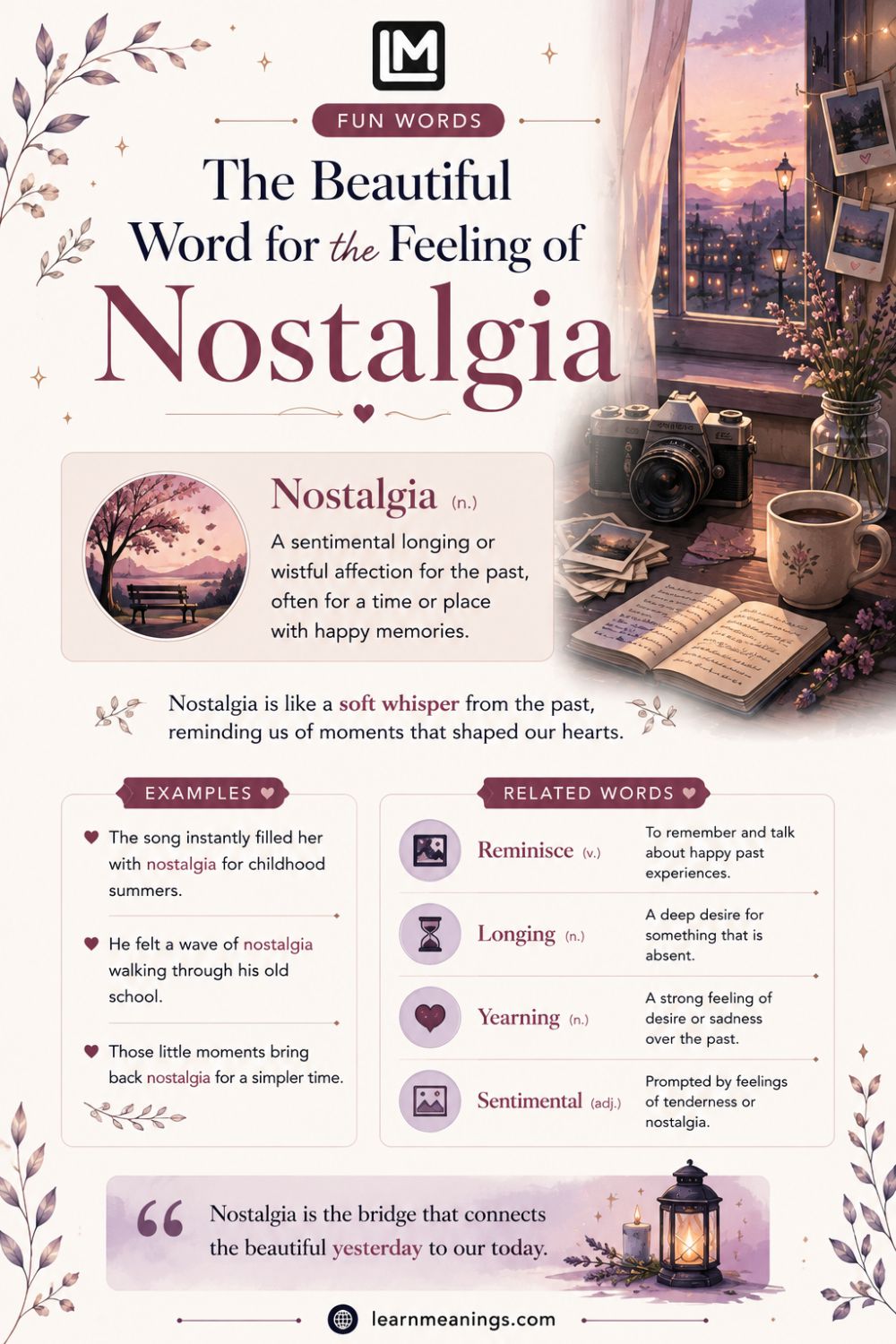


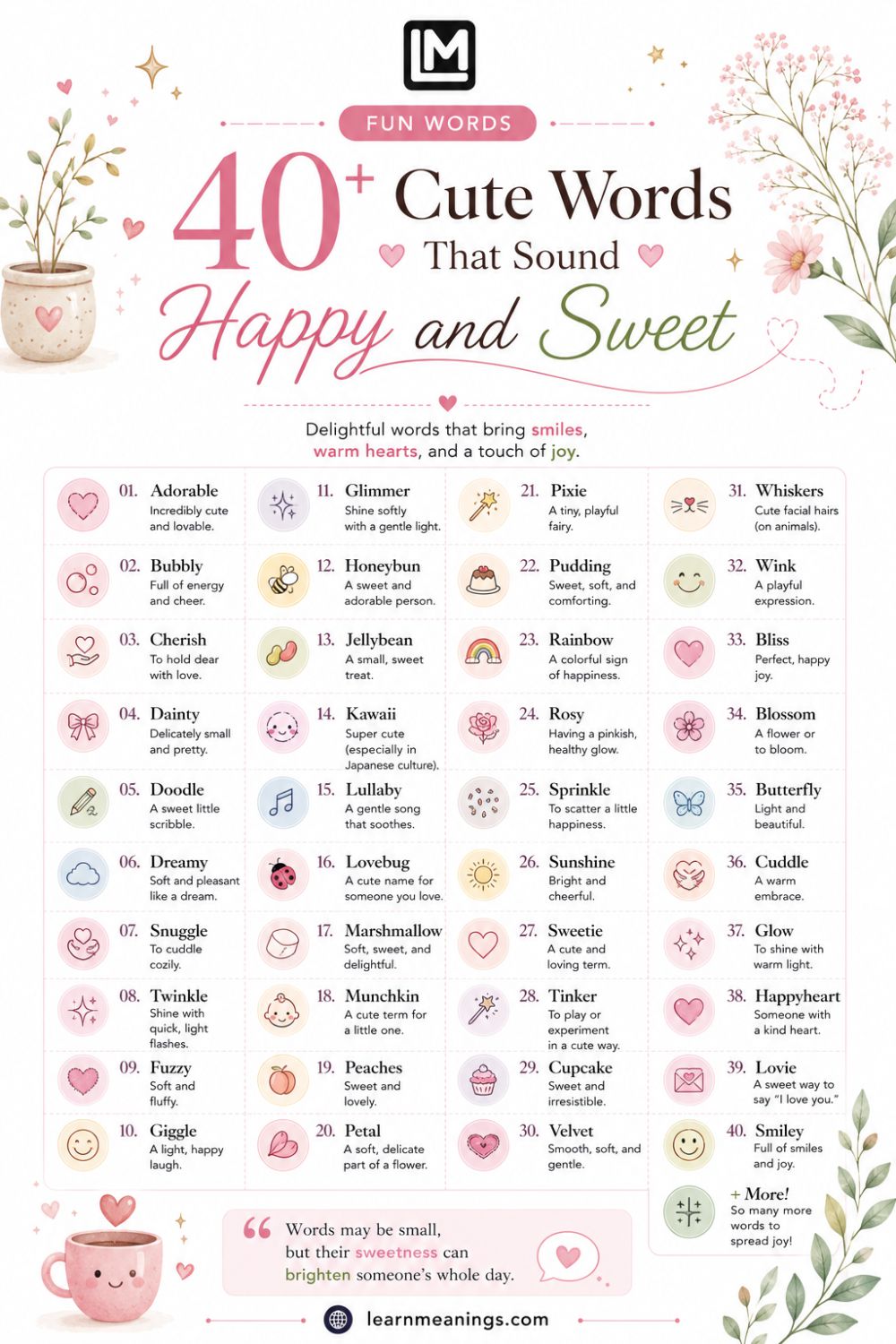


Explore our extensive dictionary using different filters and categories.
Take this 50-question quiz to test your vocabulary knowledge.
1. If someone has a 'baritone' voice, what kind of voice do they have?
2. What does the German word 'gemütlichkeit' describe?
3. Which word is a playful, slightly archaic insult for a foolish or stupid person?
4. To 'repudiate' an offer means to:
5. A 'sojourn' is best defined as:
6. Which word specifically describes a shrewd, unprincipled person, especially a politician?
7. Which word describes a period of time in the past that was idyllically happy and peaceful?
8. Which of the following words has a silent 'p'?
9. If a memory is described as 'elegiac', what tone does it have?
10. A "hoosegow" is an American slang term for a:
11. Which term describes a group that fits together so perfectly it cannot easily be broken apart?
12. Which of these words means a flat, horizontal surface and is also a palindrome?
13. If someone gives a 'dismissive' wave, what are they communicating?
14. What does 'hygge' represent?
15. If the night sky is described as 'empyrean', what does it look like?
16. What does it mean to be 'articulate'?
17. What is a 'glyph'?
18. Which word implies the use of dark, often forbidden, manipulative magic?
19. A "facsimile" is:
20. A 'revenant' is someone who:
21. If you walk "widdershins," in which direction are you moving?
22. What is a "snickersnee"?
23. What is a "flibbertigibbet"?
24. To 'skedaddle' means to:
25. A "bailiwick" refers to:
26. "Loam" refers to:
27. 'Pepper' features which doubled consonant?
28. Which word literally translates to 'flowing with honey' and describes a sweet, musical sound?
29. Which field of science uses the word 'hydropneumatics'?
30. Which Scottish word names the panic of forgetting someone's name right before introducing them?
31. Which word describes a profound spiritual transformation or change of heart?
32. What is the maximum number of letters in a recognized one-syllable English word?
33. The word "choir" is pronounced:
34. Which word describes a happy, fortunate accident or pleasant coincidence?
35. What is a 'truepenny'?
36. What does a 'barometric' shift refer to before a storm?
37. If you are "gobsmacked," you are:
38. If an amount is 'adequate', it is:
39. 'Raccoon' features which double letters?
40. Which word specifically describes the fully shaded, darkest inner region of a shadow cast during an eclipse?
41. Which word is a compliment for a leader who makes wise decisions?
42. If someone "hornswoggles" you, what have they done?
43. What do you call the thin strips of wood or metal that hold the panes of glass in a window?
44. Which word means "very fast"?
45. Which word describes a 'happy accident' or pleasant coincidence?
46. If a scientific experiment was conducted with extreme thoroughness and accuracy, it is:
47. Which word means 'unable to be affected by' (e.g., criticism)?
48. If a performance is described as 'laughable', what does that mean?
49. What does it mean to "bamboozle" someone?
50. If someone is experiencing 'weltschmerz', what are they feeling?
Fun words are unusual, quirky, or surprisingly satisfying words in the English language. They often have amusing sounds, unique spellings, or fascinating origins, making them enjoyable to say and use in daily conversation.
Learning fun words expands your vocabulary, makes your writing and speech more engaging, and helps you appreciate the playful side of English. They are also great conversation starters and can make language learning much more enjoyable.
English is full of funny-sounding words! Examples include 'bumfuzzle' (to confuse), 'cattywampus' (askew or disorganized), 'snollygoster' (a shrewd person), and 'gobbledygook' (language that is meaningless or hard to understand).
While some fun words are rare or archaic, many are perfectly acceptable and entertaining to use in daily life. Using them sparingly can add humor and personality to your conversations, making your speech more memorable.
You can discover more interesting words by reading widely across different genres, exploring our A-Z list of fun words above, and taking our vocabulary quizzes. Keeping a 'word of the day' journal is also a great way to collect them.
