Stop using boring, repetitive words. Find stronger verbs, evocative adjectives, and precise alternatives to make your writing punchier and more professional.
"Very" is a lazy modifier. Cut it and use a stronger word instead. (e.g., Very tired → Exhausted).
Very hungry
Famished
Creates a much more vivid image of desperation.
Very angry
Furious
Conveys high intensity without needing a modifier.
Very big
Colossal
Gives a sense of overwhelming scale.
Avoid repetitive dialogue tags. Use these alternatives to show emotion and tone.
Stop using generic adjectives. Precision is the key to great writing.
See how swapping just a few weak words can completely elevate your writing.
"The very big storm made the town very quiet. People felt bad."
"The colossal storm left the town desolate. Residents felt devastated."
"She was very happy about the good news and said she would come."
"She was elated by the phenomenal news and declared she would attend."
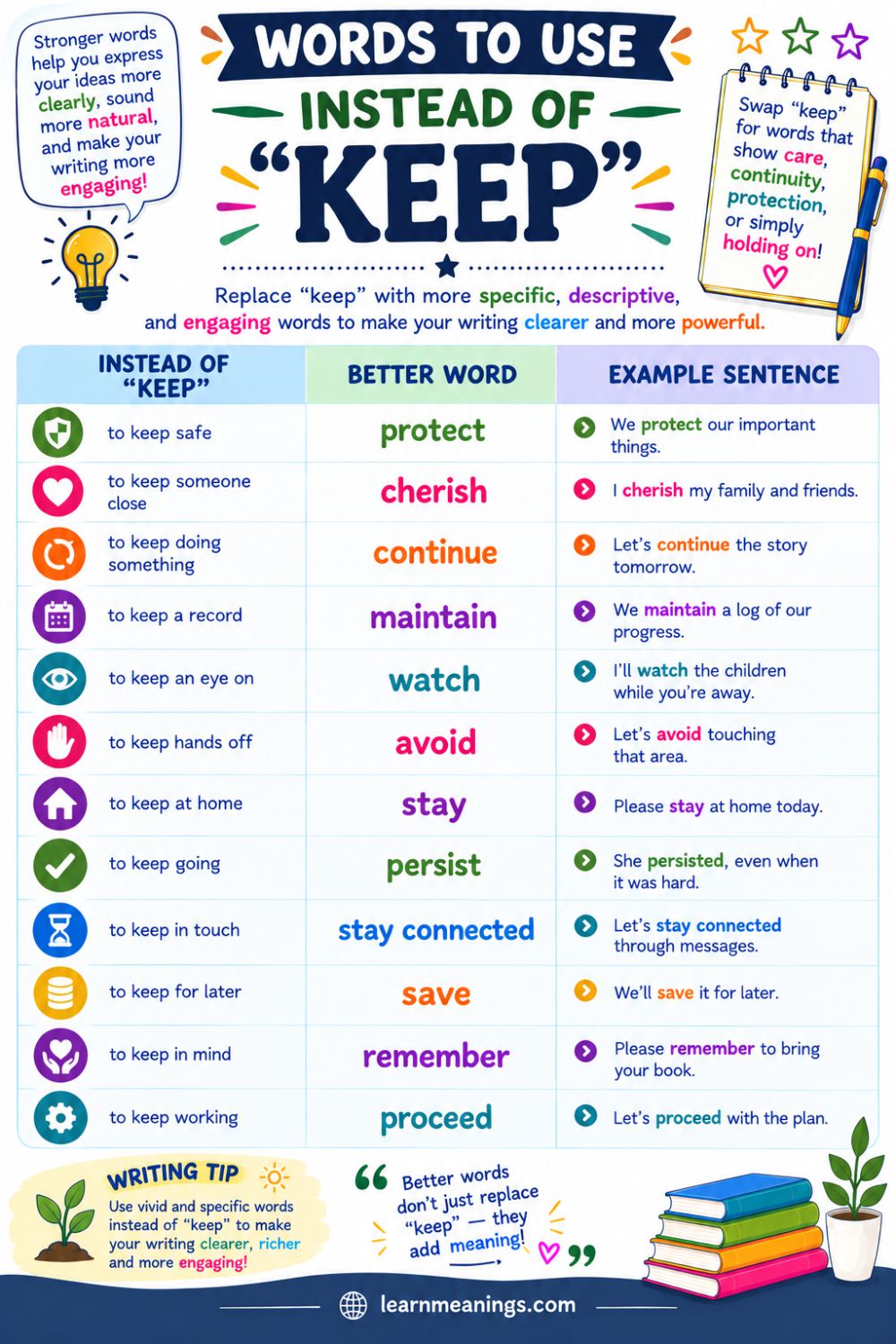
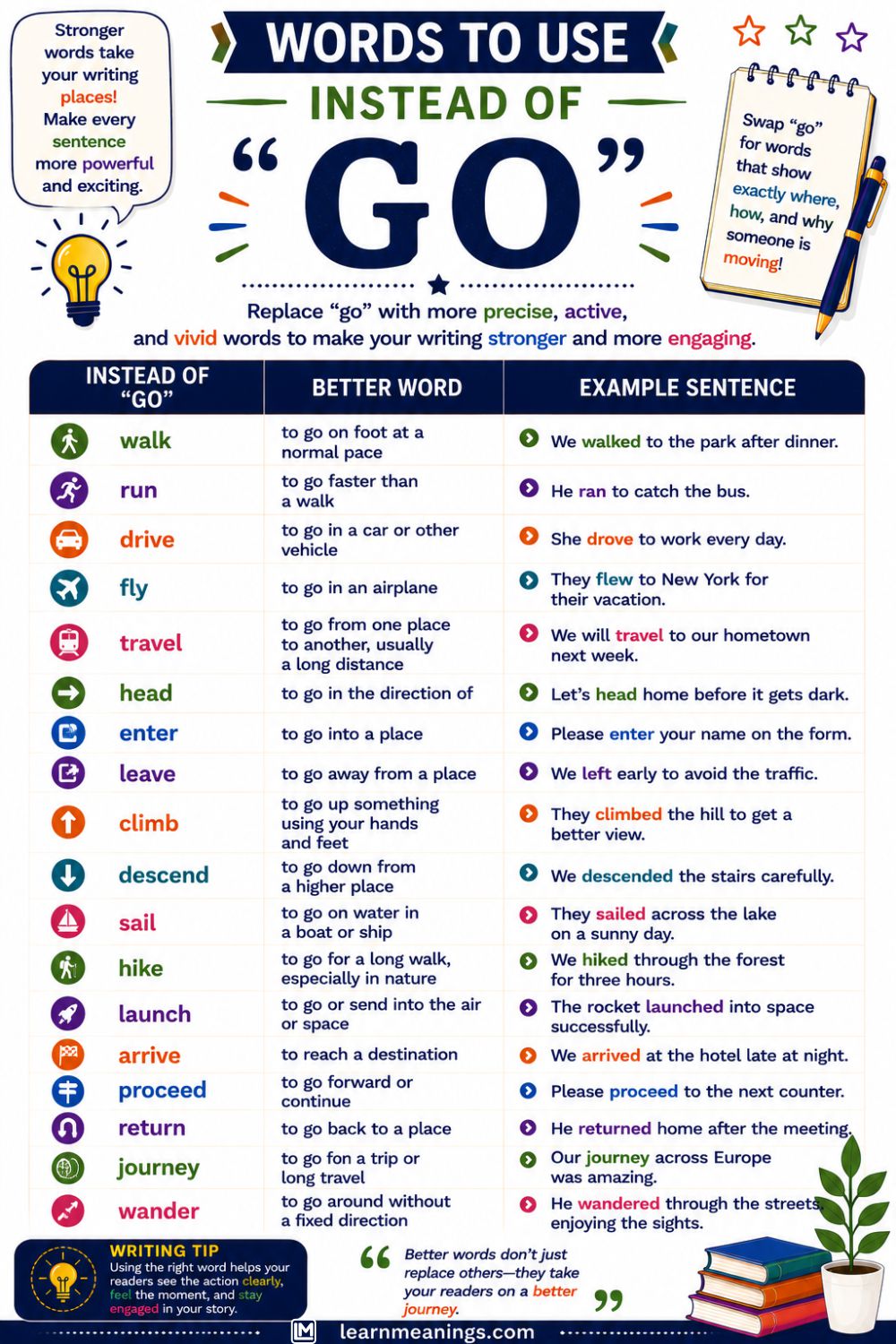
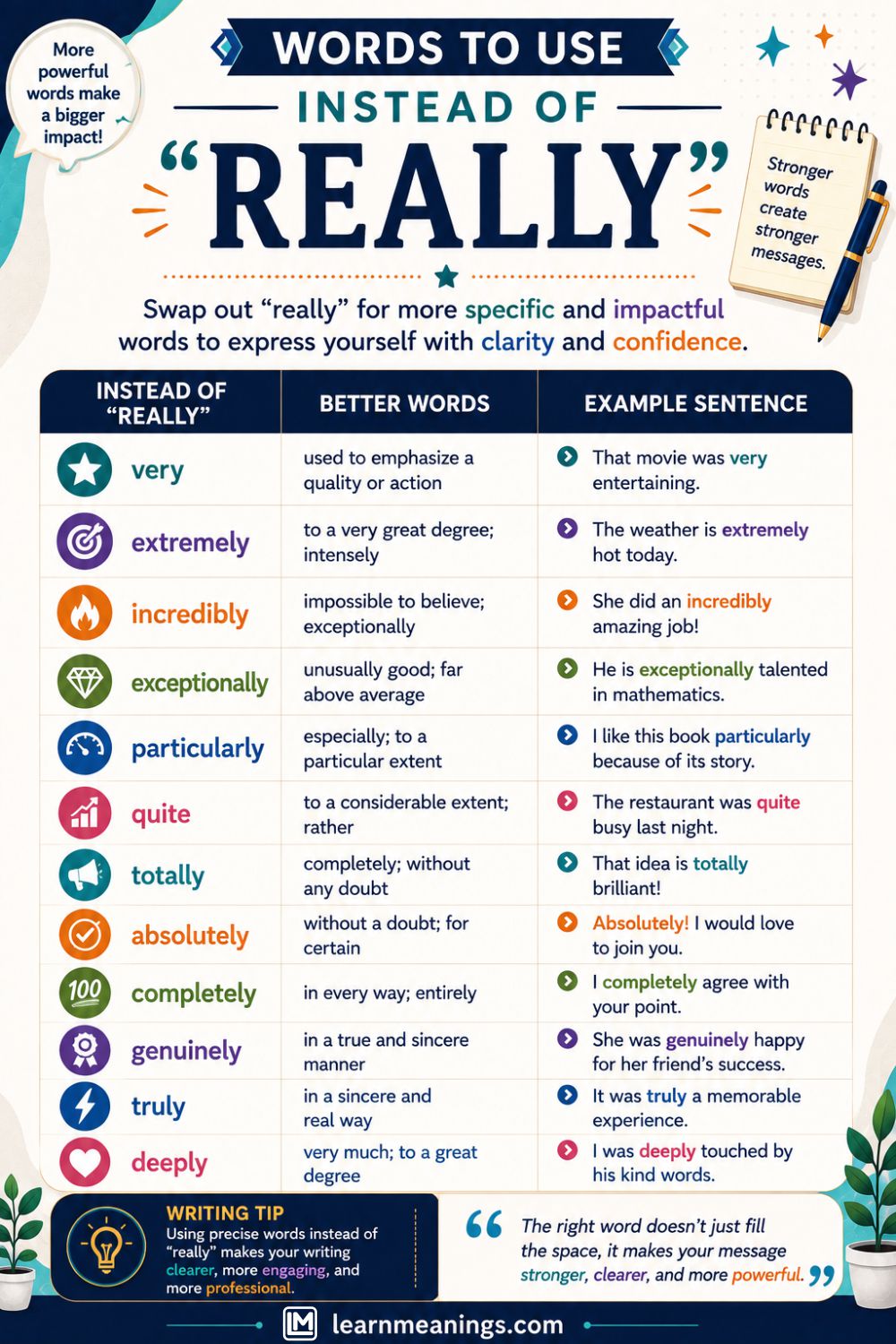
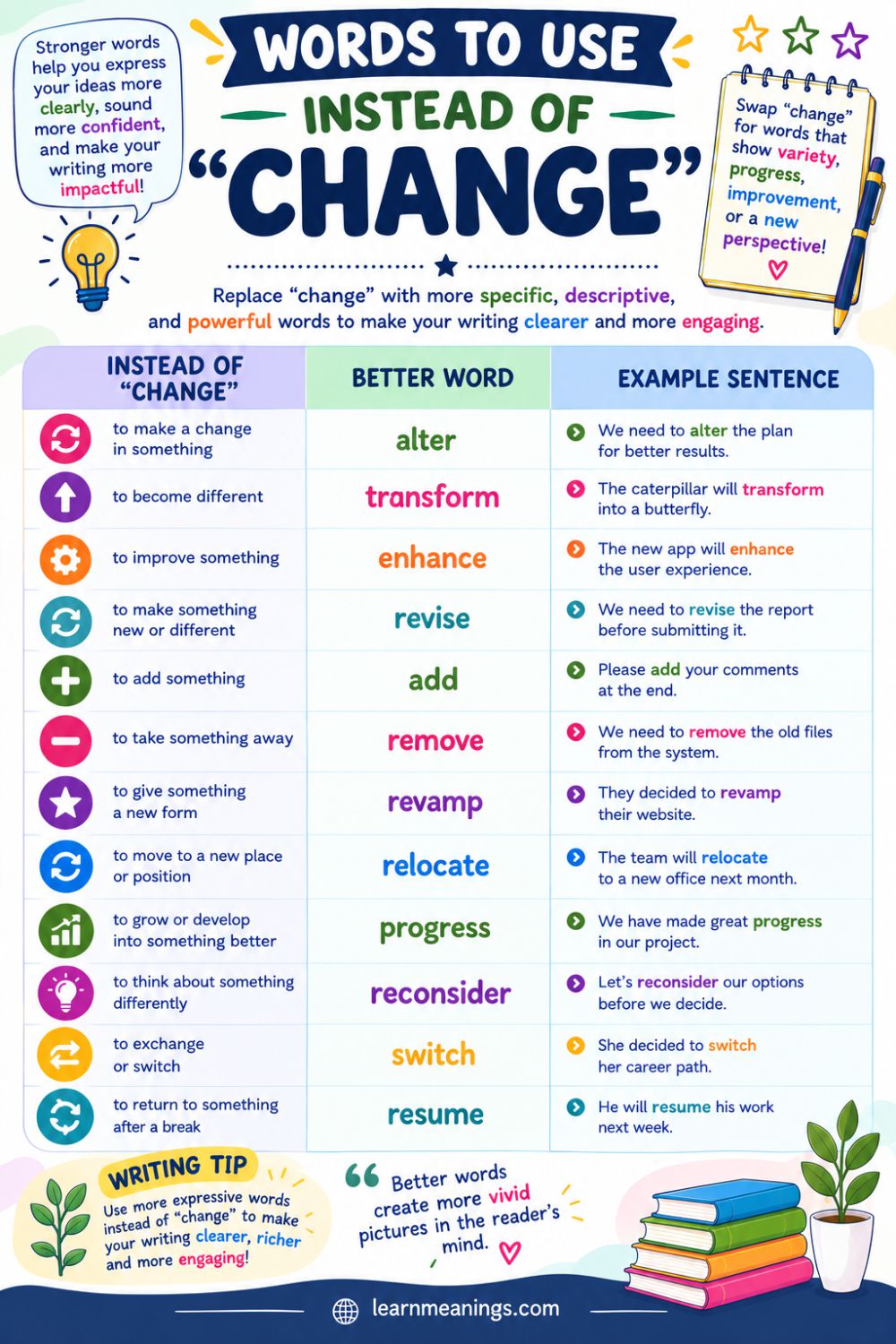

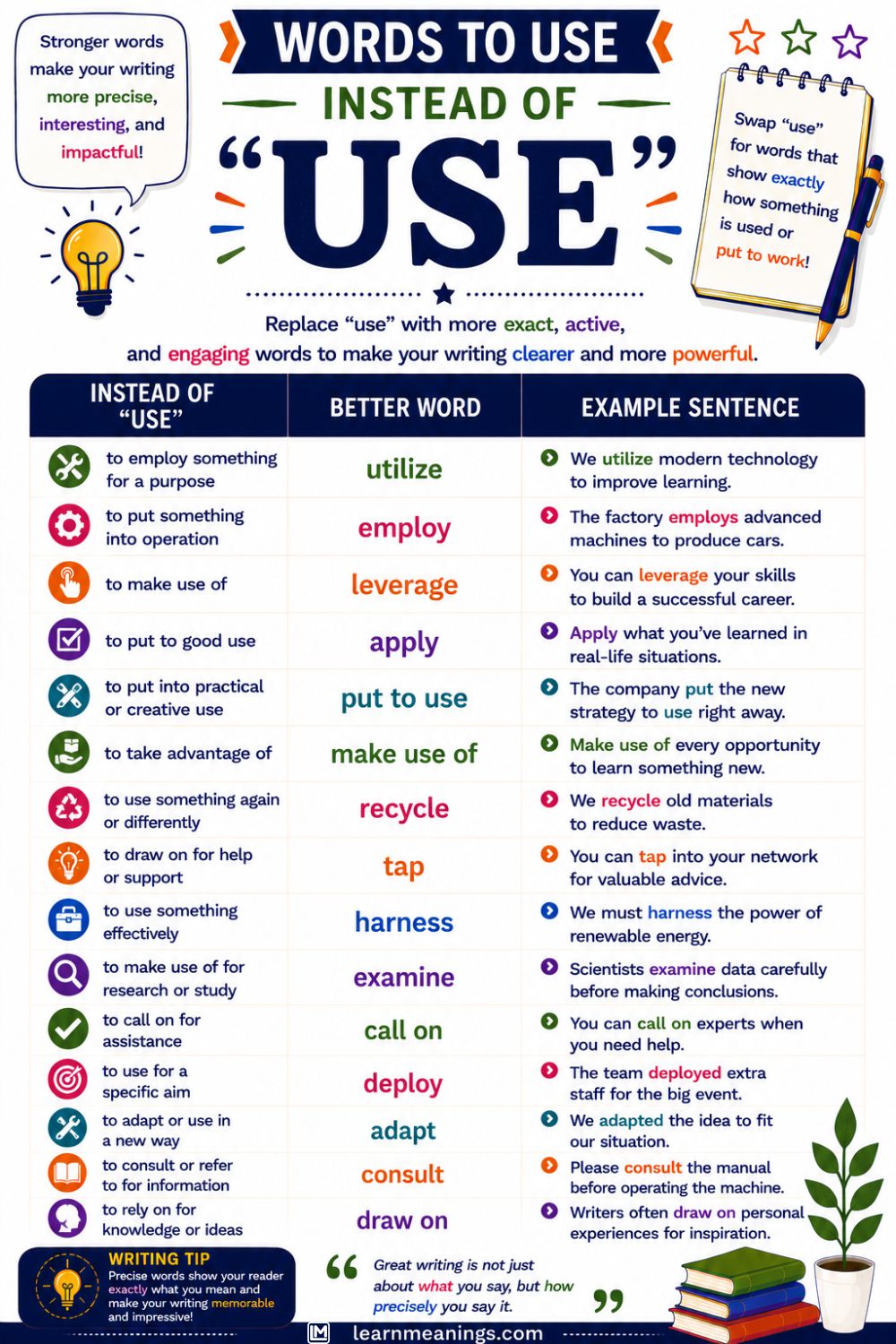

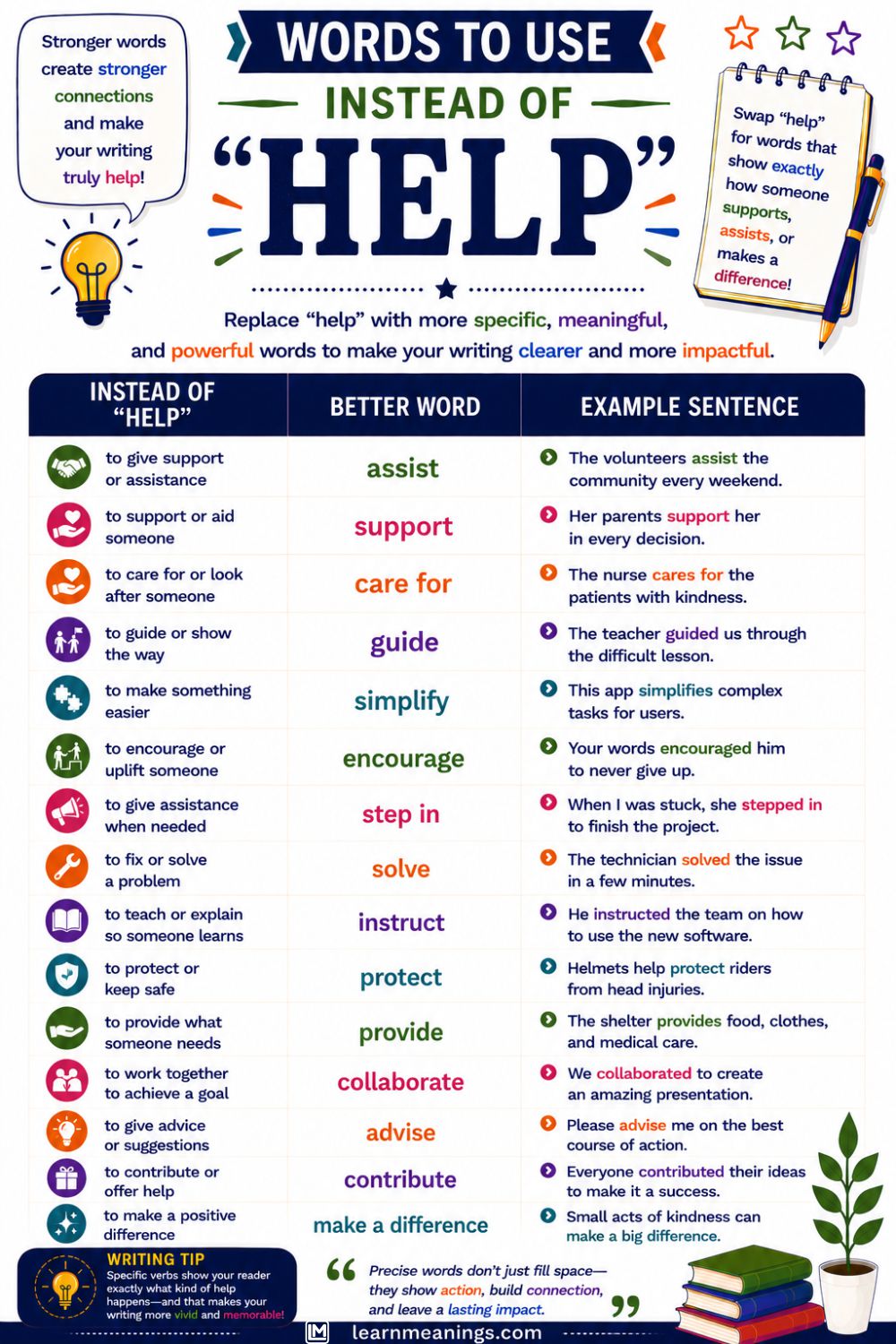
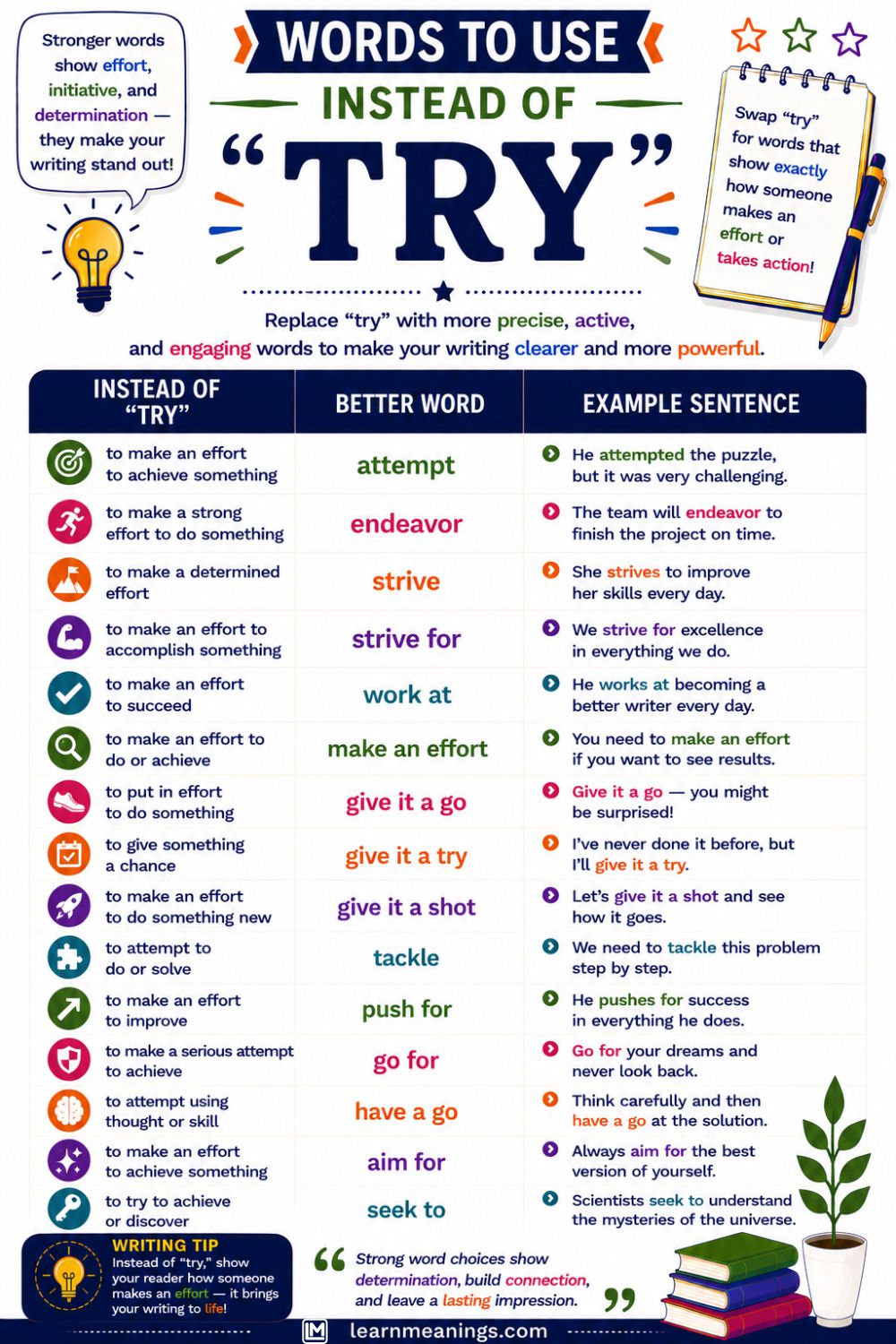
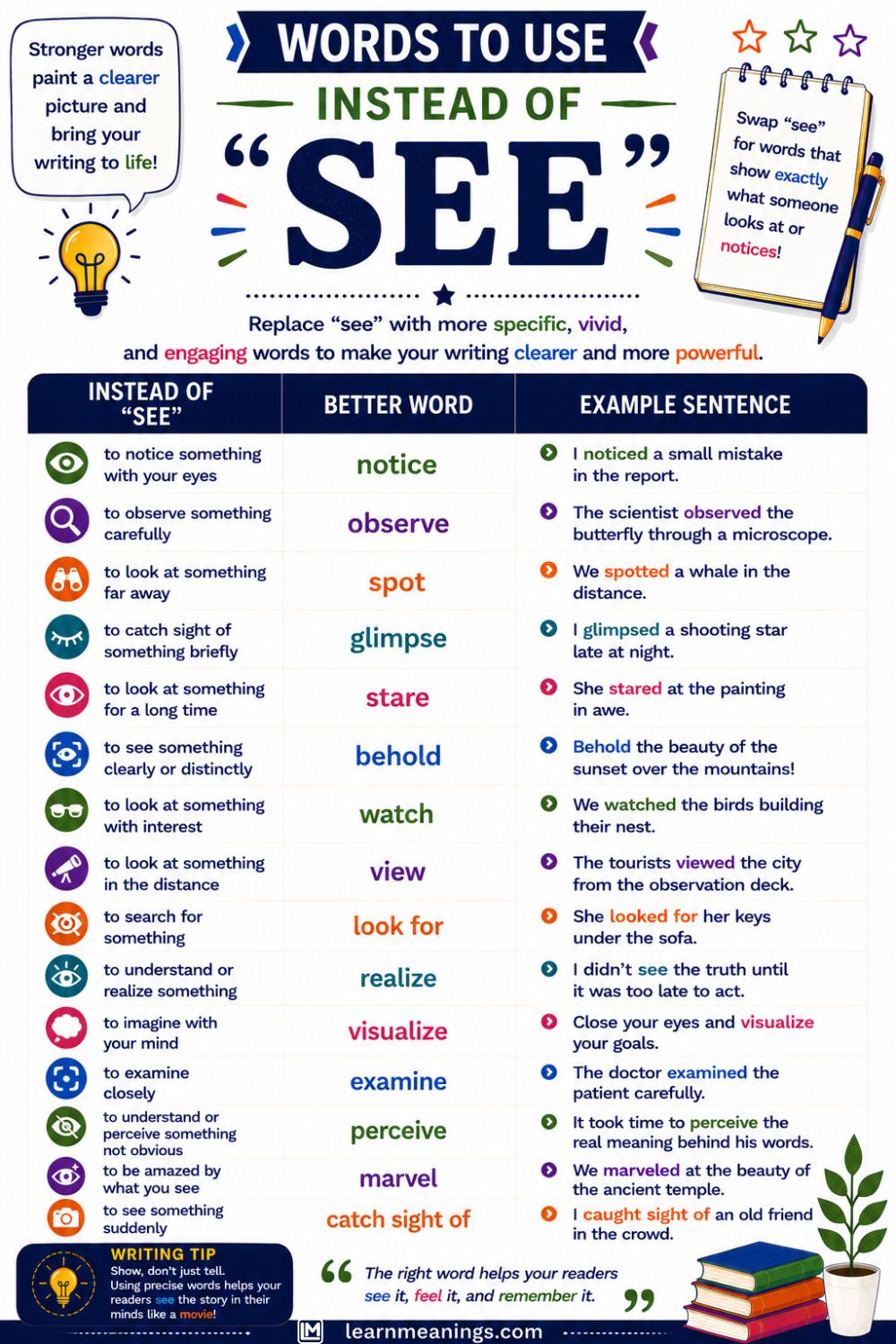

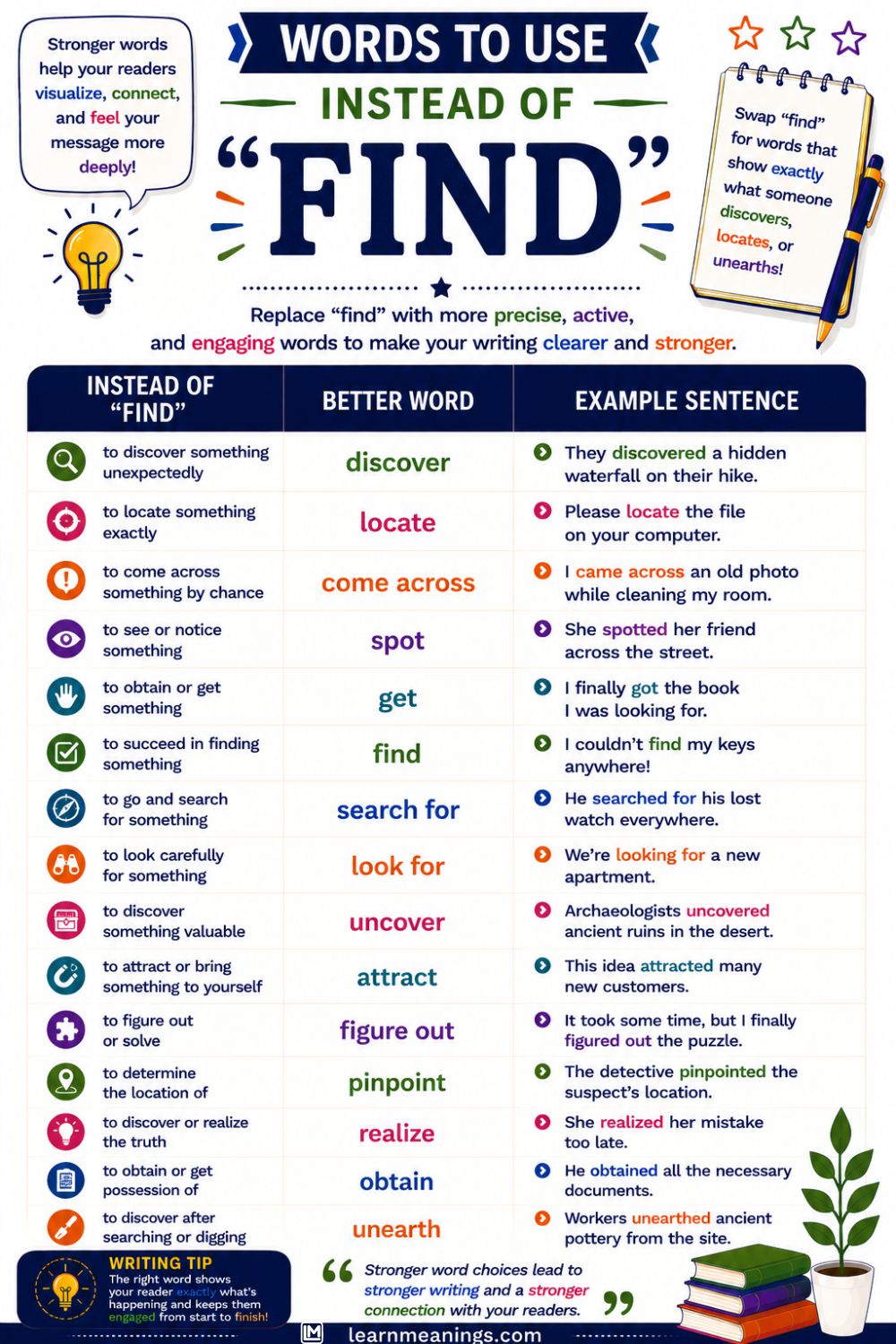
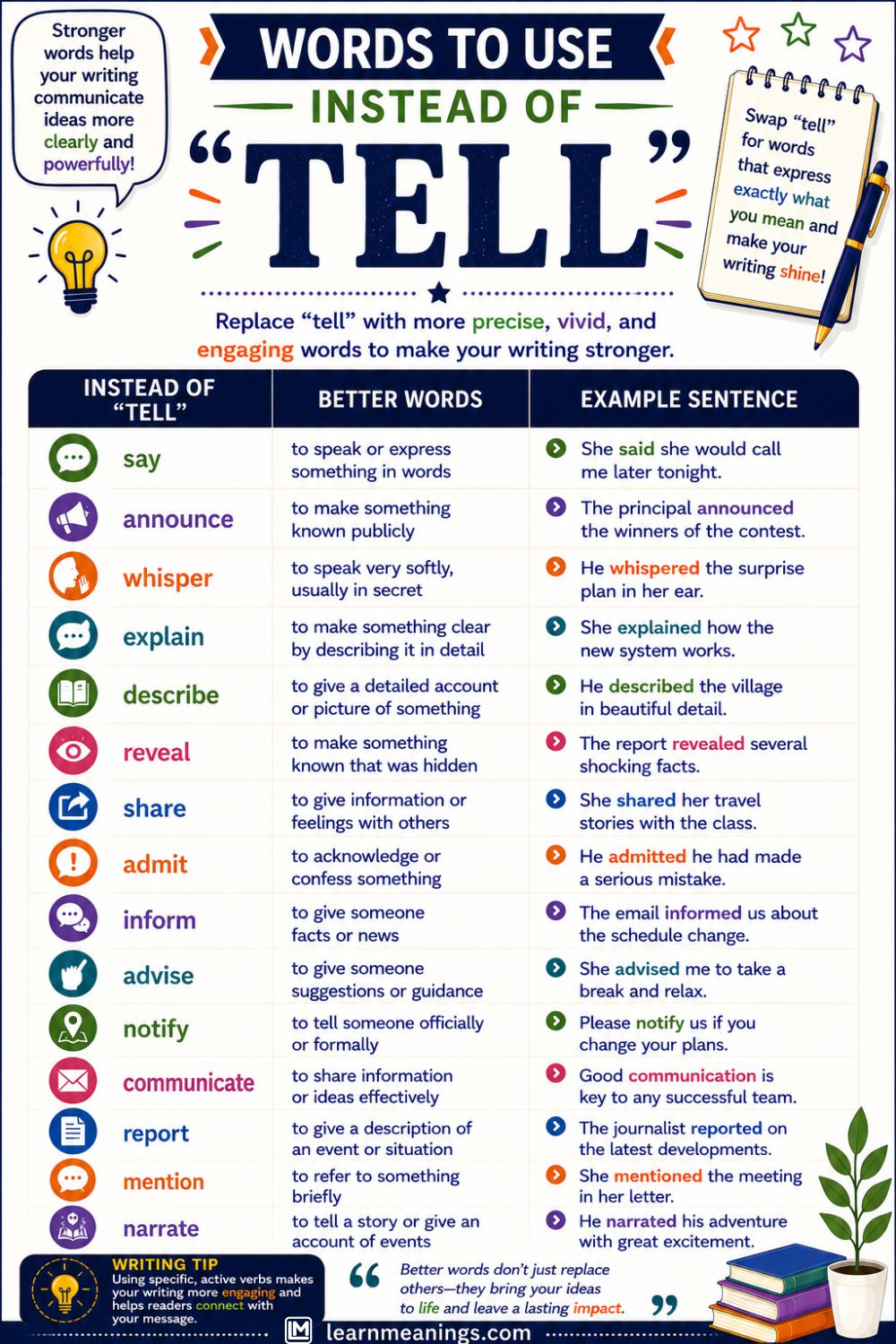
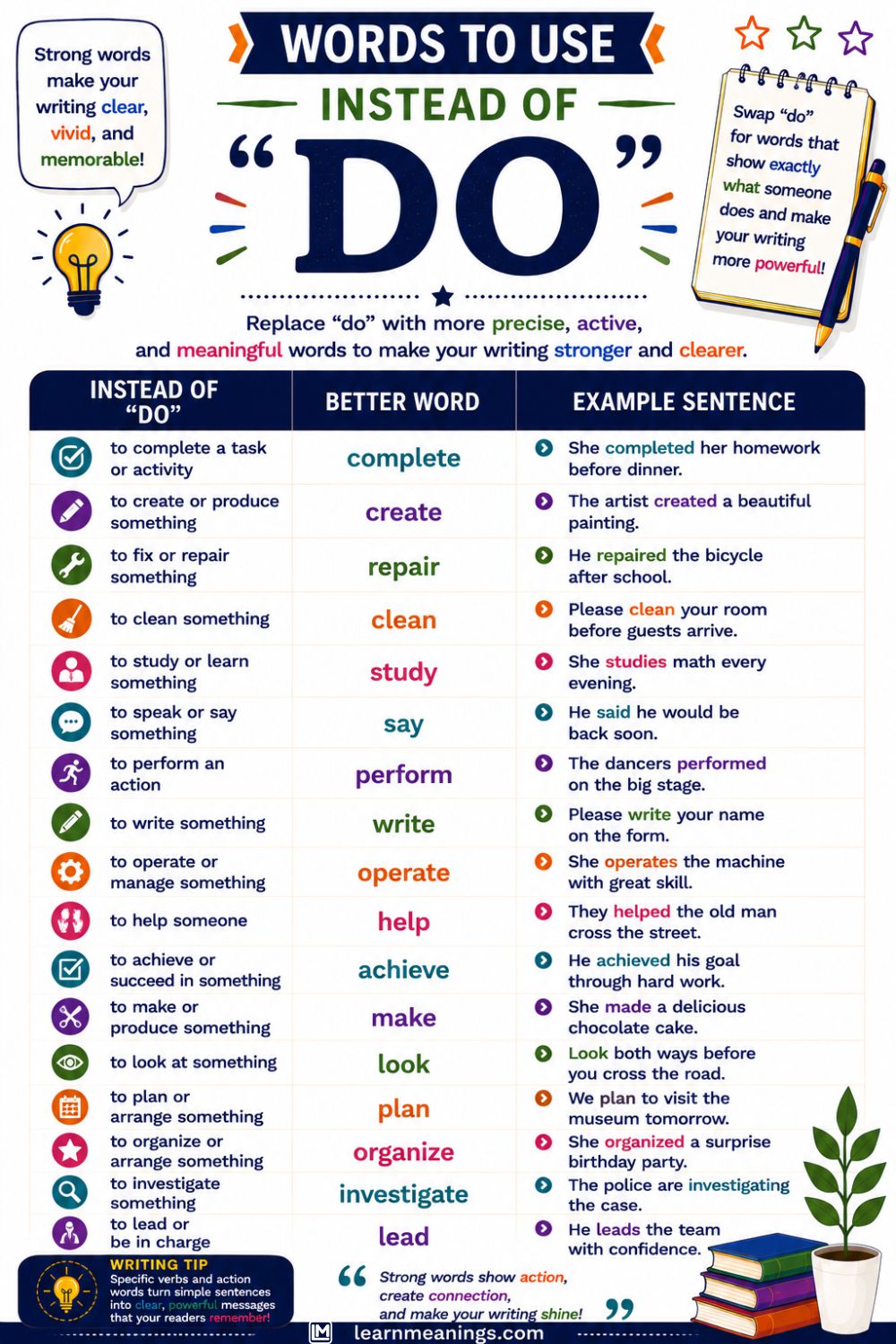
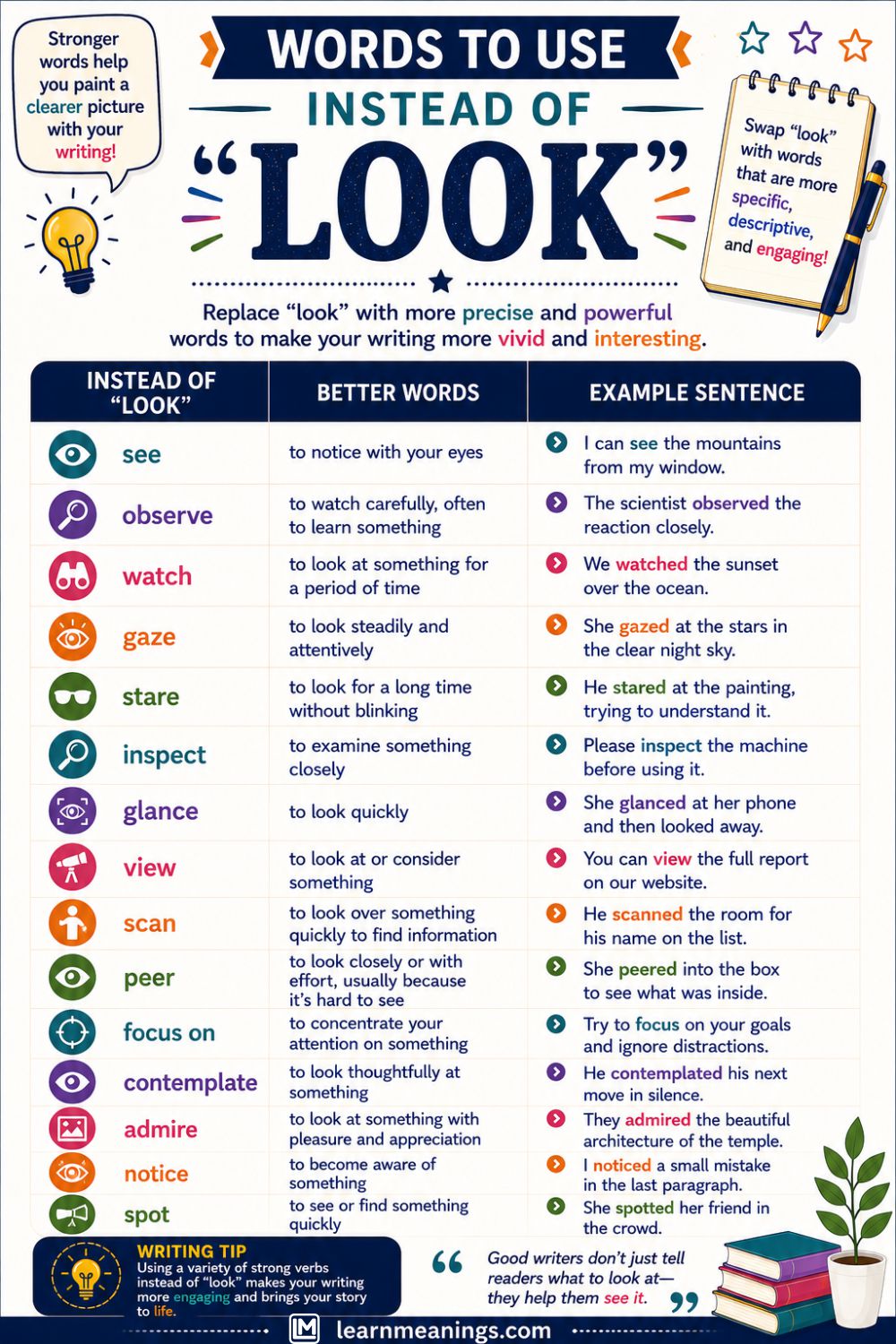
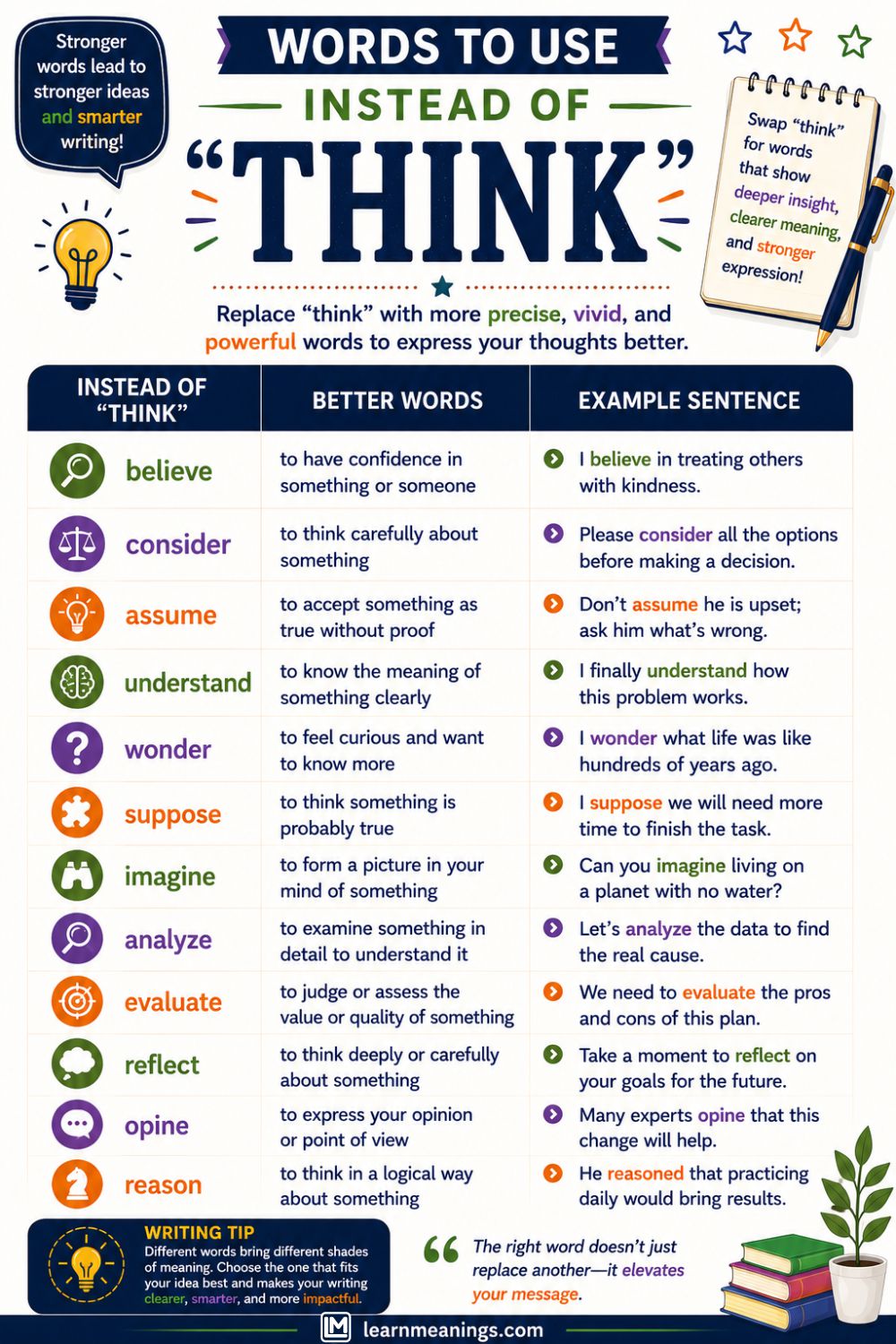
Explore our extensive dictionary using different filters and categories.
Take this 50-question quiz to test your vocabulary knowledge.
1. Which word shares a Latin root with 'compel' and relates to forcing an action?
2. Which of the following is an appropriate synonym for 'help' in a creative writing piece describing a mentor?
3. Which word describes physically blocking a path or stopping progress?
4. Which of the following synonyms for 'interesting' implies an overwhelming, almost magical level of attention-holding?
5. Which sentence uses a synonym for 'fast' correctly?
6. Which of the following synonyms for 'fun' implies the MOST extreme level of excitement?
7. Which word is too formal and inappropriate for casually guessing what's for dinner?
8. Which word means lacking originality as a result of overuse?
9. Which synonym for 'use' is best used to describe taking control of natural energy?
10. Which of the following synonyms for 'show' implies uncovering a hidden truth or wrongdoing?
11. Which word shares a root with 'miracle' and relates to something seemingly impossible?
12. If you want to replace 'look' in the sentence "She took a quick look at her watch," which word is best?
13. Which sentence uses a synonym for 'get' incorrectly?
14. What is a common spelling mistake with 'therefore'?
15. Which word describes eating steadily and audibly, like on a carrot?
16. Which word describes someone who is not only poor but also unwilling to spend money?
17. Which word implies importance specifically within a professional or legal context?
18. If a piece of clothing is obnoxiously bright and tasteless, what is it?
19. If you have a feeling about something without proof, which word is best?
20. If a lawyer is talking about topics to discuss with a client, what word replaces 'stuff'?
21. Which sentence uses a synonym for 'beautiful' incorrectly?
22. Which synonym implies considering the pros and cons of two options?
23. If you exchange goods without money, which word is best?
24. Which synonym for 'amazing' is best used to describe someone who has just achieved a long-term goal?
25. Which word describes something that is visually incongruous or clashing with its surroundings?
26. Why is 'change' sometimes considered a weak word in formal writing?
27. If you want to avoid slang in an academic paper, which phrase should you replace 'vibe with' with?
28. What is a common misspelling of 'receive'?
29. Which word describes lacking any distinctive or interesting features?
30. Which sentence correctly uses a strong synonym for 'important'?
31. Which synonym means 'except for; apart from' and is often considered archaic in casual speech?
32. Which word means an abstract idea or general notion?
33. What is a common mistake when using the word 'literally'?
34. Which of the following is an appropriate synonym for 'run' in a creative writing piece describing a fast river?
35. Which synonym best describes taking the time to fully enjoy a taste or experience?
36. If you are formally alerting a security team of a threat, what is the best word to use?
37. Which synonym best describes a company slowly accumulating a large amount of wealth?
38. Why might an American writer avoid using 'chuffed' in an essay for a US professor?
39. In a formal essay, which word is the best replacement for 'never' when describing an improbable event?
40. Which sentence correctly uses a strong synonym for 'show'?
41. Which sentence uses a synonym for 'never' incorrectly?
42. Which sentence uses a synonym for 'got' incorrectly?
43. Which word shares a linguistic root with 'silent' and relates to stillness?
44. What is the difference between 'barely' and 'scarcely'?
45. Why is 'fast' sometimes considered a weak word in formal writing?
46. In writing, why is 'I think' sometimes considered a weak phrase?
47. Which of these phrases is an idiom meaning a very difficult situation?
48. Which word describes stopping something dangerous from happening?
49. Which sentence uses a synonym for 'give' INCORRECTLY?
50. If a boss wants to express that a project is difficult but fair in a formal email, which word is the best replacement for 'hard'?
'Words Instead Of' refers to using more descriptive, advanced, or specific vocabulary to replace basic, overused words in your writing or speech. For example, using 'exhausted' instead of 'very tired', or 'whispered' instead of 'said quietly'.
Using alternative words helps you avoid repetition, makes your writing more engaging, and demonstrates a stronger grasp of the English language. It allows you to express your thoughts more precisely and sound more professional.
Instead of using 'very' before an adjective, you can use a single strong adjective. For example, instead of 'very cold', use 'freezing'; instead of 'very big', use 'enormous'; and instead of 'very happy', use 'thrilled'.
To find better words, you can use a thesaurus, read regularly to expose yourself to new vocabulary, and practice substituting common words with their synonyms. Our 'Words Instead Of' lists above provide ready-to-use alternatives for your writing.
A synonym is a word with the exact or nearly exact same meaning as another word. An alternative word is a broader term that includes synonyms but also covers words that provide better context, tone, or imagery, even if the meaning isn't perfectly identical.
