Whether you're writing a poem, a song, or just playing with words, discover perfect rhymes, slant rhymes, and near rhymes instantly.
Not all rhymes are created equal. Understanding these will elevate your writing.
The final stressed vowel and all subsequent sounds are identical.
Also called near rhyme. The sounds are similar but not identical.
Words look like they should rhyme based on spelling, but don't sound alike.
The last syllable of each word sounds exactly the same.
A gentle wind. Looking for words that rhyme with 'Breeze'? Here are the top picks.
Example Usage
"The leaves danced in the gentle breeze, while the bees hummed among the trees."
Start with the most commonly searched words by writers and poets.
The pattern of rhymes at the end of each line. Letters are assigned to represent the scheme.
A The cat sat on the mat,
A And looked at the brown rat.
B The dog barked at the moon,
B While playing a happy tune.
A The sun sets in the west,
B The birds begin to fly,
A The animals take their rest,
B Across the painted sky.
Rhyming isn't just for poetry; it's a fundamental part of human memory and music.
Rhyming makes information easier to remember. It's why nursery rhymes are used to teach children, and why advertising jingles get stuck in our heads.
In hip-hop and songwriting, rhymes create the rhythmic bounce of the lyrics. Slant rhymes are often used to avoid sounding predictable or forced.
A well-placed rhyme ties a poem together, creating a sense of closure and harmony that appeals to the human ear.
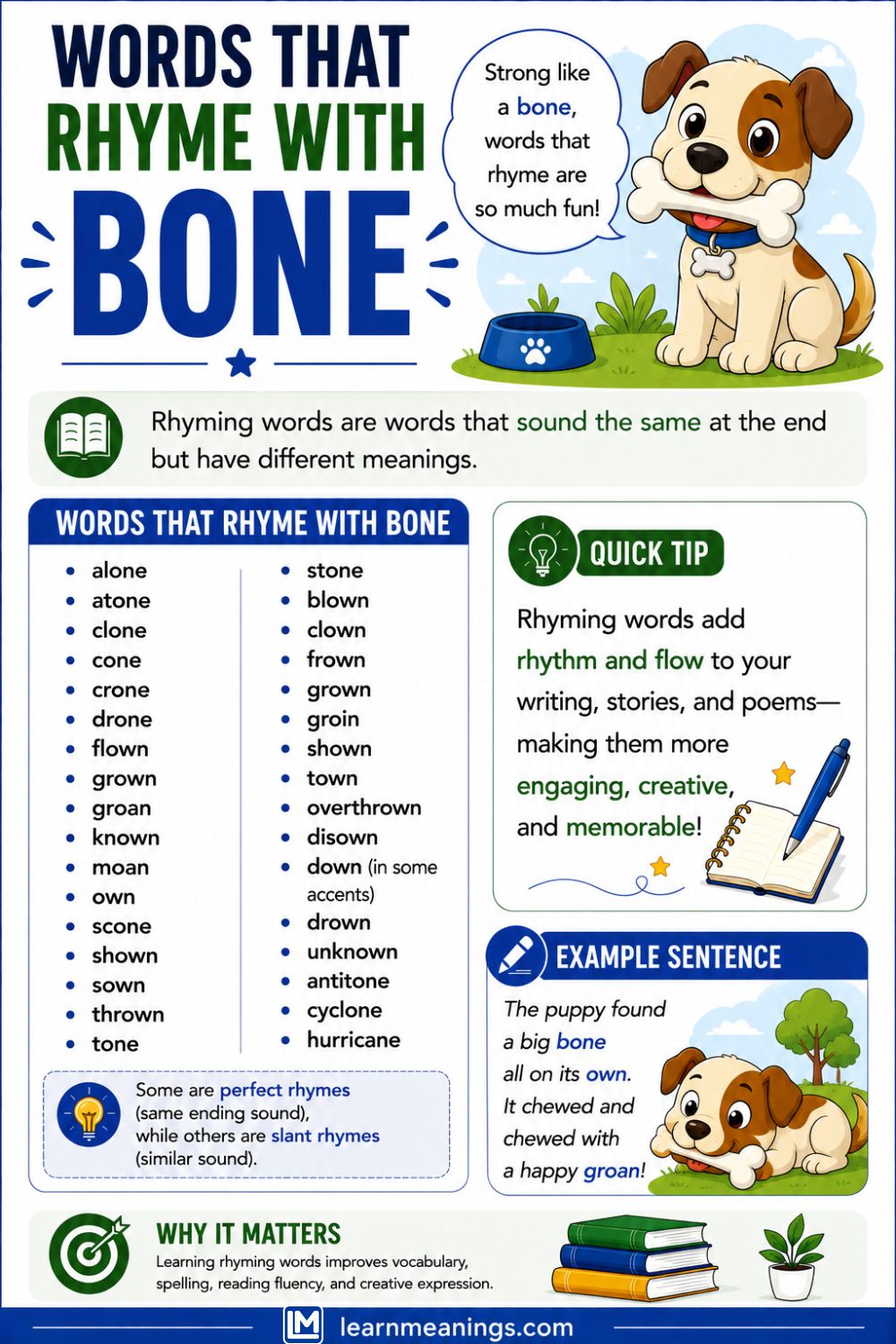
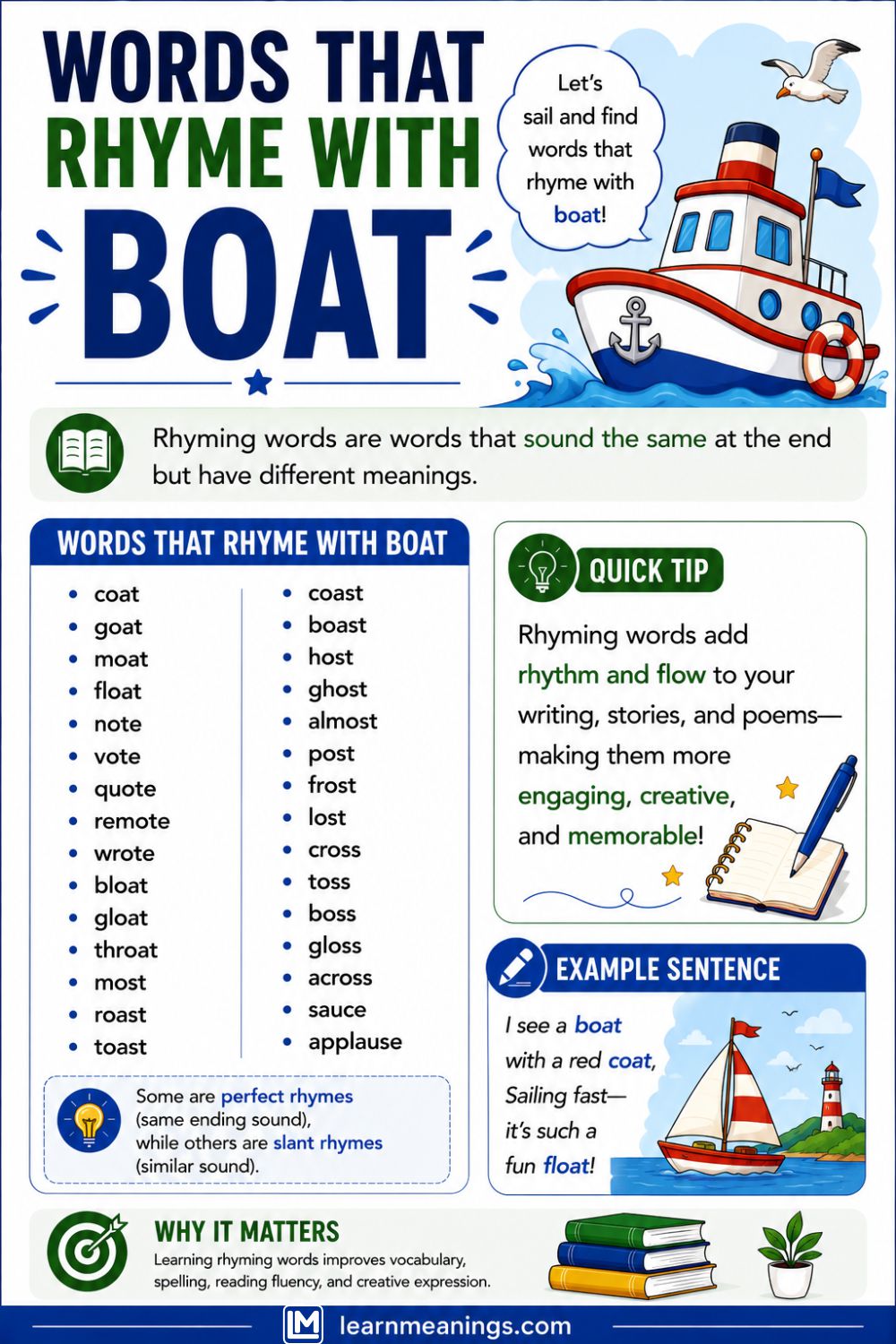
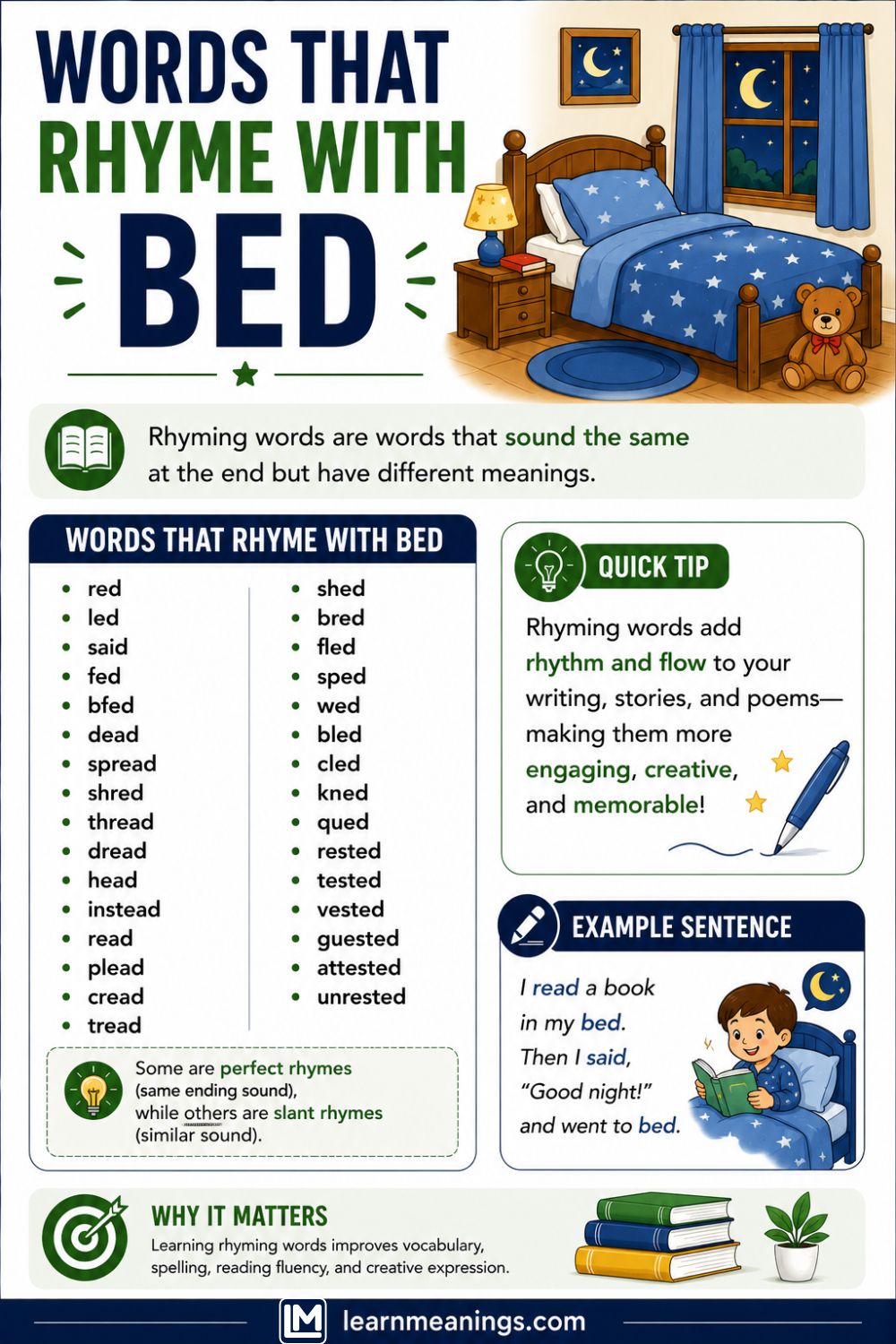
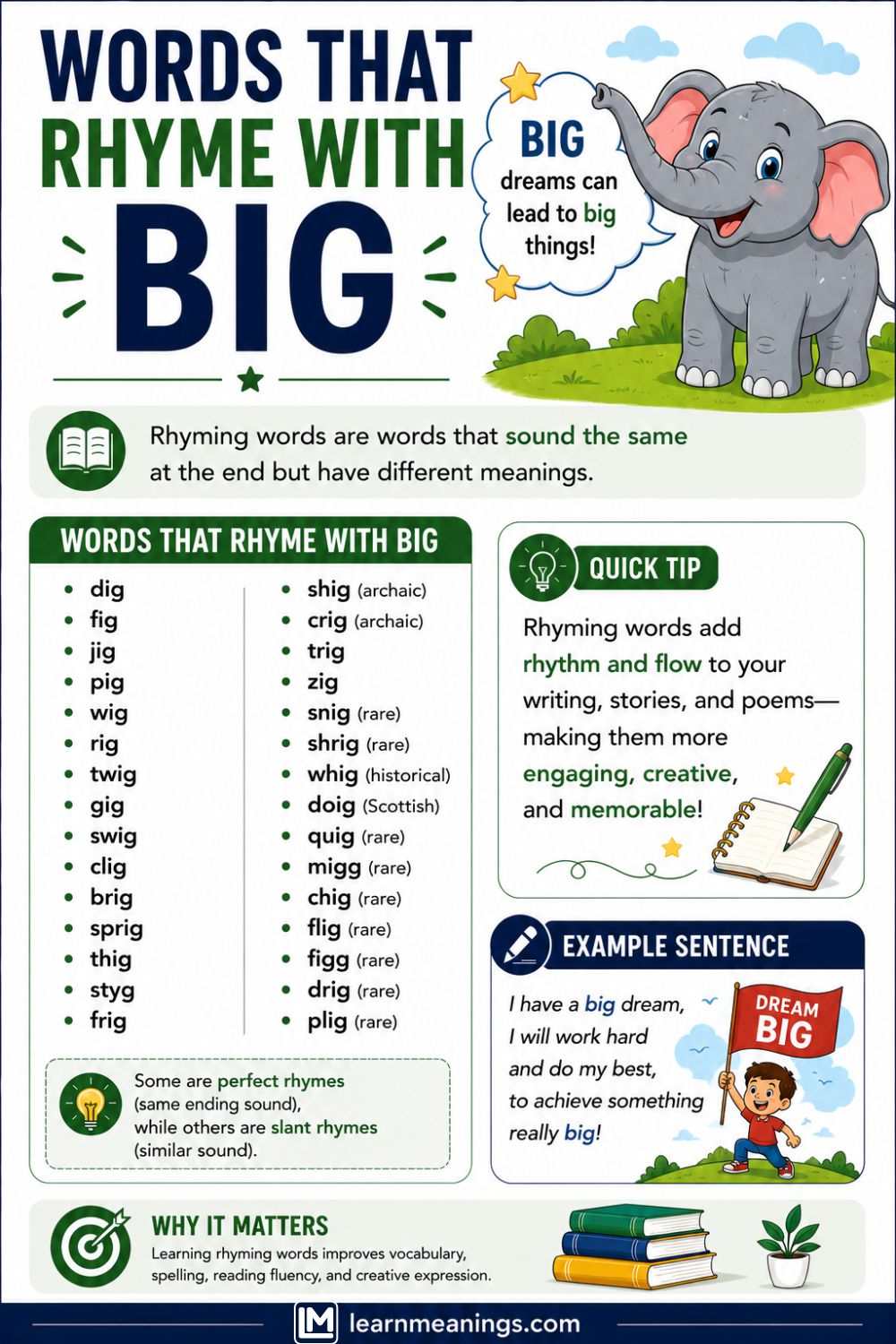
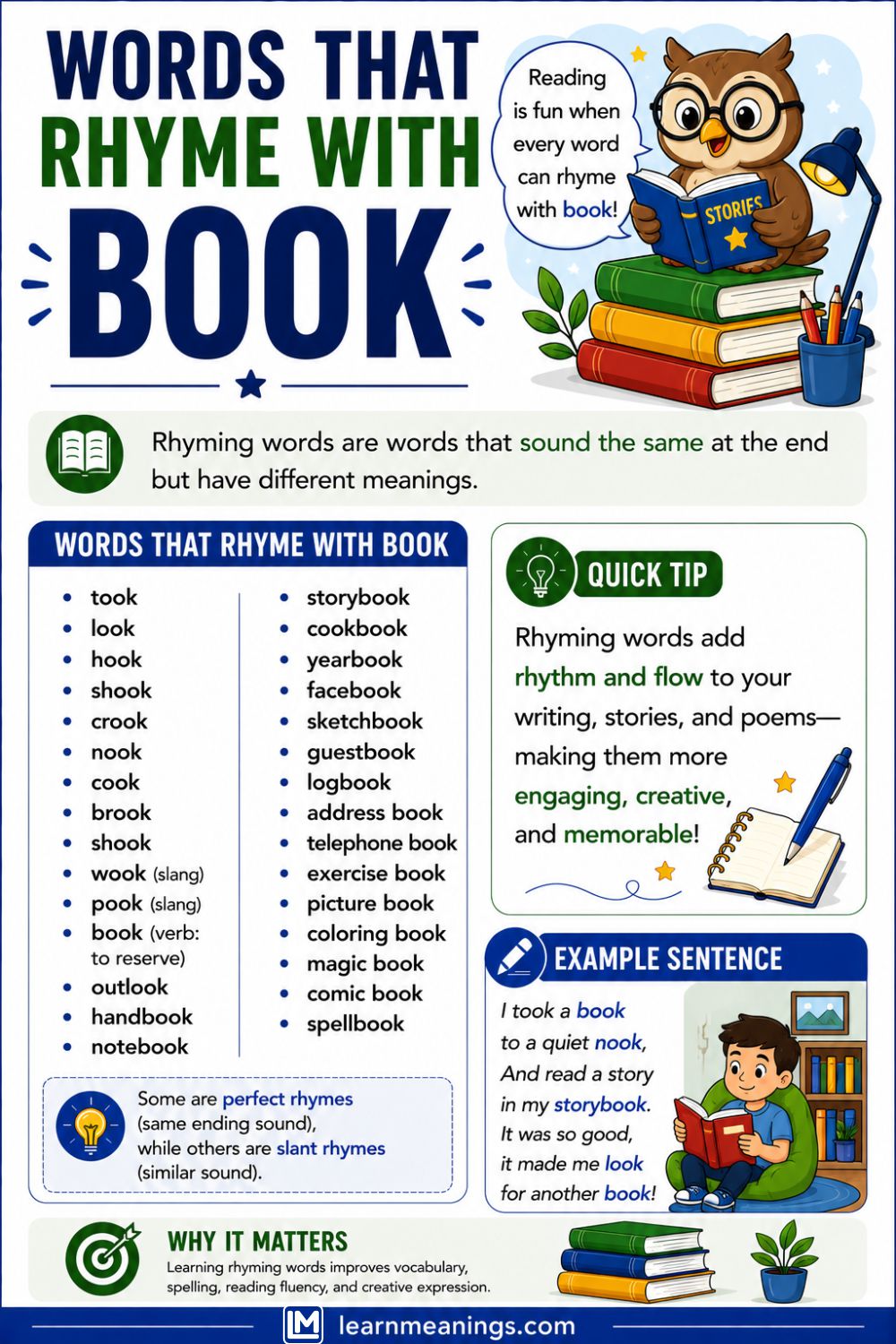
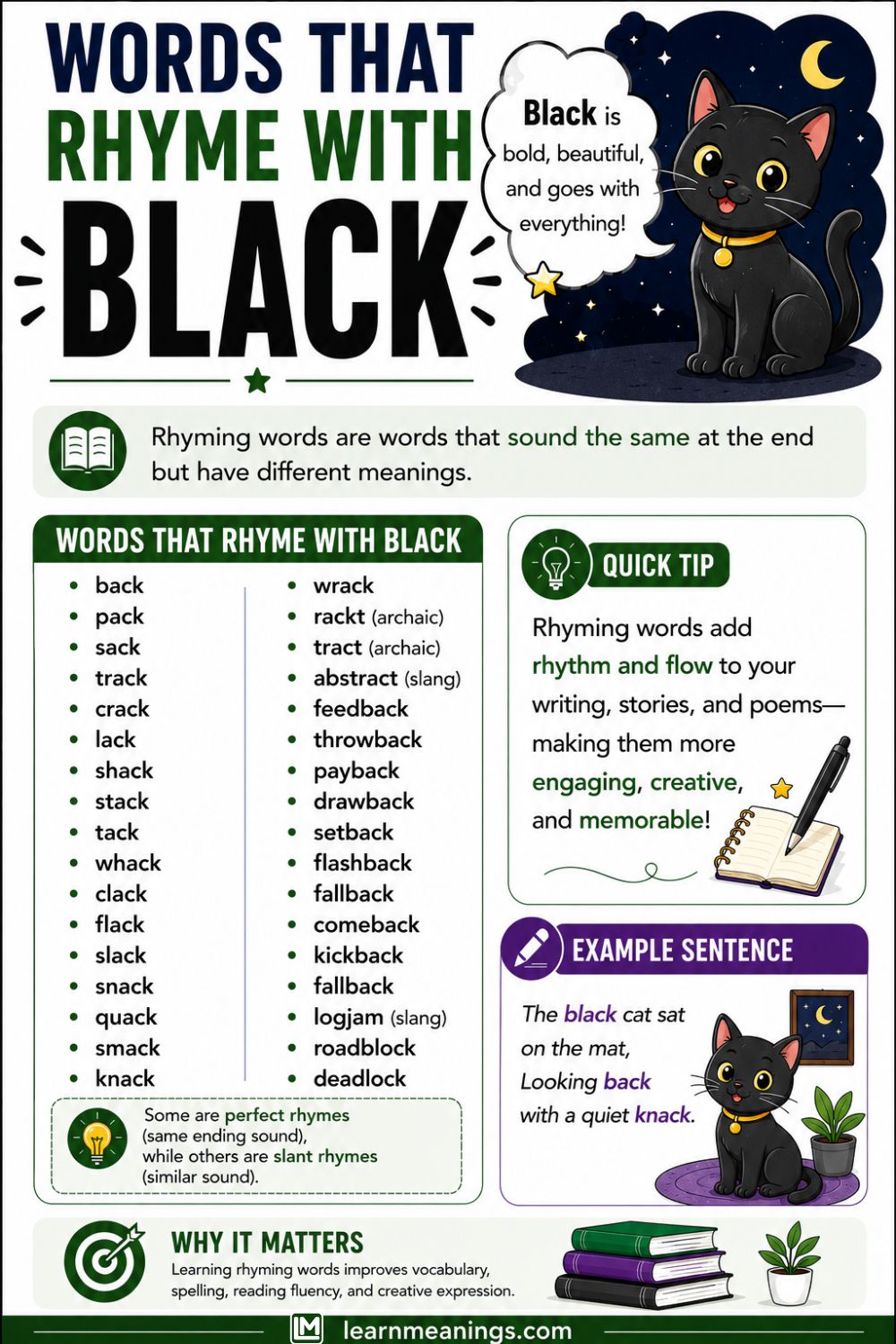
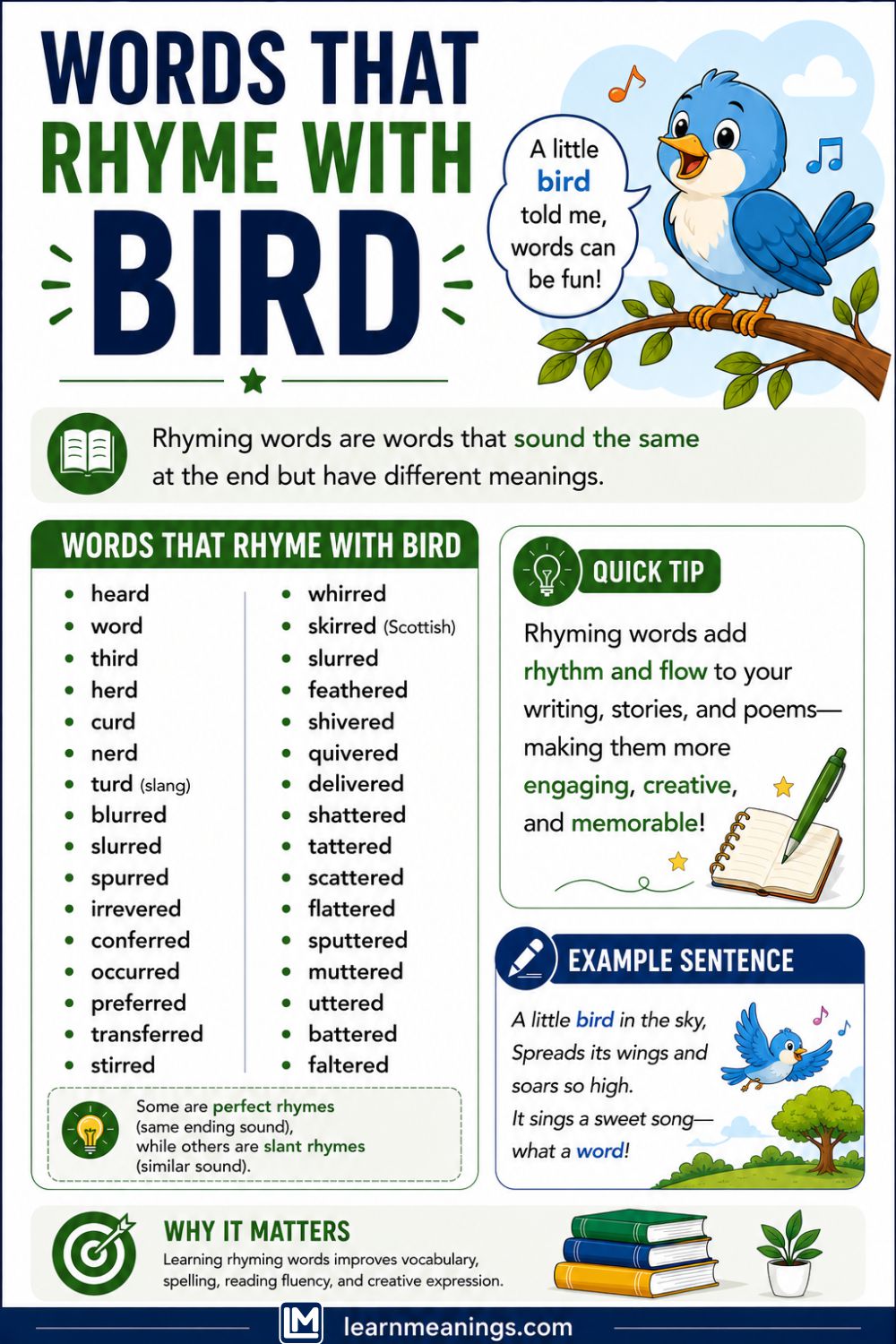


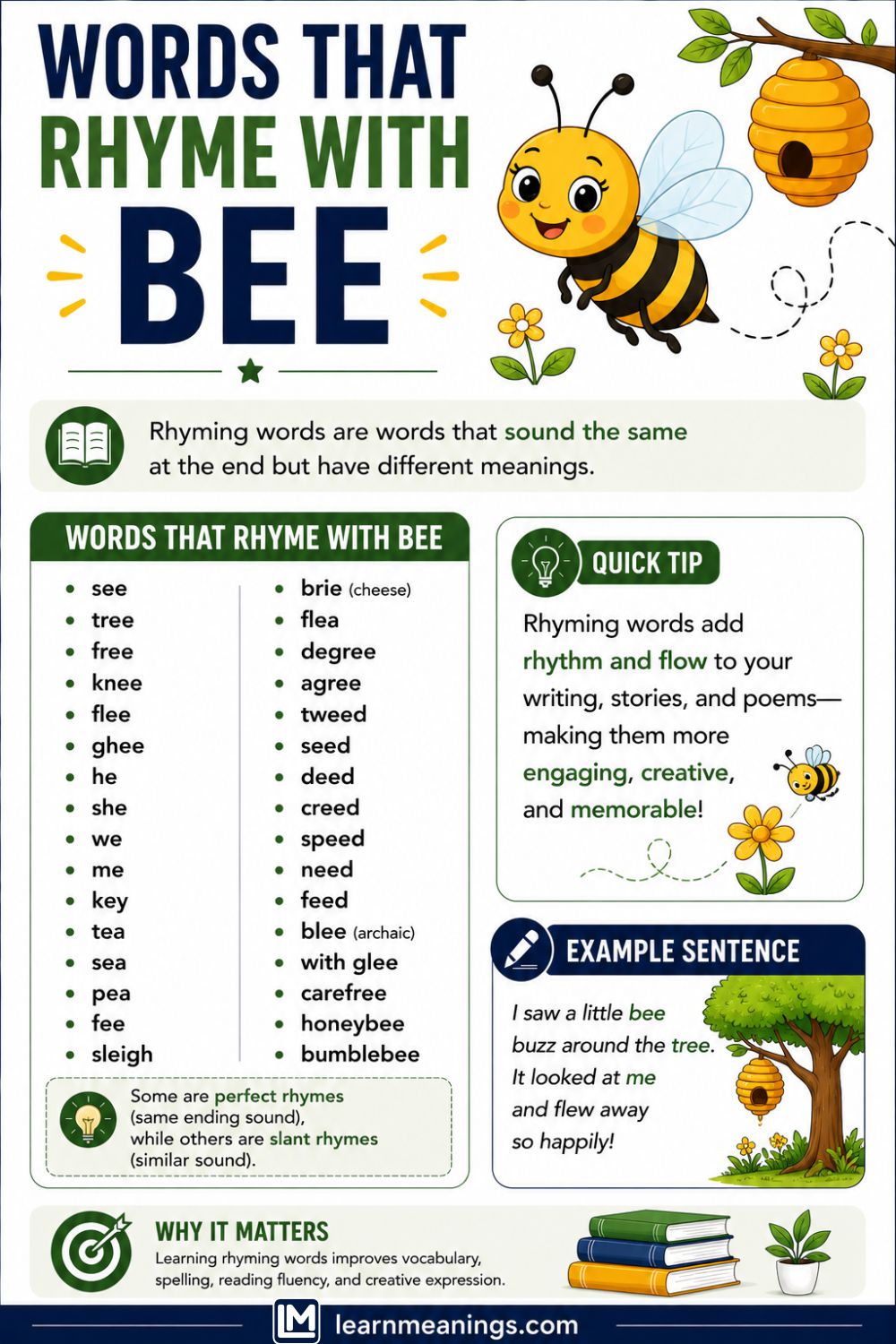


Explore our extensive dictionary using different filters and categories.
Proven strategies to make vocabulary stick.
Consistency is key. Learn at least 5 new words every day and review them regularly to build long-term memory.
Use physical or digital flashcards with the word on one side and the meaning/example on the other for active recall.
Read books, articles, and news in English. Context helps you understand how words are naturally used in sentences.
Watch English movies, listen to podcasts, and hear native speakers to grasp pronunciation and intonation effortlessly.
Write sentences or short paragraphs using new words. This reinforces learning and highlights areas needing improvement.
Use new vocabulary in conversations. Speaking out loud helps solidify your memory and builds confidence.
Take this 50-question quiz to test your vocabulary knowledge.
1. What is the primary vowel sound in 'die'?
2. What type of rhyme uses words that share the same ending sound but have different preceding syllables, like 'overglad' and 'mad'?
3. How many syllables are in the word 'road'?
4. Which of the following is a perfect rhyme for 'dog'?
5. What is a 'slant rhyme'?
6. Which of the following is a perfect rhyme for 'smile'?
7. Which of these is an example of a multi-syllable rhyme pairing?
8. Which of the following is a perfect rhyme for 'summer'?
9. Which of these is a slant rhyme for 'red'?
10. How many syllables are in the word 'meat'?
11. Why is 'feet' NOT a perfect rhyme for 'fight'?
12. Why shouldn't you rhyme 'berry' with 'story'?
13. In poetry, where is the most effective place to put the word 'dream' if you want the rhyme to be noticed?
14. Which of these is a near rhyme for 'face'?
15. Why do modern songwriters often use near rhymes for 'easter'?
16. How many syllables are in the word 'year'?
17. Which word rhymes perfectly with 'sky' and means 'to move through the air'?
18. What is a 'slant rhyme'?
19. Is 'alive' a perfect rhyme for 'wife'?
20. What is a 'slant rhyme'?
21. Why shouldn't you rhyme 'blood' with 'boy'?
22. Which of these is a slant rhyme for 'cloud'?
23. Why do modern songwriters often use slant rhymes for 'open'?
24. Which suffix do most slant-rhymes for 'seven' share?
25. Which of these is an example of a slant rhyme pairing?
26. Is 'word' a perfect rhyme for 'learn'?
27. Why shouldn't you rhyme 'test' with 'toast'?
28. Which of these words does NOT share the '-ind' perfect rhyme sound?
29. Which of the following is a perfect rhyme for 'tear'?
30. Which word is a better slant rhyme based on sound: 'name' or 'said'?
31. What is the primary stressed syllable in 'computer'?
32. Which of these is a near rhyme for 'sad'?
33. How many syllables are in the word 'ten'?
34. True or False: 'Laugh' has many perfect rhymes in the English language.
35. Which word rhymes perfectly with 'halloween' and means 'a large luxury vehicle'?
36. If a songwriter wants to rhyme 'give' with a two-word phrase, which works best?
37. Which of these is a slant rhyme for 'gold'?
38. What is a 'slant rhyme'?
39. What is the primary stress pattern in 'sun'?
40. What type of rhyme uses words that share the same ending suffix but have a different stressed vowel?
41. Which of the following is a perfect rhyme for 'beach'?
42. What type of rhyme uses words that share similar but not identical vowel sounds?
43. Which of the following is the best rhyming pair for a song lyric?
44. Why shouldn't you rhyme 'stage' with 'stag'?
45. What is the primary vowel sound in the stressed syllable of 'lonely'?
46. Why do modern songwriters often use slant rhymes for 'room'?
47. Which word is a better perfect rhyme: 'time' or 'line'?
48. What is the primary stressed syllable in 'beautiful'?
49. Which word is a better multi-syllable rhyme: 'trendsetter' or 'hurt'?
50. How many syllables are in the word 'sleep'?
Rhyming words are words that have the same ending sound. They are commonly used in poetry, songs, and nursery rhymes to create a musical rhythm and make phrases more memorable. For example, 'cat' and 'hat' are rhyming words.
Perfect rhymes share the exact same ending sound, such as 'time' and 'chime'. Imperfect rhymes (also called slant or half rhymes) have similar but not identical sounds, such as 'shape' and 'keep' or 'worm' and 'swarm'.
Rhyming words help improve phonetic awareness, which is crucial for reading and spelling. They help learners recognize sound patterns in the English language, expand their vocabulary, and make language learning more engaging through poems and songs.
You can find rhyming words by identifying the final vowel and consonant sounds of your target word and looking for other words that share those sounds. You can also browse our A-Z list of rhyming words above to easily find perfect and slant rhymes for your writing.
Some common examples of rhyming word pairs include 'light/night', 'tree/bee', 'play/stay', and 'moon/spoon'. You can explore thousands of rhyming word combinations in our comprehensive lists.
