Stop using boring, repetitive words. Find stronger verbs, evocative adjectives, and precise alternatives to make your writing punchier and more professional.
"Very" is a lazy modifier. Cut it and use a stronger word instead. (e.g., Very tired → Exhausted).
Very hungry
Famished
Creates a much more vivid image of desperation.
Very angry
Furious
Conveys high intensity without needing a modifier.
Very big
Colossal
Gives a sense of overwhelming scale.
Avoid repetitive dialogue tags. Use these alternatives to show emotion and tone.
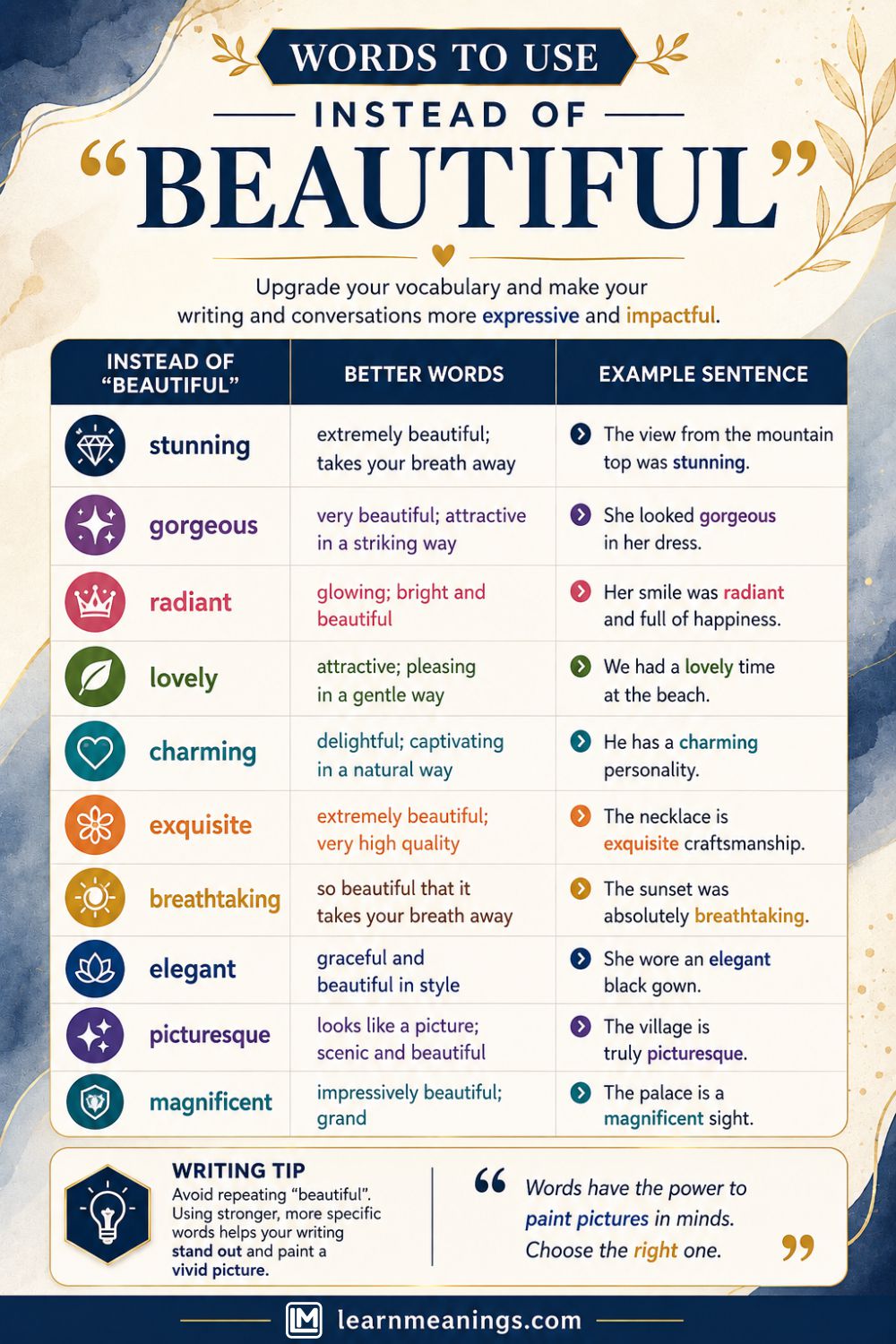
Stop using generic adjectives. Precision is the key to great writing.
See how swapping just a few weak words can completely elevate your writing.
"The very big storm made the town very quiet. People felt bad."
"The colossal storm left the town desolate. Residents felt devastated."
"She was very happy about the good news and said she would come."
"She was elated by the phenomenal news and declared she would attend."
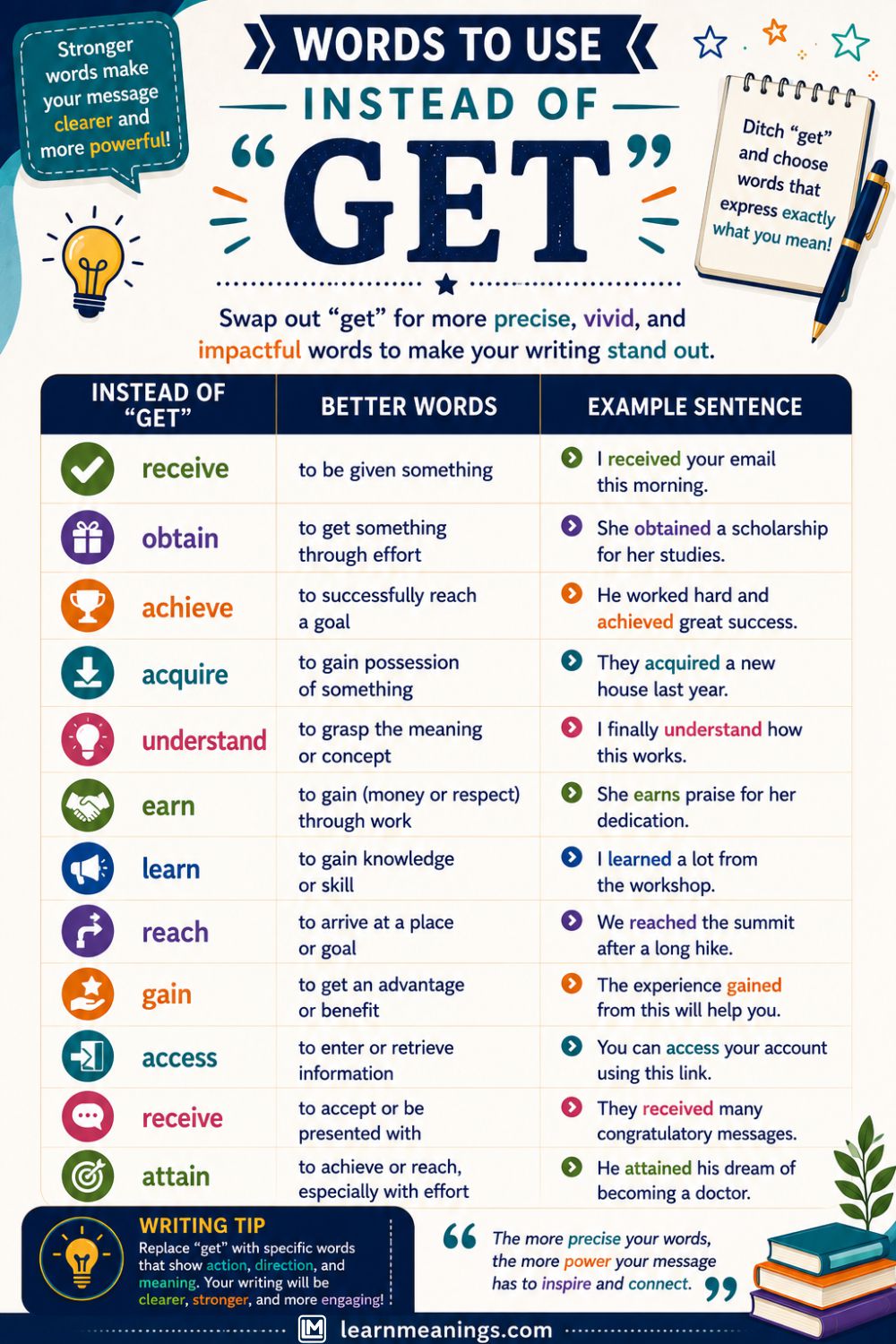
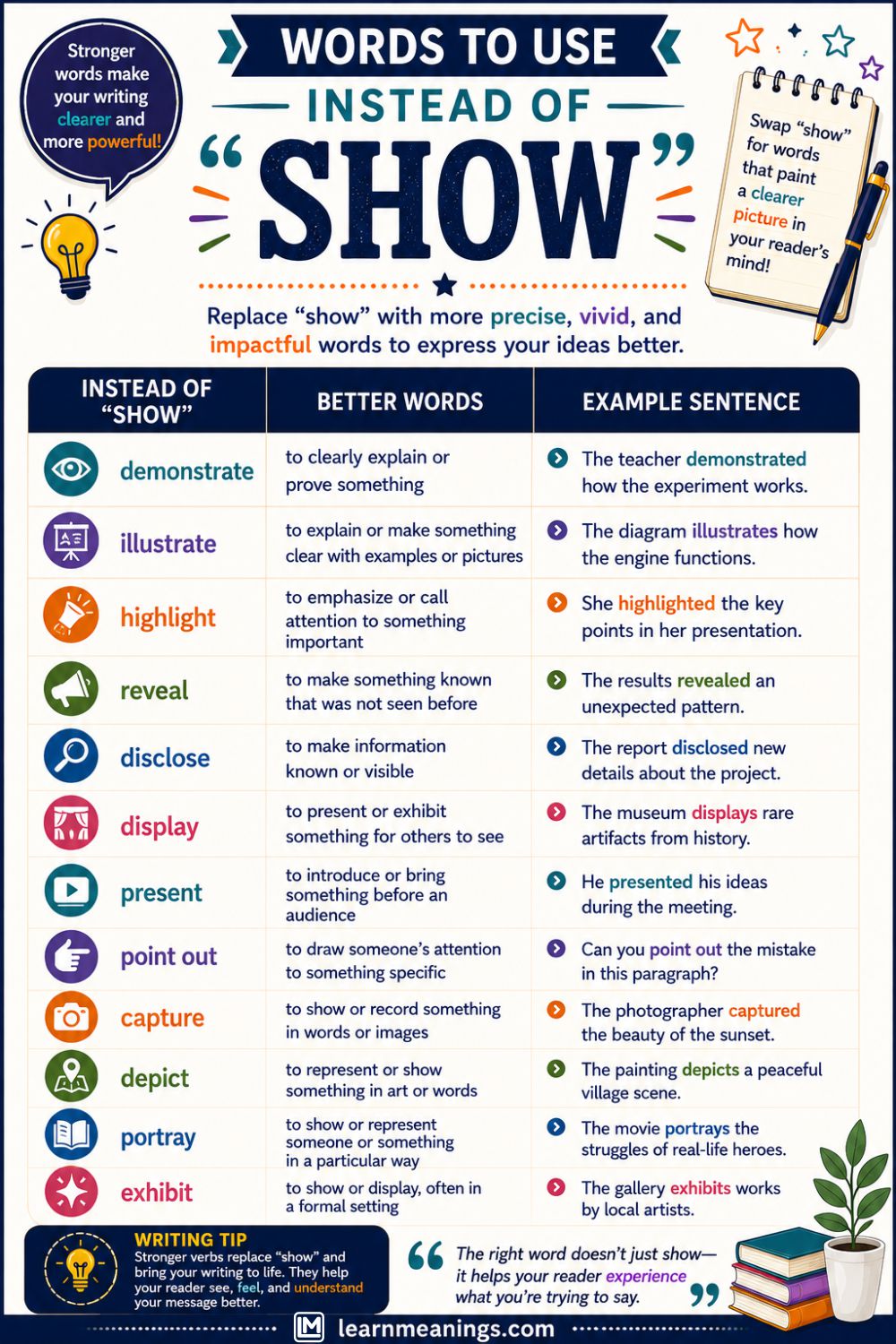
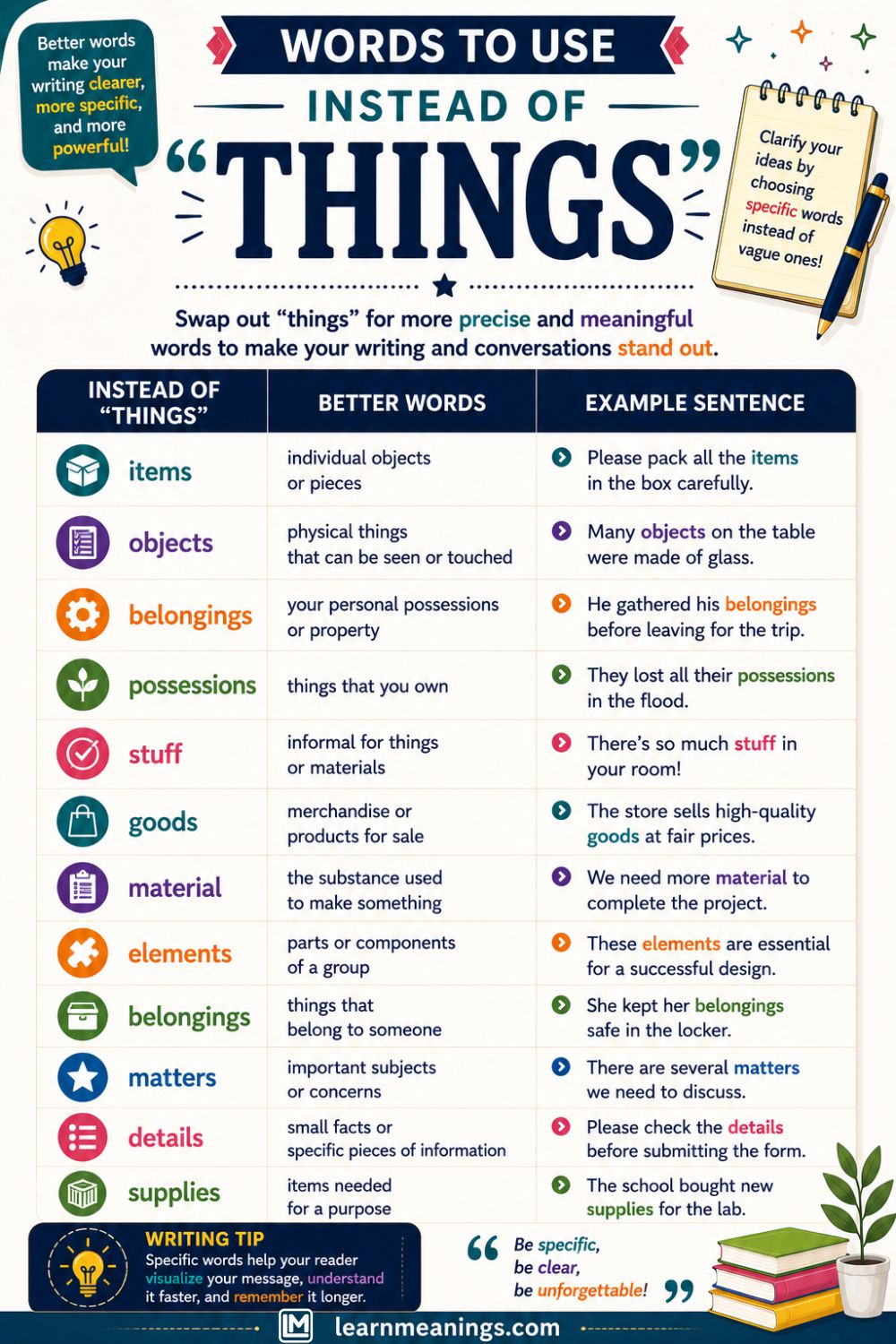


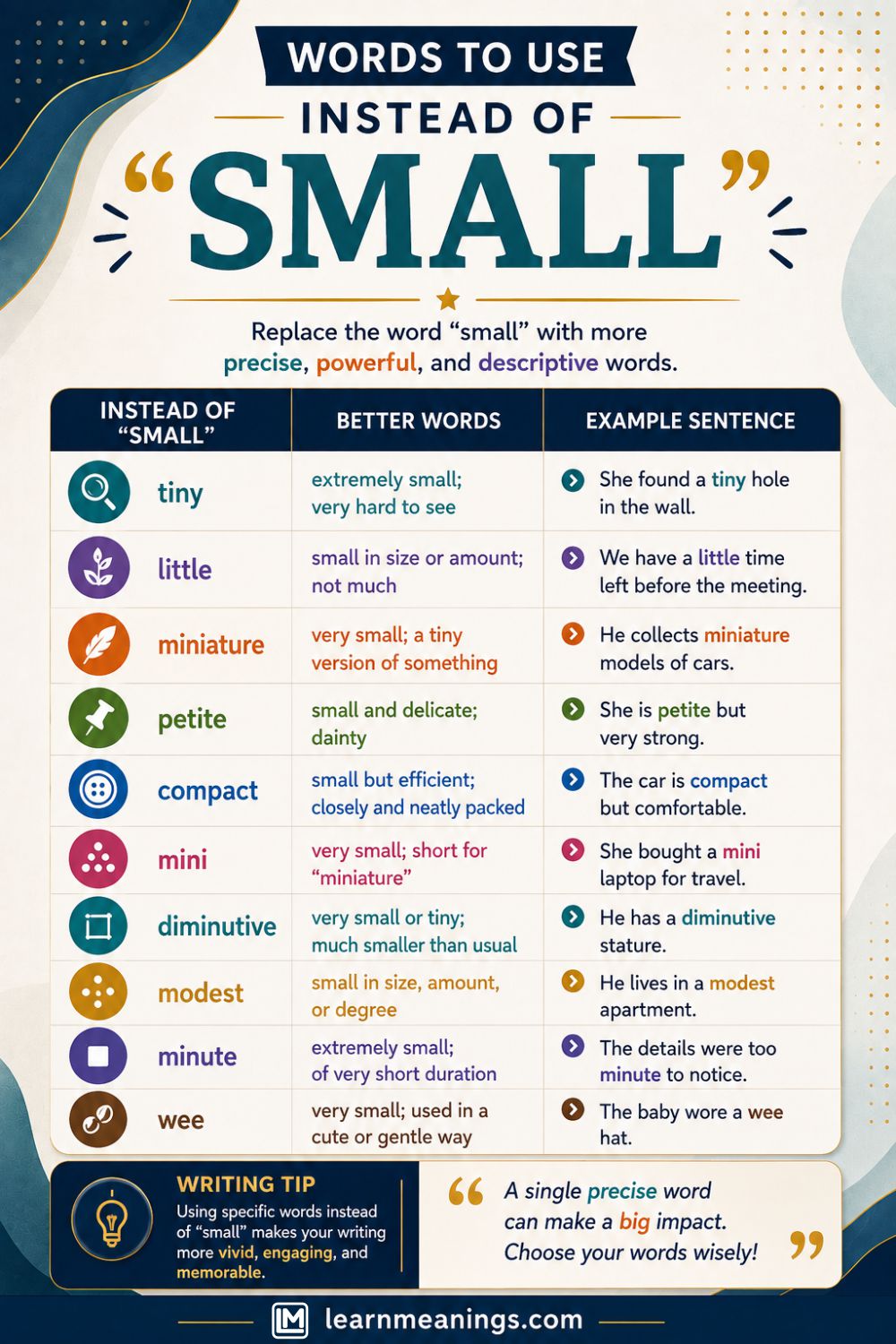
Explore our extensive dictionary using different filters and categories.
Take this 50-question quiz to test your vocabulary knowledge.
1. Which word is too intense and inappropriate for starting to read a book?
2. Which synonym for 'look' is best used to describe searching a messy drawer for a pen?
3. Which word means to make or construct something with skill and care?
4. What is the difference between 'poor' and 'destitute'?
5. If a character is sharing a secret with a trusted friend, which word replaces 'said' best?
6. Which word describes quickly grabbing something informally?
7. Which synonym best describes people living in a particular country or area?
8. What is the main difference between 'big' and 'massive'?
9. If someone 'sizes up' an opponent, what does that mean?
10. What is the main difference between 'tired' and 'lethargic'?
11. Which sentence correctly uses a strong synonym for 'change'?
12. Which of these phrases is an idiom meaning to figure something out?
13. Which sentence correctly replaces 'never' in a formal context?
14. What is a common misspelling of 'appalling'?
15. Which of the following is an appropriate synonym for 'go' in a creative writing piece about an explorer?
16. Which of the following synonyms for 'very' implies an absolute, ungradable degree?
17. Which sentence uses a synonym for 'important' incorrectly?
18. Which of the following is an appropriate synonym for 'work' in a creative writing piece describing an artisan?
19. Which sentence correctly uses a strong synonym for 'got'?
20. What is the difference between 'lousy' and 'atrocious'?
21. What is the best word to describe a deep, heavy, and powerful voice?
22. If a person wants to describe a panicked, disordered search for lost keys, which word is the best replacement for 'crazy'?
23. Which word describes something that is large and physically strong, like a lumberjack?
24. Which sentence correctly uses a strong synonym for 'fast'?
25. Why might a writer avoid using 'jumbo' in a professional business report?
26. What is the difference between 'putting' someone in danger and 'exposing' them to danger?
27. Which sentence uses a synonym for 'things' incorrectly?
28. Which synonym implies a rule that is rigidly enforced without bending?
29. If a crowd suddenly rushes the stage in a frenzy, the concert is doing what?
30. What is the difference between 'pristine' and 'mint'?
31. Which sentence uses a synonym for 'easy' incorrectly?
32. Which synonym best describes a dark, gloomy, and inhospitable landscape?
33. What does 'eclectic' mean when describing a collection or taste?
34. Which word describes a ridiculously small or insultingly small amount of money?
35. If you want to avoid slang in an academic paper, which word should you replace 'show' with?
36. Which of the following means to value highly?
37. If a character is 'limping', what is likely wrong with them?
38. Which of these phrases is an idiom meaning to do a significant favor?
39. Why might an American writer avoid using 'mates' in an essay for a US professor?
40. Which sentence uses a synonym for 'fun' incorrectly?
41. Which word means happening instantly?
42. If something 'gushes', how does it compare to just 'running'?
43. If a business wants to say they used a new asset to their maximum advantage, which word is best?
44. What is the best replacement for 'things' when referring to kitchen tools?
45. Which sentence uses a synonym for 'tired' incorrectly?
46. Why might a writer avoid using 'gutted' in an essay for a US professor?
47. If something is 'imminent', how does it compare to being 'just' there?
48. Which of the following is an appropriate synonym for 'quiet' in a creative writing piece describing a hidden door?
49. If you 'trace' a phone call, what are you doing?
50. Which word means a plan or idea that is not fully thought out?
'Words Instead Of' refers to using more descriptive, advanced, or specific vocabulary to replace basic, overused words in your writing or speech. For example, using 'exhausted' instead of 'very tired', or 'whispered' instead of 'said quietly'.
Using alternative words helps you avoid repetition, makes your writing more engaging, and demonstrates a stronger grasp of the English language. It allows you to express your thoughts more precisely and sound more professional.
Instead of using 'very' before an adjective, you can use a single strong adjective. For example, instead of 'very cold', use 'freezing'; instead of 'very big', use 'enormous'; and instead of 'very happy', use 'thrilled'.
To find better words, you can use a thesaurus, read regularly to expose yourself to new vocabulary, and practice substituting common words with their synonyms. Our 'Words Instead Of' lists above provide ready-to-use alternatives for your writing.
A synonym is a word with the exact or nearly exact same meaning as another word. An alternative word is a broader term that includes synonyms but also covers words that provide better context, tone, or imagery, even if the meaning isn't perfectly identical.
