Stop using boring, repetitive words. Find stronger verbs, evocative adjectives, and precise alternatives to make your writing punchier and more professional.
"Very" is a lazy modifier. Cut it and use a stronger word instead. (e.g., Very tired → Exhausted).
Very hungry
Famished
Creates a much more vivid image of desperation.
Very angry
Furious
Conveys high intensity without needing a modifier.
Very big
Colossal
Gives a sense of overwhelming scale.
Avoid repetitive dialogue tags. Use these alternatives to show emotion and tone.
Stop using generic adjectives. Precision is the key to great writing.
See how swapping just a few weak words can completely elevate your writing.
"The very big storm made the town very quiet. People felt bad."
"The colossal storm left the town desolate. Residents felt devastated."
"She was very happy about the good news and said she would come."
"She was elated by the phenomenal news and declared she would attend."

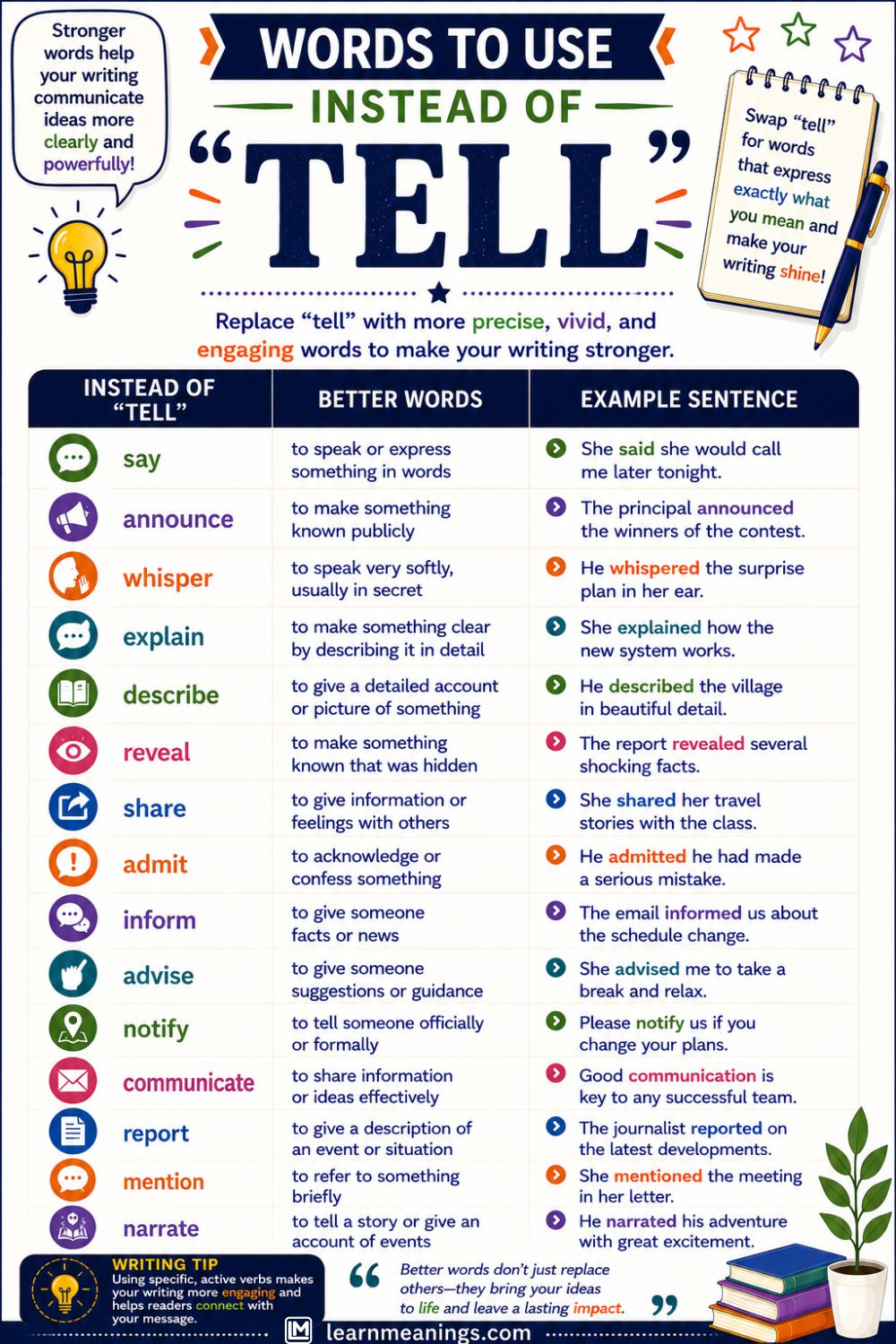
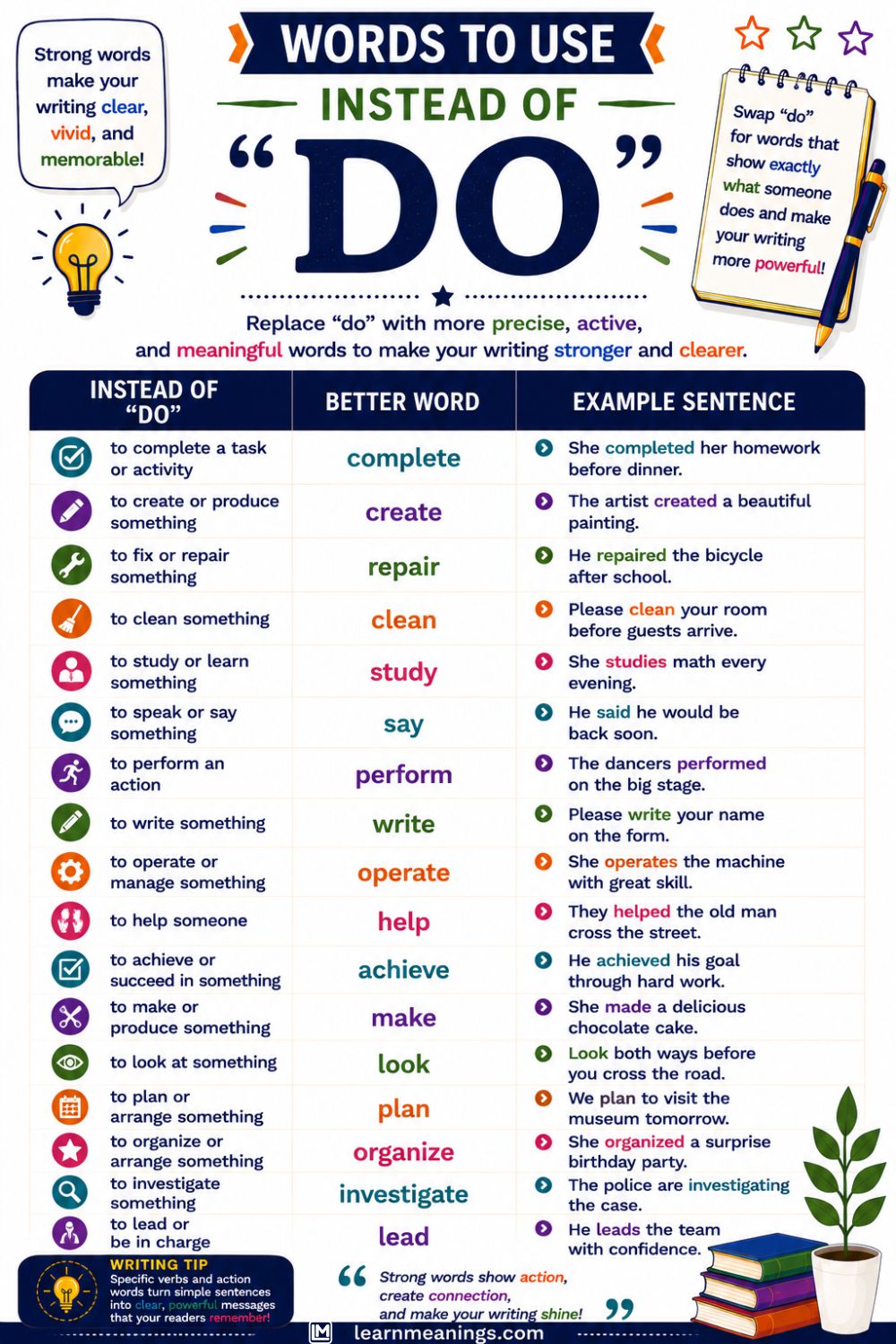
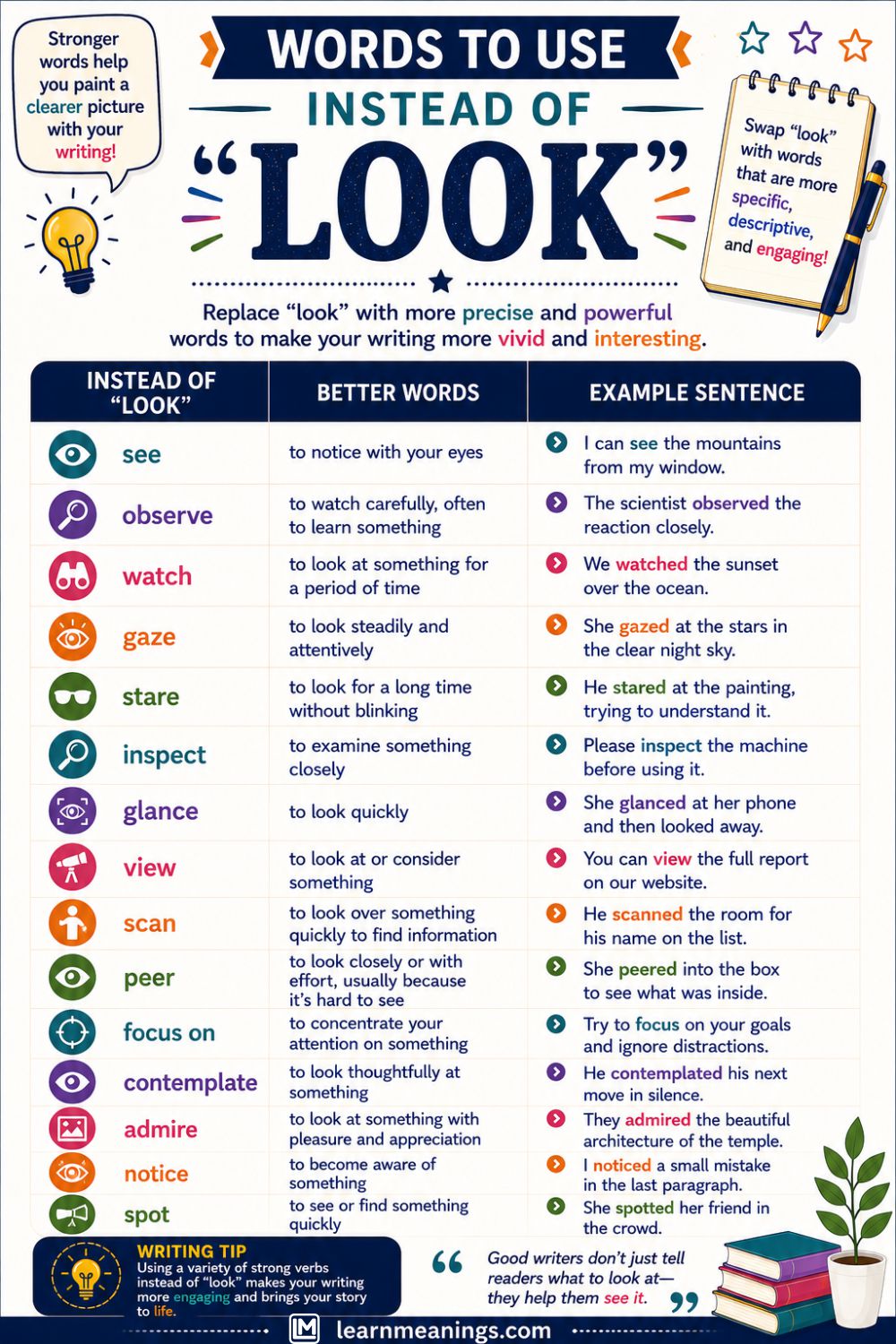
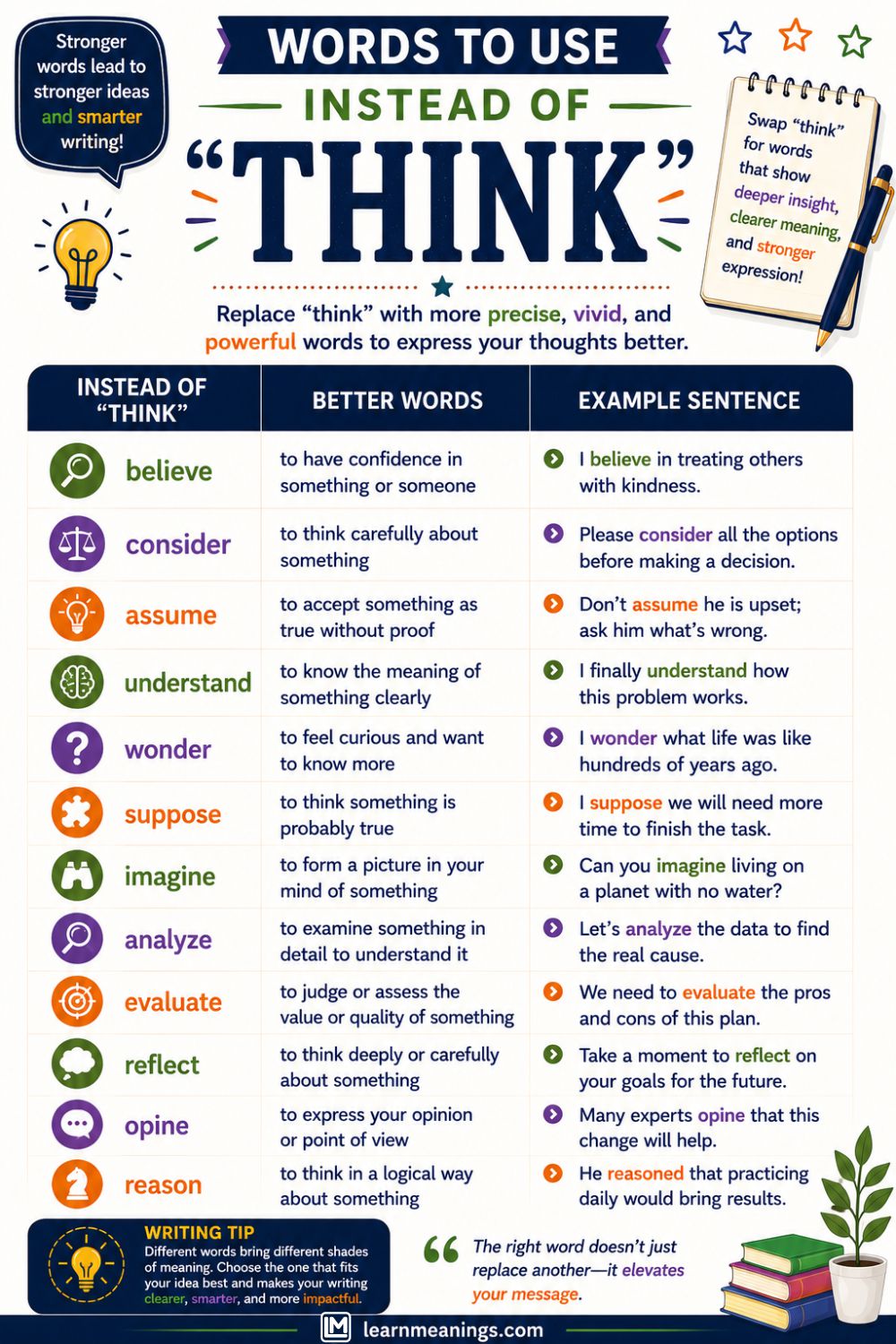


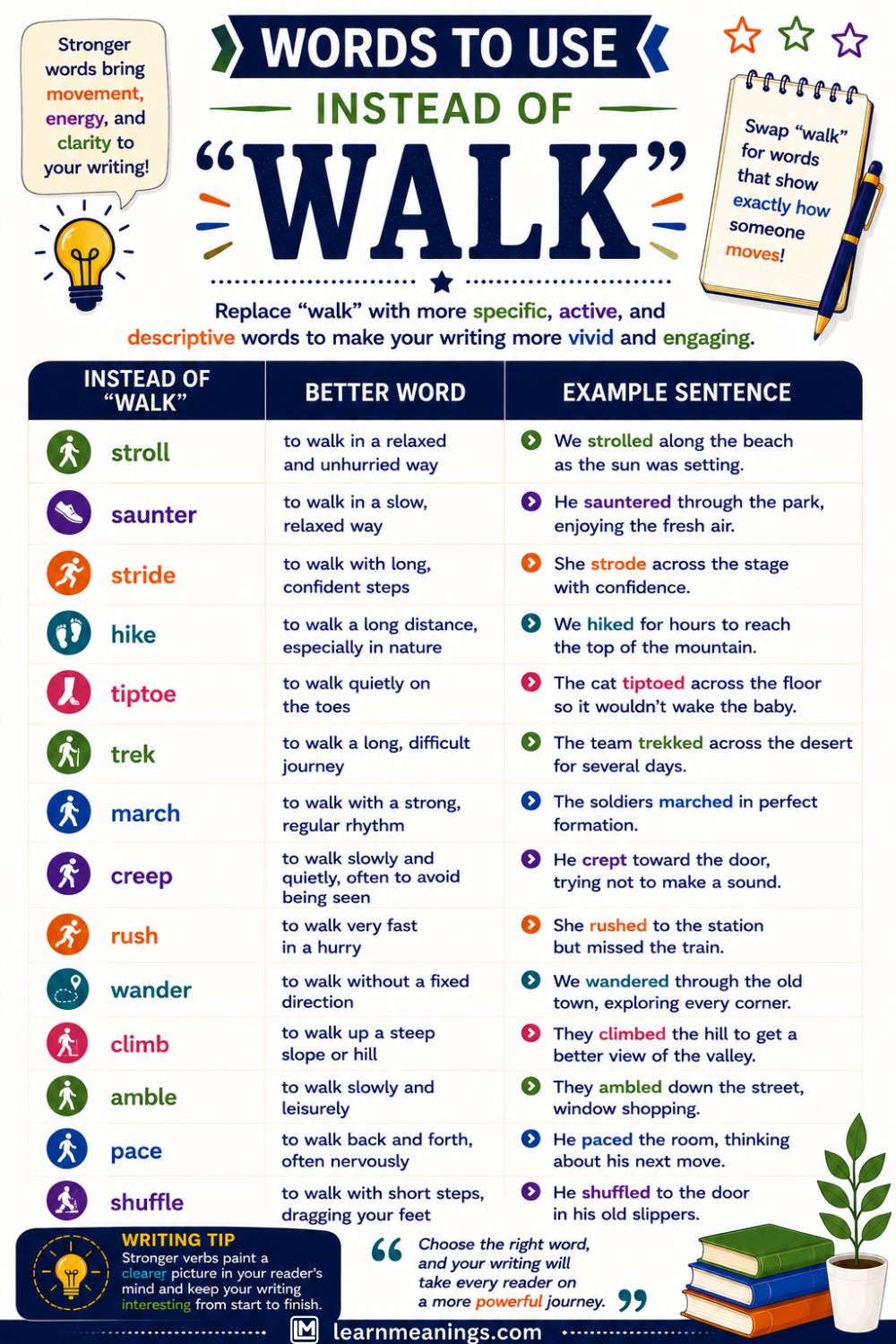
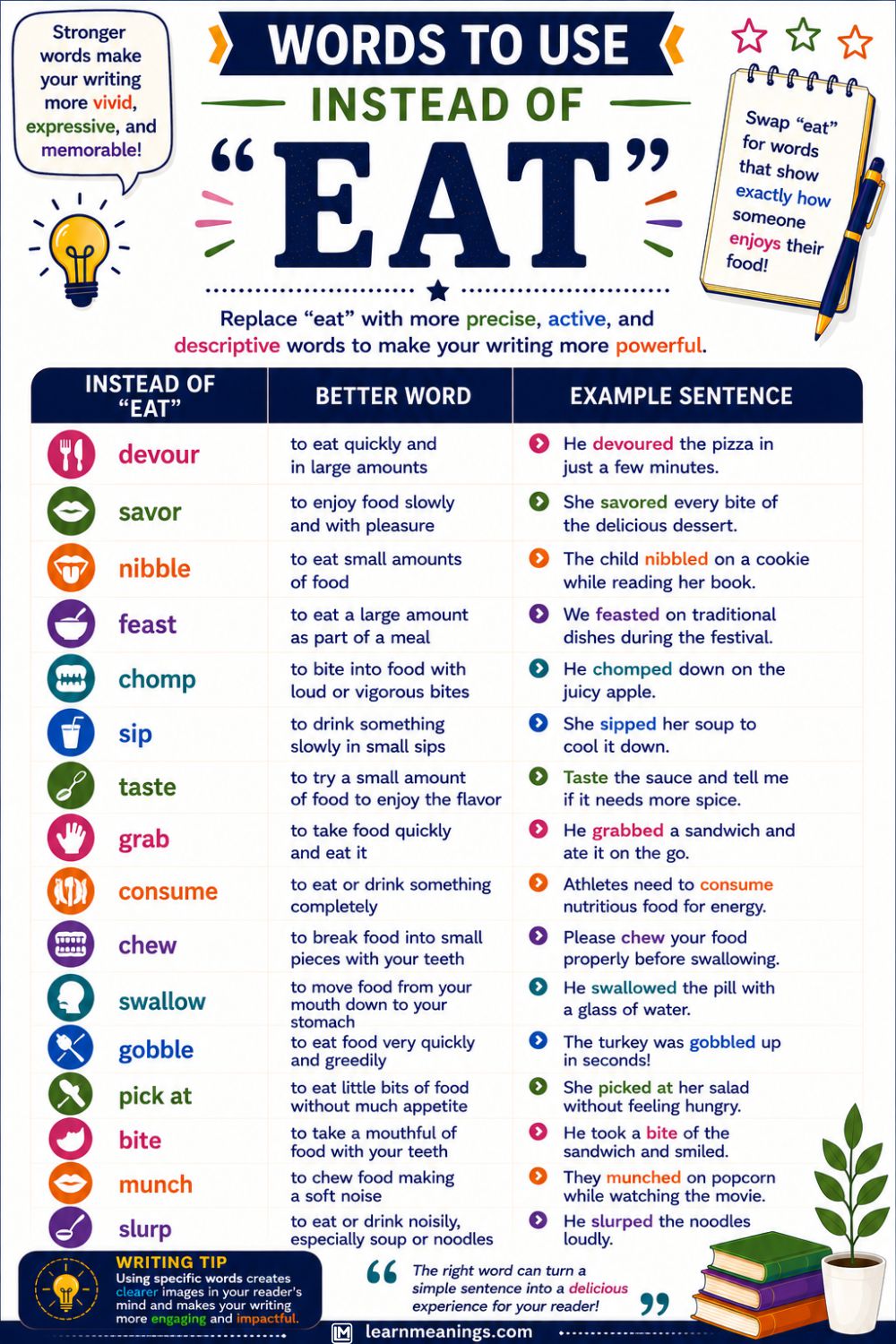

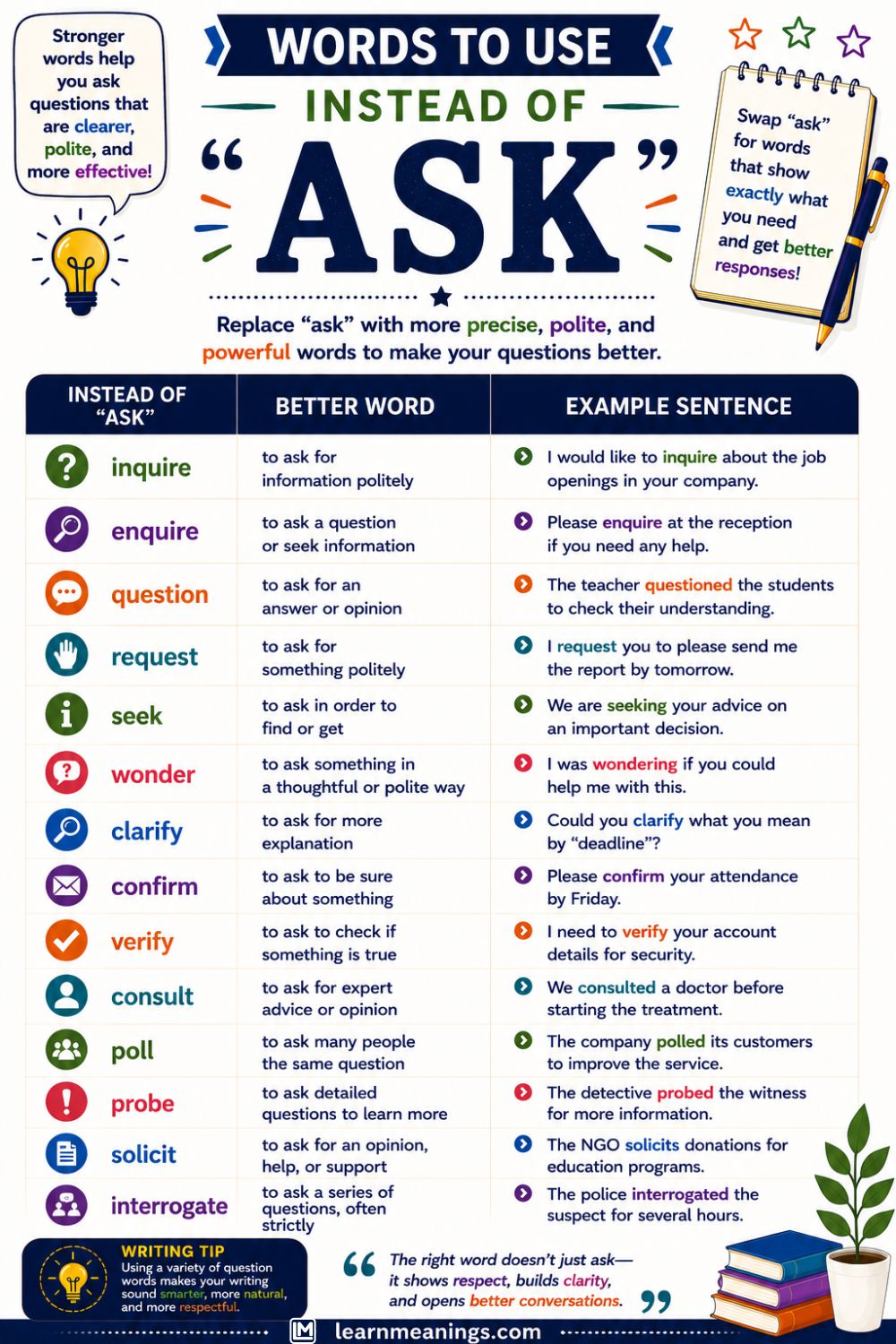
Explore our extensive dictionary using different filters and categories.
Take this 50-question quiz to test your vocabulary knowledge.
1. In a business context, why is 'so' sometimes considered a weak word?
2. Which word shares a Latin root with 'equitable' and relates to fairness?
3. What is the difference between 'vast' and 'spacious'?
4. Which of the following synonyms for 'amazing' implies the MOST extreme level of surprise and wonder?
5. Which word shares a root with 'question' and relates to asking for answers?
6. In formal American English, which preposition is generally preferred after 'different'?
7. Which sentence correctly uses a strong synonym for 'problem'?
8. Why might an American writer avoid using 'practise' in a formal essay?
9. What is the main difference between 'devour' and 'savor'?
10. Which word implies a smallness that is accompanied by weakness or sickliness?
11. In a business email, which word is the best replacement for 'amazing'?
12. Which of the following is an appropriate synonym for 'small' in a creative writing piece describing a fairy?
13. Which word implies a specific mechanical or logical defect?
14. Which phrase is an idiom meaning to reveal something hidden?
15. Which word implies slow movement due to lack of energy?
16. If you put a message or feeling across so it is understood, what is a good synonym?
17. Which of the following synonyms for 'sad' implies the MOST extreme level of sorrow?
18. If a doctor puts a patient in a psychiatric hospital, what is the formal verb?
19. What is the main difference between 'quiet' and 'quite'?
20. What is the main difference between being 'small' and being 'petite'?
21. Which plural form is grammatically correct?
22. If someone 'sizes up' an opponent, what does that mean?
23. Which word describes a person who is unfeeling and lacks sympathy?
24. Which synonym for 'tired' is best used to describe a metal structure that has been weakened by stress over time?
25. Which word is too intense and inappropriate for starting to read a book?
26. If someone is 'crestfallen,' how do they feel compared to being just 'sad'?
27. What is a common misspelling of 'ingenious'?
28. Which verb is best for a witty, clever, and quick remark?
29. Which word describes a formal suggestion or piece of advice?
30. Which sentence uses a synonym for 'slow' correctly?
31. Which word describes a 'good' view that inspires awe?
32. Which synonym best describes a deep, flawless form of quality or manners?
33. If an event happens very rarely, which idiom is best?
34. Why might a writer avoid using 'dip' in a formal essay?
35. If someone "picked at" their food, what does that mean?
36. Which of the following synonyms for 'rich' implies extreme, luxurious wealth?
37. Why might a writer avoid using 'sick' in a formal essay?
38. If a doctor gives a medical recommendation, what is the best word to replace 'tell'?
39. Which sentence uses a synonym for 'poor' INCORRECTLY?
40. Which word is best for replacing 'things' when referring to luggage?
41. Why should you avoid saying something is 'very unique'?
42. Which sentence correctly uses a strong synonym for 'fast'?
43. Which word describes being deceived by a trick or lie?
44. Which word is related to 'volume' and describes a document that is very long?
45. If something 'gushes', how does it compare to just 'running'?
46. Which word describes moving with long, leaping strides, often playfully?
47. Which synonym for 'work' is best used to describe a team completing a plan flawlessly?
48. If a person is 'tardy', what did they do?
49. Which synonym for 'people' is best used to describe people of the same age, status, or ability?
50. If you want to avoid slang in an academic paper, which phrase should you replace 'brand-new' with?
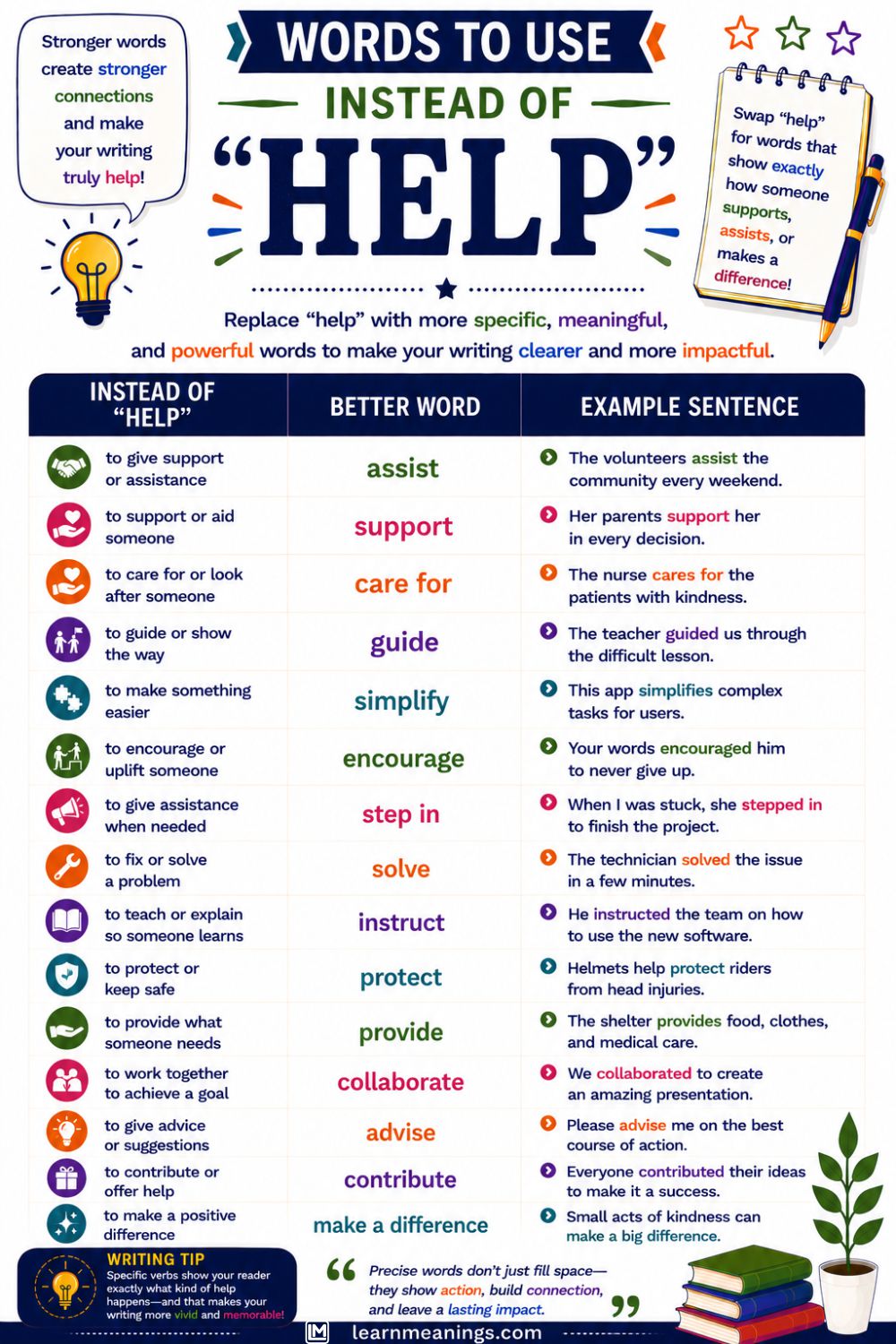
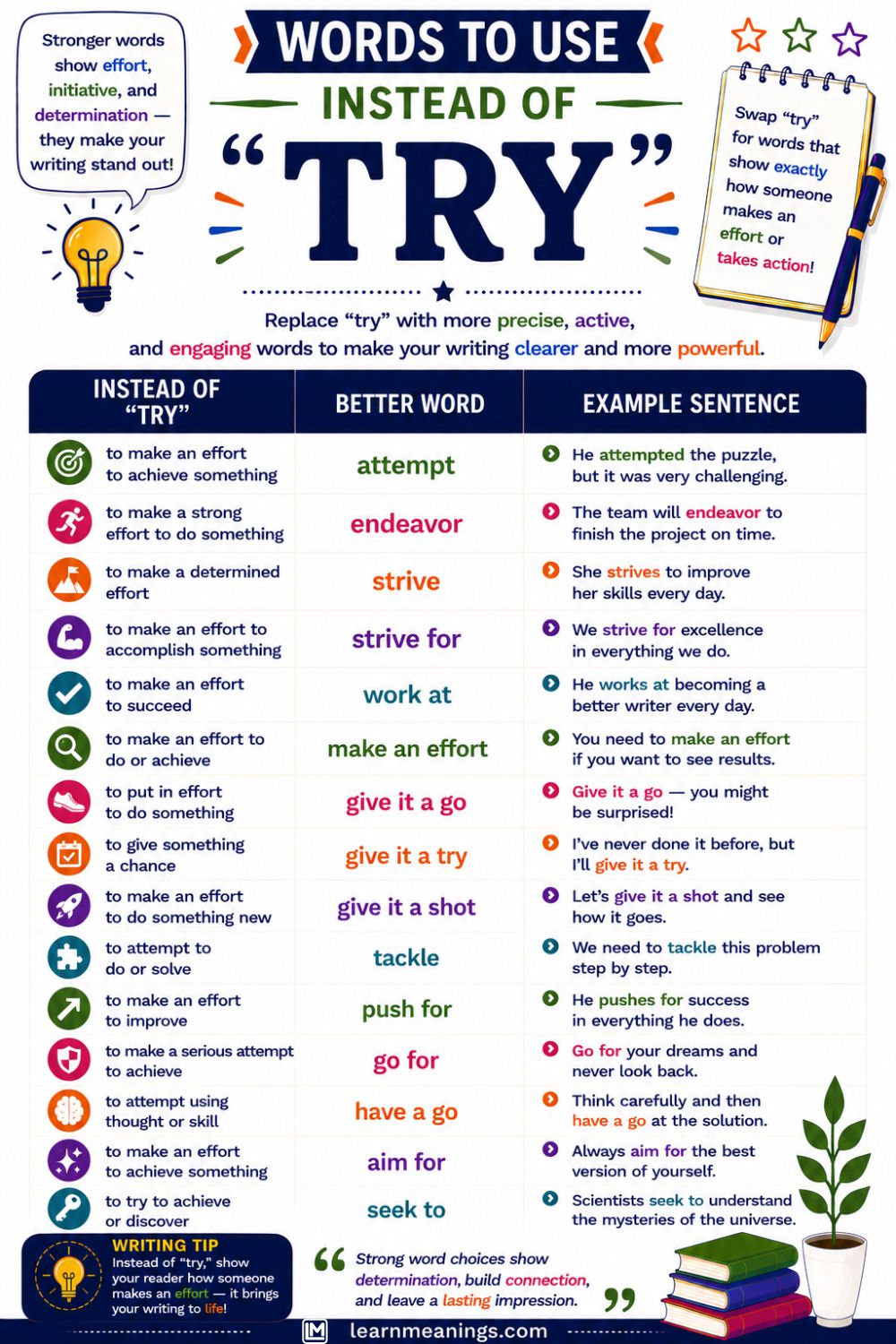
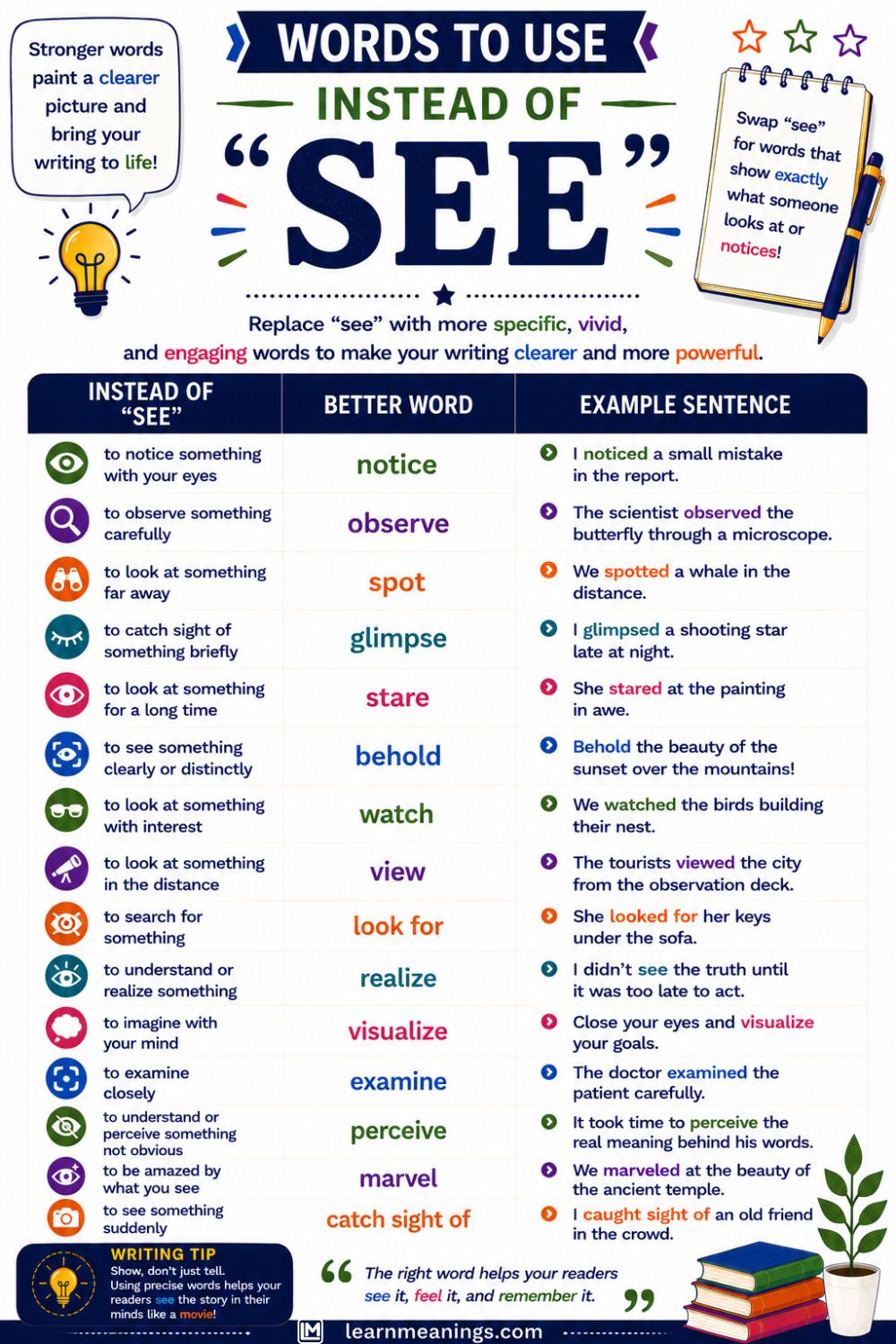
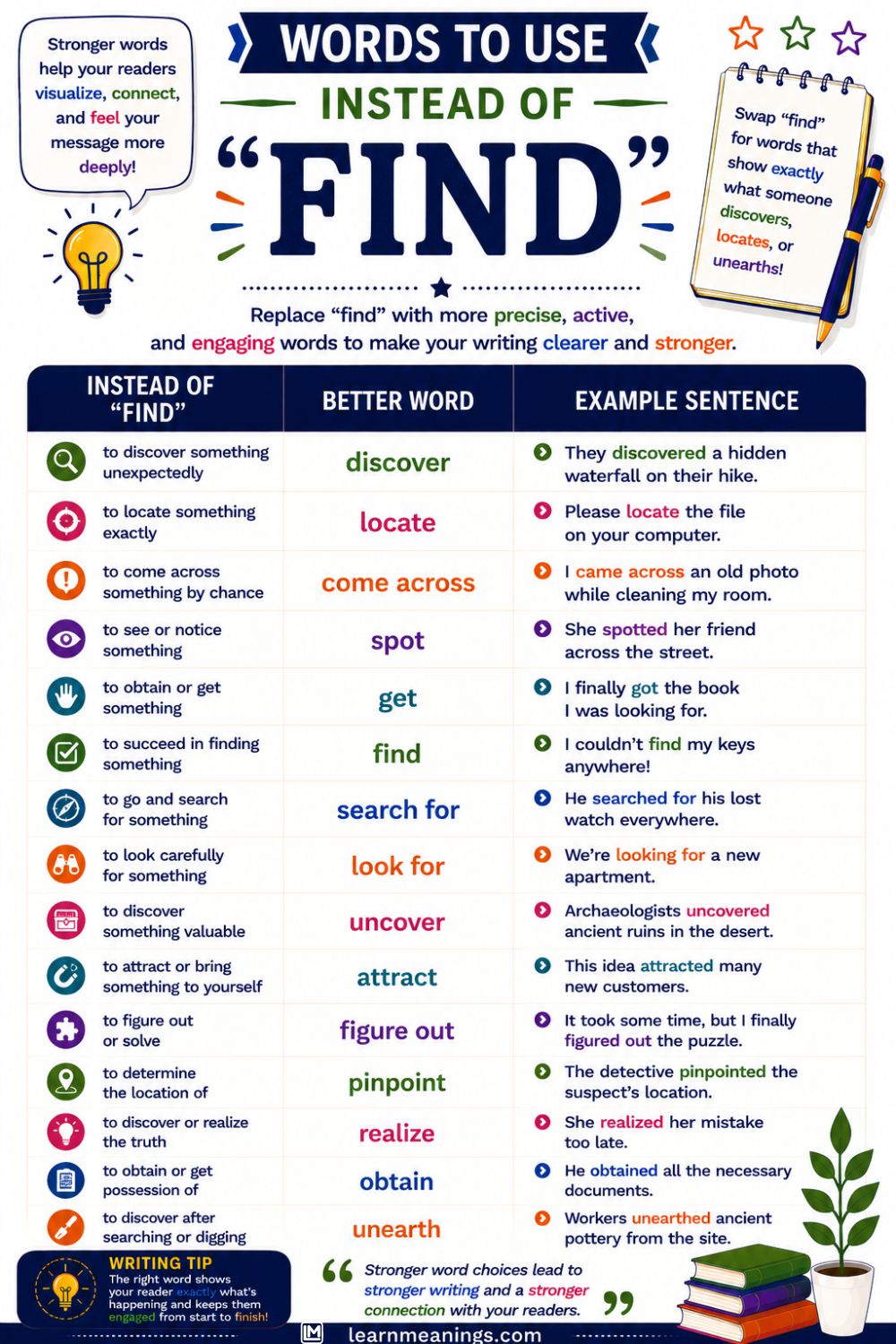
'Words Instead Of' refers to using more descriptive, advanced, or specific vocabulary to replace basic, overused words in your writing or speech. For example, using 'exhausted' instead of 'very tired', or 'whispered' instead of 'said quietly'.
Using alternative words helps you avoid repetition, makes your writing more engaging, and demonstrates a stronger grasp of the English language. It allows you to express your thoughts more precisely and sound more professional.
Instead of using 'very' before an adjective, you can use a single strong adjective. For example, instead of 'very cold', use 'freezing'; instead of 'very big', use 'enormous'; and instead of 'very happy', use 'thrilled'.
To find better words, you can use a thesaurus, read regularly to expose yourself to new vocabulary, and practice substituting common words with their synonyms. Our 'Words Instead Of' lists above provide ready-to-use alternatives for your writing.
A synonym is a word with the exact or nearly exact same meaning as another word. An alternative word is a broader term that includes synonyms but also covers words that provide better context, tone, or imagery, even if the meaning isn't perfectly identical.
