Stop mixing up commonly confused words. Learn the clear rules, memory tricks, and exact contexts for when to use which word.
The golden rule: "Affect" is usually an Action (Verb), "Effect" is usually an End result (Noun).
Verb (Action)
To influence or produce a change in something.
Example
"The rain will affect our picnic."
Noun (End Result)
The result of a change or the outcome of an action.
Example
"The rain had a negative effect on our picnic."
Quick rules for the most commonly mixed-up words in English.
Then
TimeThan
CompareThen relates to time. Than is used for comparisons.
Lose
VerbLoose
AdjectiveLose means to misplace. Loose means not tight.
Who
SubjectWhom
ObjectWho performs the action. Whom receives the action.
Principal
Person/RulePrinciple
BeliefPrincipal is your pal or main. Principle is a law or rule.
Stationary
StillStationery
PaperStationary means not moving. Stationery is paper (with an E for Envelope).
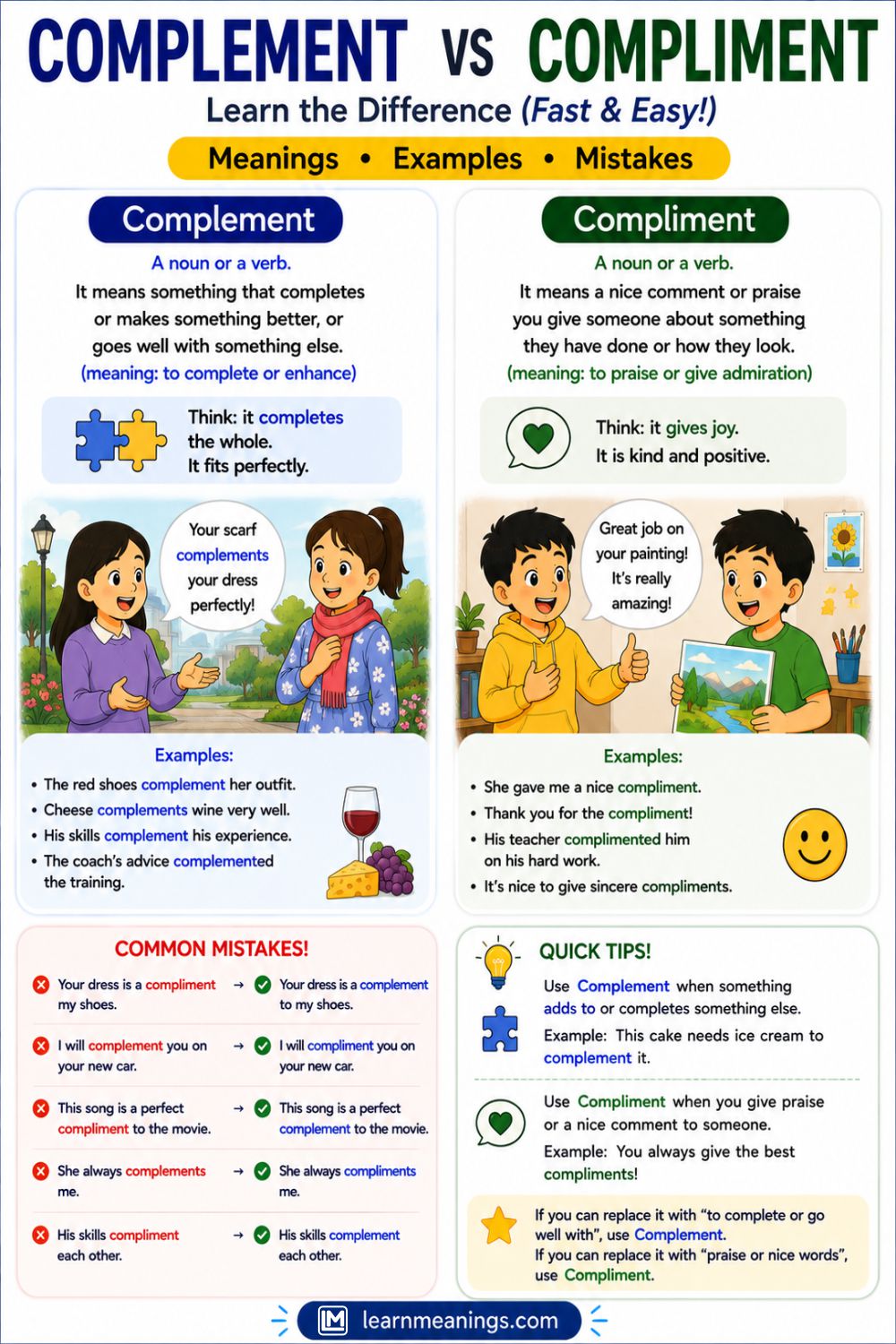
Compliment
PraiseComplement
CompleteCompliment is praise. Complement means to complete or enhance.
Simple mental shortcuts to lock the correct usage into your brain forever.
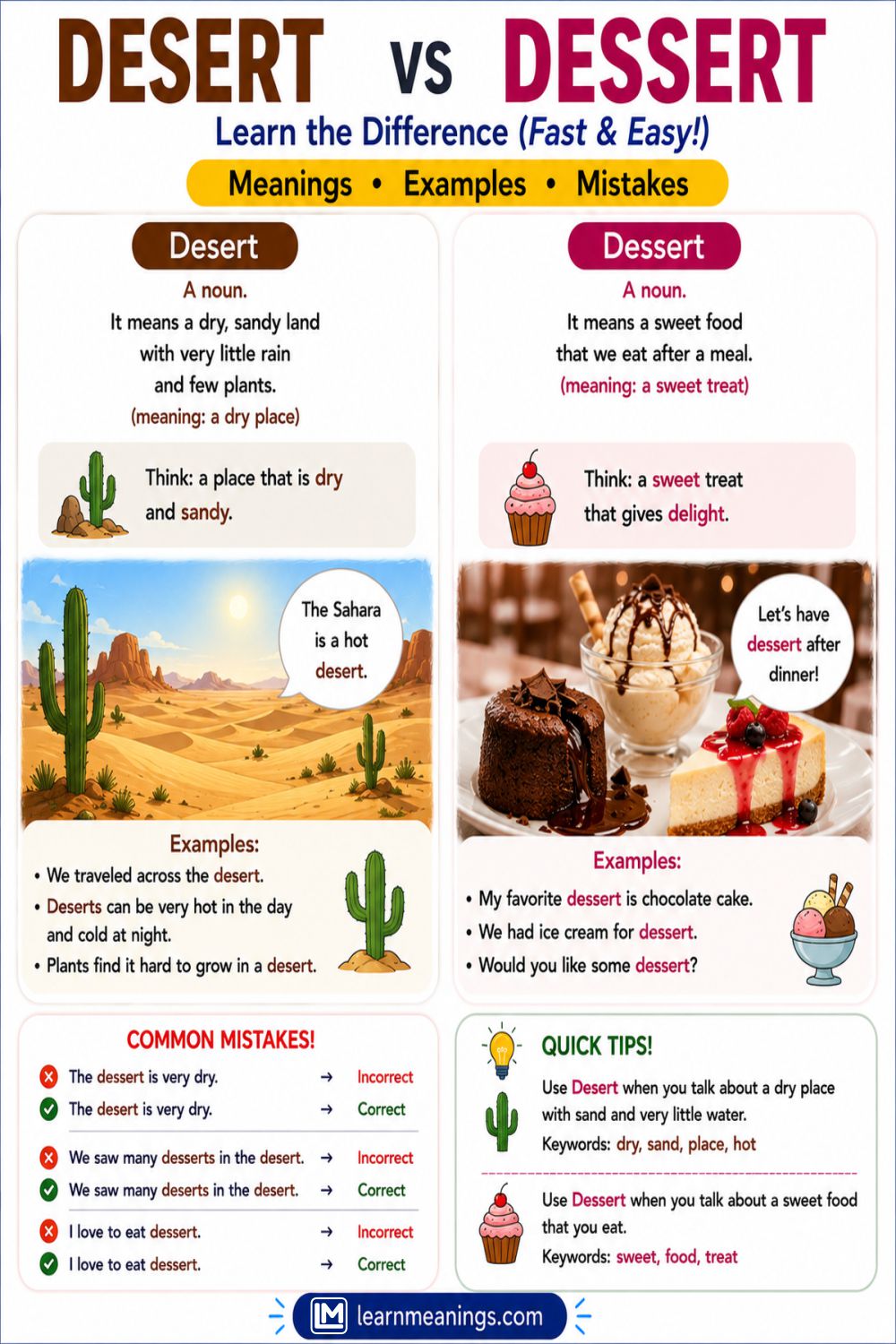
Dessert has two 'S's because you always want a second piece. Desert has one 'S' because it's just sand.
Remember: Affect = Verb, Effect = Noun. RAVEN will save you every time.
Stationery (with an E) is for Envelopes. Stationary (with an A) is for At rest.
Words that sound identical but have completely different spellings and meanings.
There = Location. Their = Possession. They're = They are.
To = Direction. Too = Also/Excessive. Two = Number 2.
Right = Correct/Direction. Write = Create text. Rite = A ceremony.
See how swapping the wrong word for the right one fixes the meaning instantly.
"There are less cars on the road today."
"There are fewer cars on the road today."
"I am taller then him."
"I am taller than him."
Same meaning, completely different words. Here are the most common variations.
US ↔ UK
US ↔ UK
US ↔ UK
US ↔ UK
The English language is weird. These words have two completely opposite meanings depending on context.
Meaning 1: To stick together tightly.
Meaning 2: To split apart forcefully.
Meaning 1: To remove fine particles (cleaning).
Meaning 2: To add fine particles (like sugar on a cake).
Meaning 1: To supervise or watch carefully.
Meaning 2: To fail to notice or ignore.

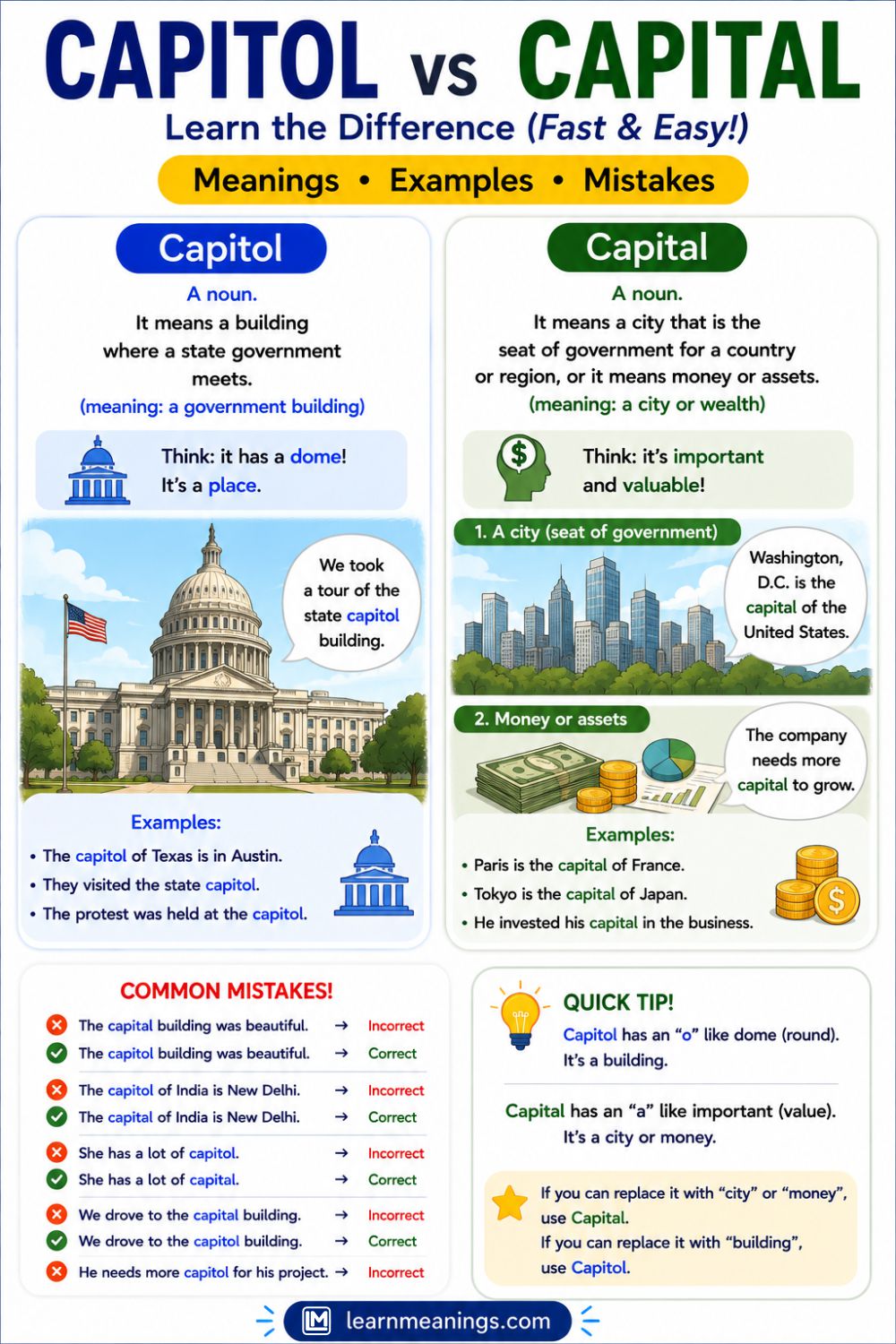
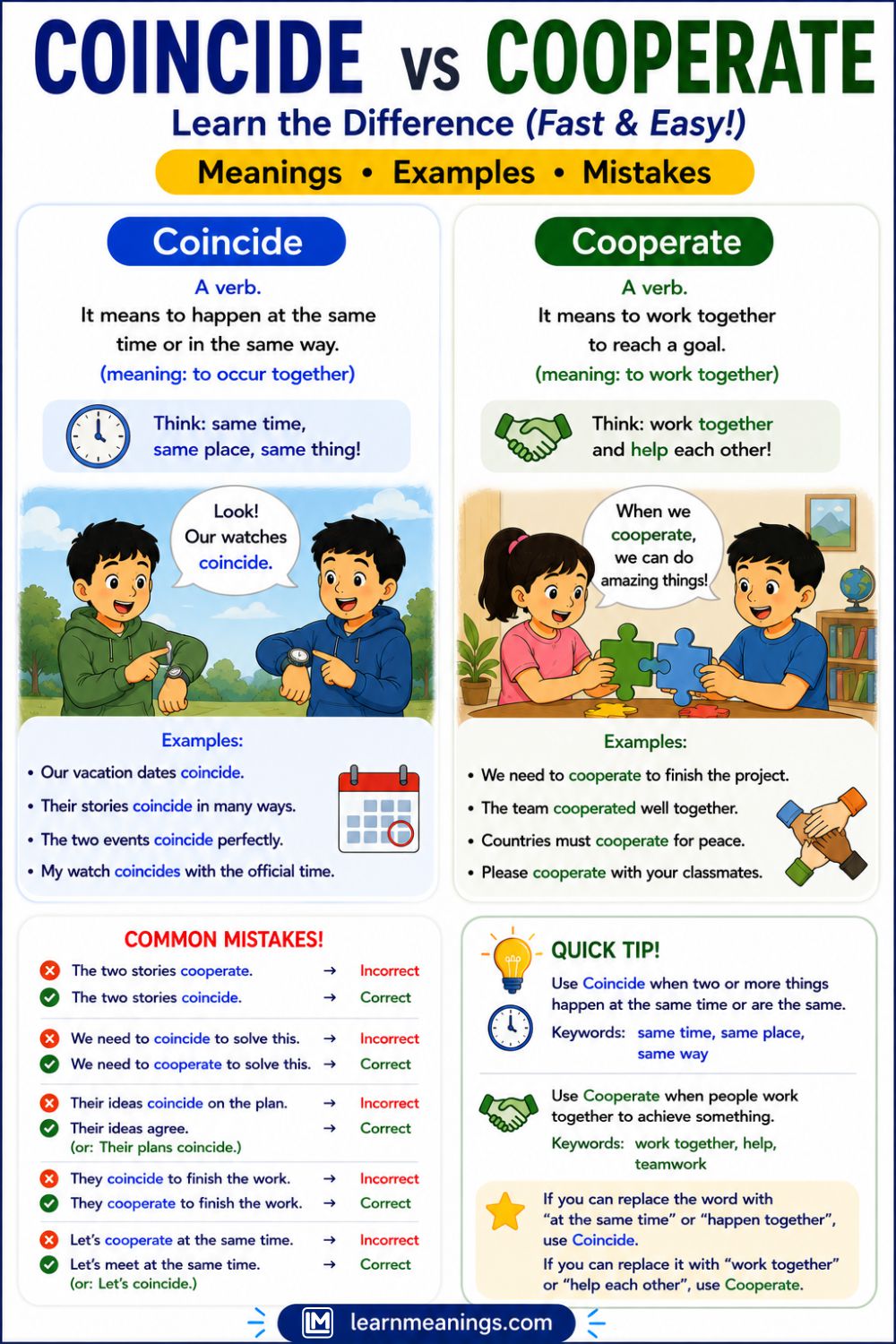
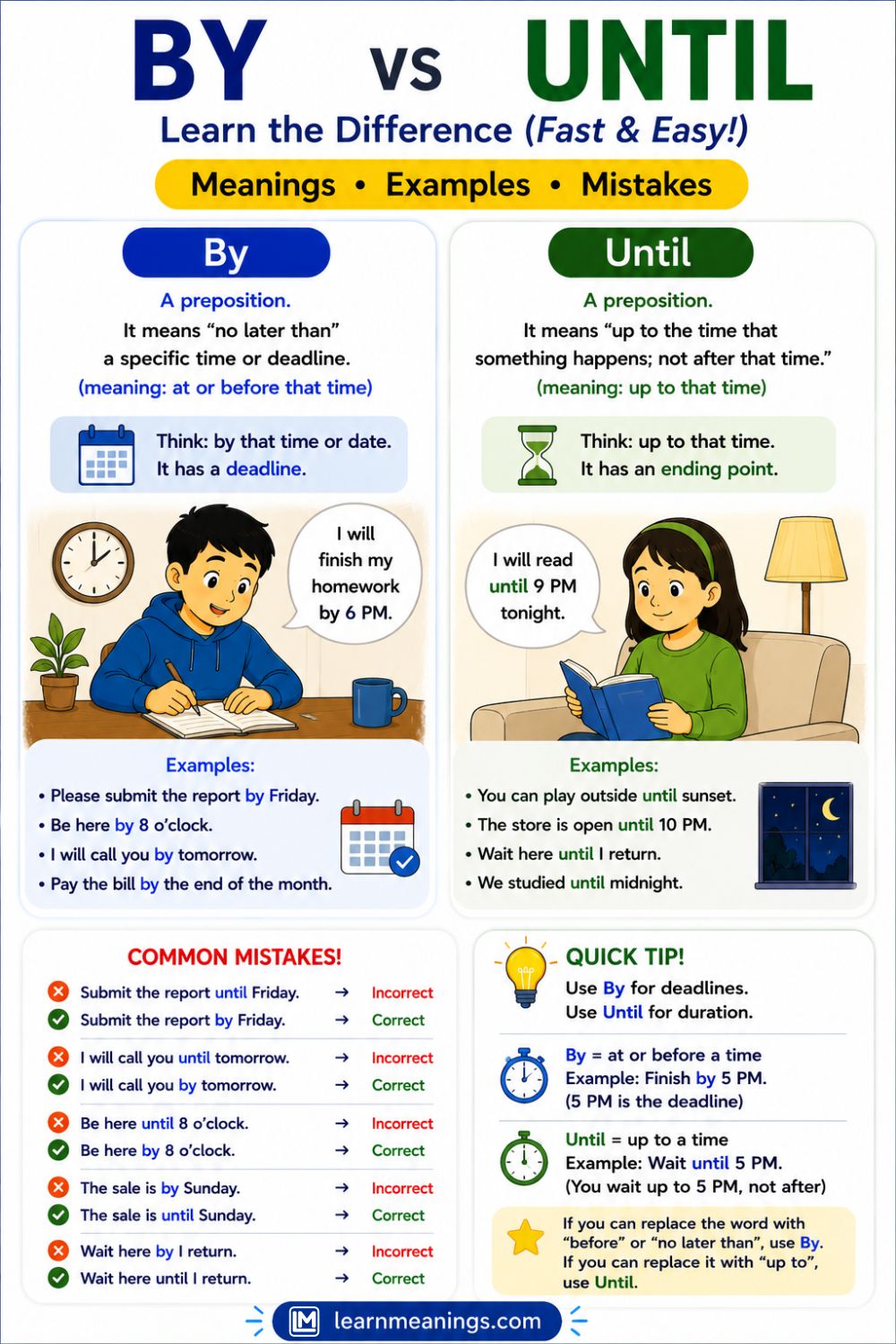

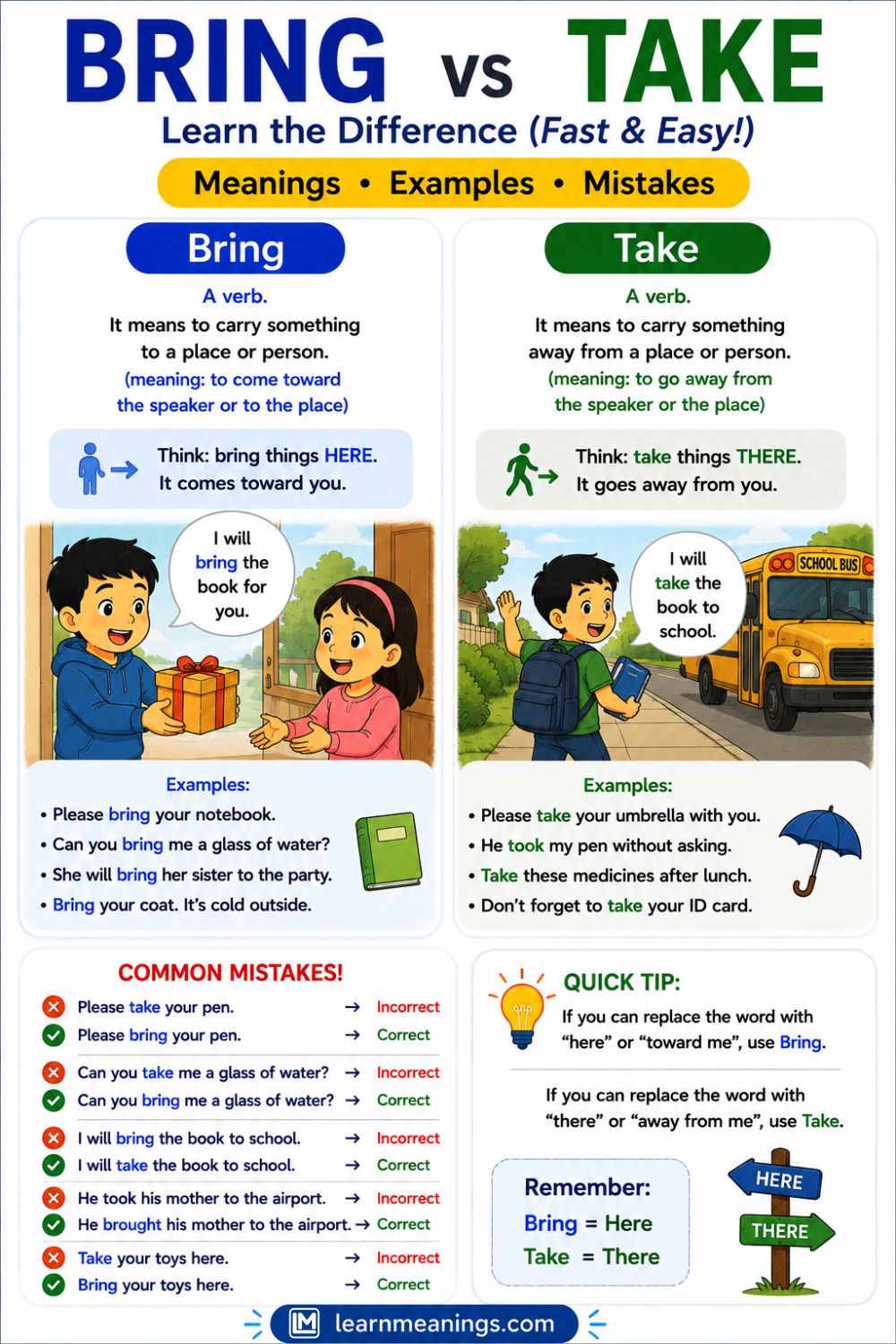
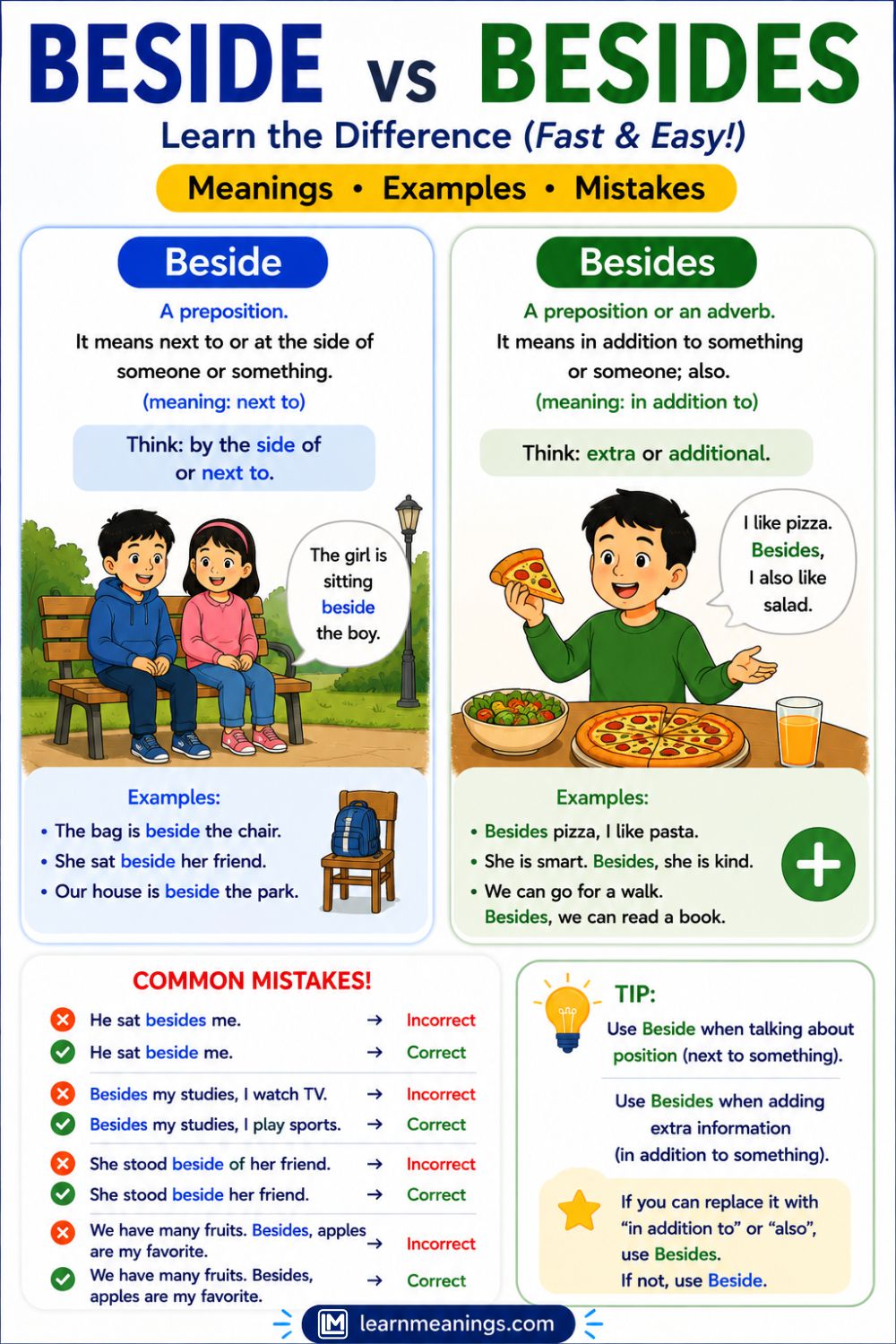
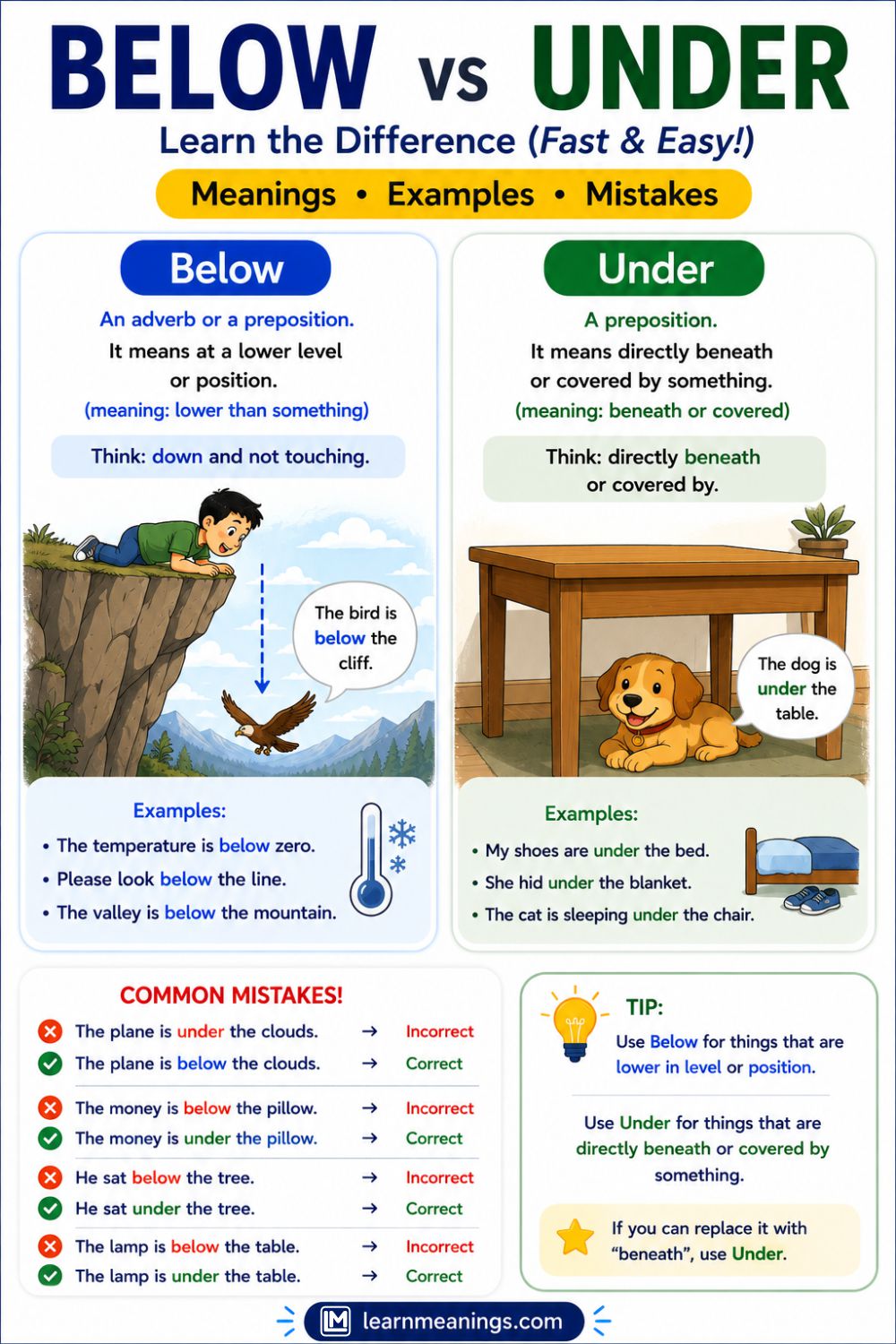

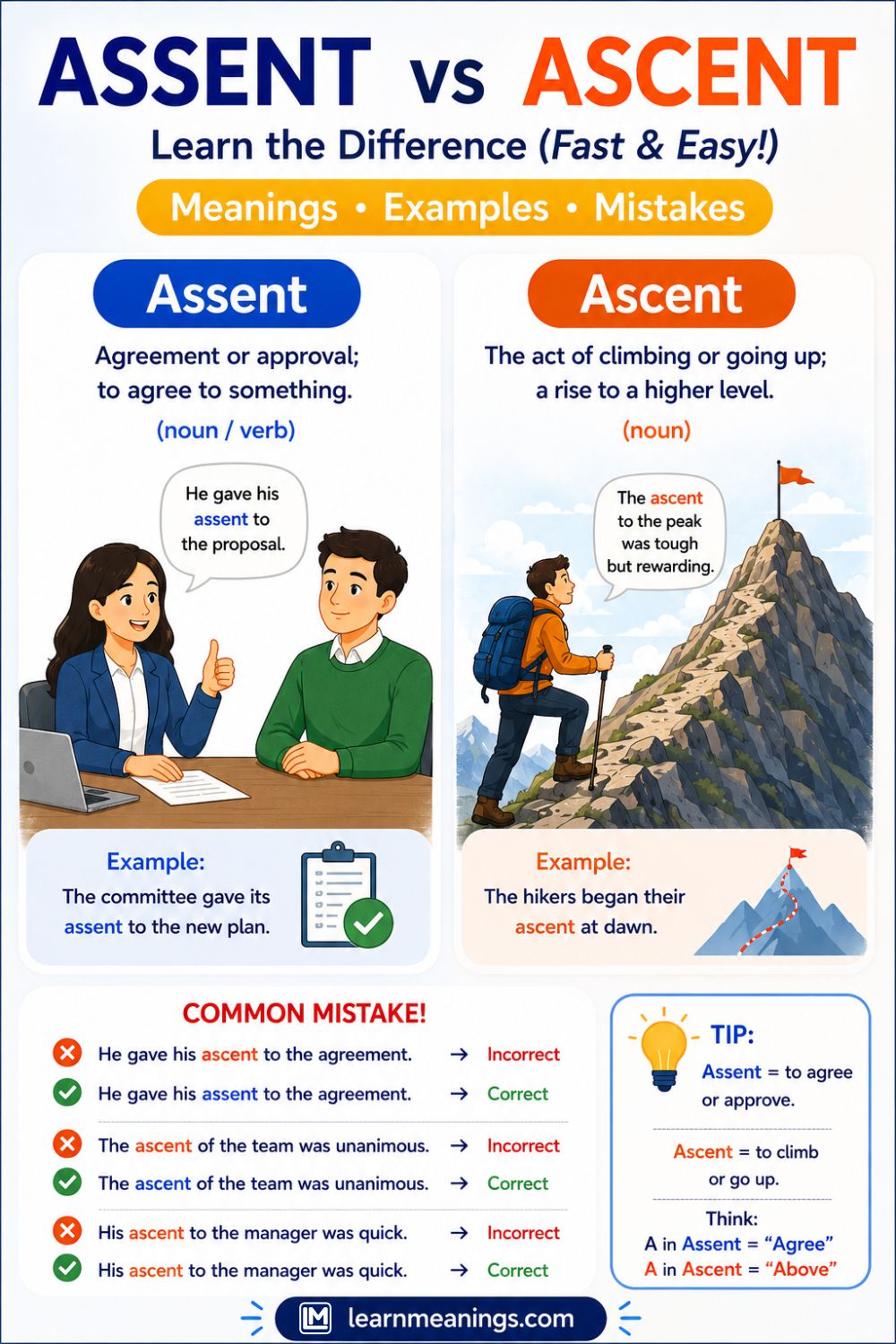
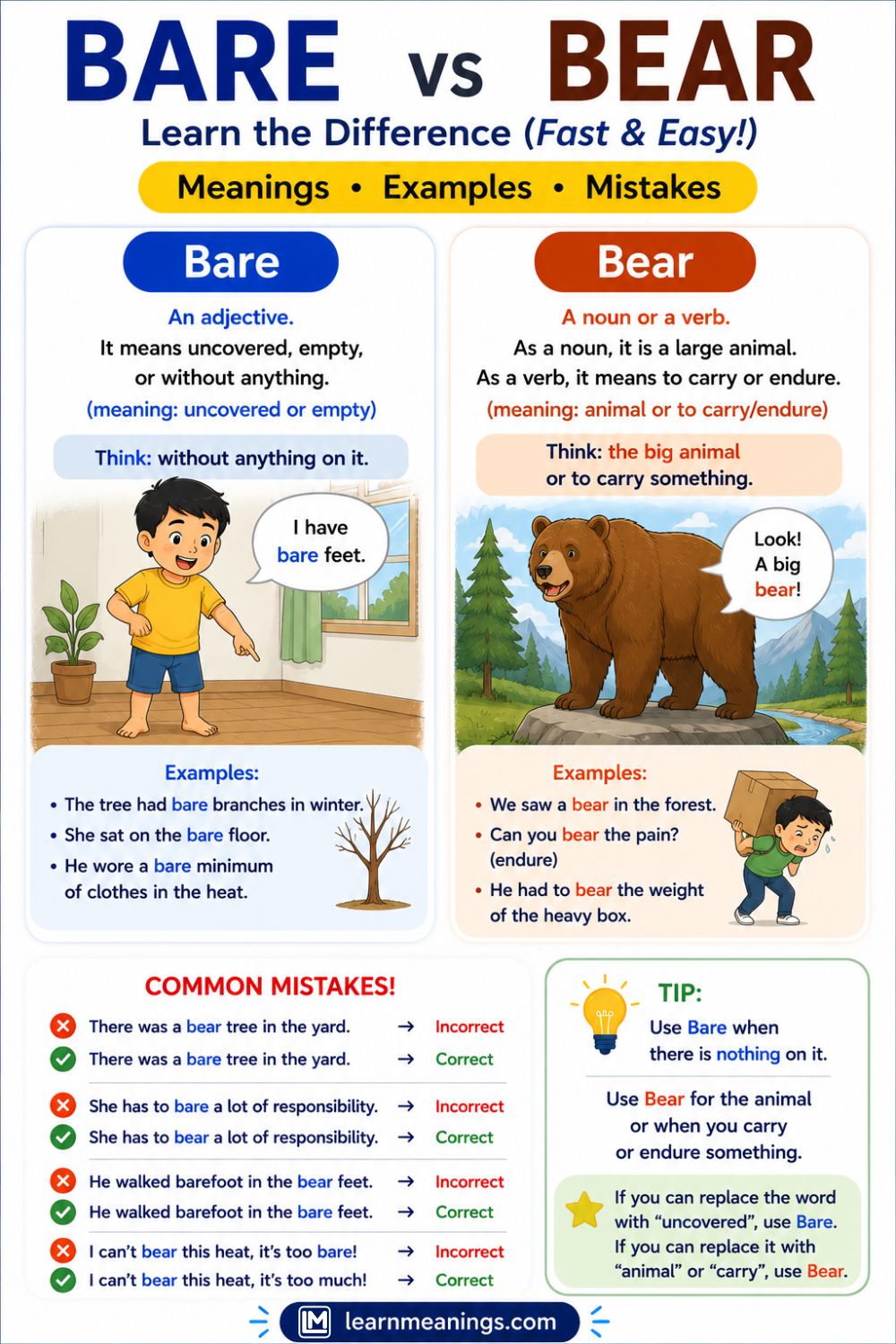

Explore our extensive dictionary using different filters and categories.
Take this 50-question quiz to test your vocabulary knowledge.
1. The prize money was divided ______ the three winners.
2. ______ going to need an umbrella today.
3. She ______ on the board of directors for the charity.
4. The founding ______ of the nation are liberty and justice.
5. I am ______ tired today.
6. The smartphone boasts a ______ camera system for better photos.
7. Can 'besides' be used as an adverb?
8. The stars shine brightly in the ______ sky.
9. What is the pronunciation difference between hard and hardly?
10. The bridge is closed ______ further notice.
11. Which sentence is grammatically correct?
12. Which of the following is a common collocation for 'disinterested'?
13. Which word refers to a dark blue color?
14. Did the speech have the desired ______ on the audience?
15. I bought this shirt ______ $20.
16. What is the comparative form of 'fast'?
17. The water turned ______ ice.
18. The startup is seeking venture ______ to fund its expansion.
19. Can 'farther' be used for figurative distance in formal American writing?
20. A championship ring has ______ him despite fifteen seasons in the league.
21. Which of the following is a common collocation?
22. What is the pronunciation difference between adept and adopt?
23. A cure for the common cold has long ______ scientists.
24. Throw the used napkin into the ______ bin.
25. The man ______ called you is on the phone.
26. Which of the following is a common collocation for 'until'?
27. The investigation laid ______ the company's hidden debts.
28. Acid rain can ______ calcium from the soil, making it difficult for trees to grow.
29. What were you ______ to when you mentioned the budget cuts?
30. Which of the following is a common mistake?
31. True ______ requires vulnerability, as you must open yourself to another's pain.
32. The new policy ______ several questions about employee privacy.
33. The doctor noted that the patient's tumor has ______ by 30%.
34. My house, ______ is painted blue, is at the end of the street.
35. The reality of the difficult math test finally ______ in.
36. What is a 'flat adverb'?
37. Are 'shined' and 'shone' pronounced the same?
38. We ______ a lot of positive feedback so far.
39. The police arrested the suspect for possessing ______ drugs.
40. The manager decided to take the project a step ______.
41. He built his company ______ the ground up.
42. Which of the following is a common mistake?
43. Which word is a noun?
44. What is the pronunciation difference between who and that?
45. The movie was ______ from a popular bestselling novel.
46. Investors are worried about the approaching ______ market.
47. Which of the following is a common collocation for grief?
48. The athlete trained for years to ______ the world record.
49. Your argument is completely ______ the point.
50. It took years for the community to ______ the rift caused by the controversial law.
Yes, in psychology, "affect" (pronounced AFF-ect) is a noun meaning an expressed emotion. However, in 99% of everyday writing, "affect" is a verb and "effect" is a noun. Stick to the RAVEN rule unless you are writing a psychology paper.
In modern conversational English, "whom" is slowly fading out. However, it is still strictly required in formal, academic, and professional writing. If you can replace the word with "him" or "her," you should use "whom." If you can replace it with "he" or "she," use "who."
Use "fewer" for things you can count (fewer cars, fewer apples). Use "less" for things you cannot count individually (less water, less time). The classic example is the grocery store express lane: it should say "10 Items or Fewer," not "10 Items or Less."
"Its" is a possessive pronoun, meaning belonging to it (e.g., "the dog wagged its tail"). "It's" is a contraction of "it is" or "it has" (e.g., "it's raining"). If you can replace the word with "it is" and the sentence still makes sense, use "it's" with an apostrophe.
"Then" is used for time and sequence (e.g., "we ate dinner, and then we went home"). "Than" is used for comparisons (e.g., "a watermelon is bigger than an apple"). A good trick is to remember that "thAn" compares, and "thEn" tells you whEn.
