Stop using boring, repetitive words. Find stronger verbs, evocative adjectives, and precise alternatives to make your writing punchier and more professional.
"Very" is a lazy modifier. Cut it and use a stronger word instead. (e.g., Very tired → Exhausted).
Very hungry
Famished
Creates a much more vivid image of desperation.
Very angry
Furious
Conveys high intensity without needing a modifier.
Very big
Colossal
Gives a sense of overwhelming scale.
Avoid repetitive dialogue tags. Use these alternatives to show emotion and tone.
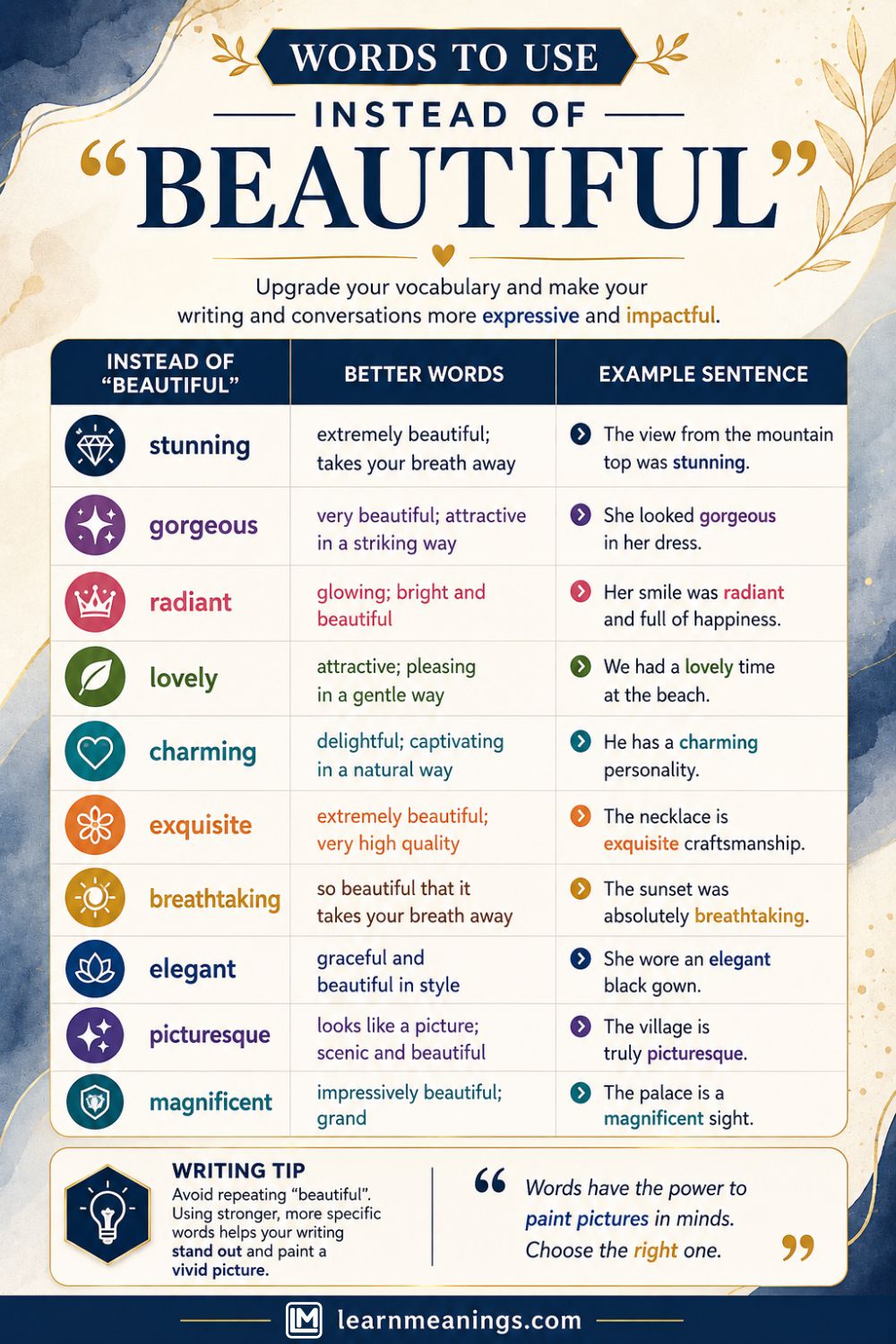
Stop using generic adjectives. Precision is the key to great writing.
See how swapping just a few weak words can completely elevate your writing.
"The very big storm made the town very quiet. People felt bad."
"The colossal storm left the town desolate. Residents felt devastated."
"She was very happy about the good news and said she would come."
"She was elated by the phenomenal news and declared she would attend."
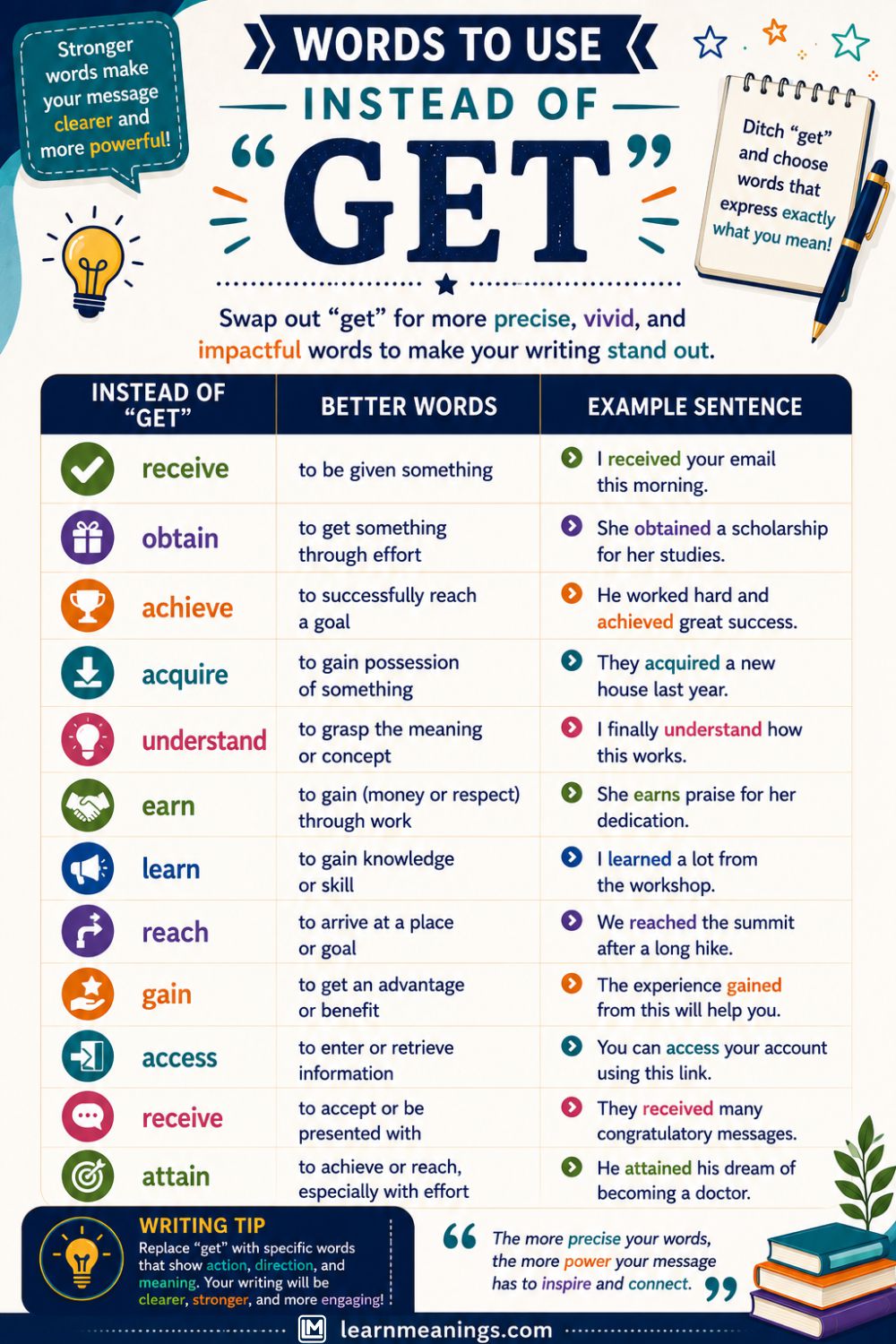
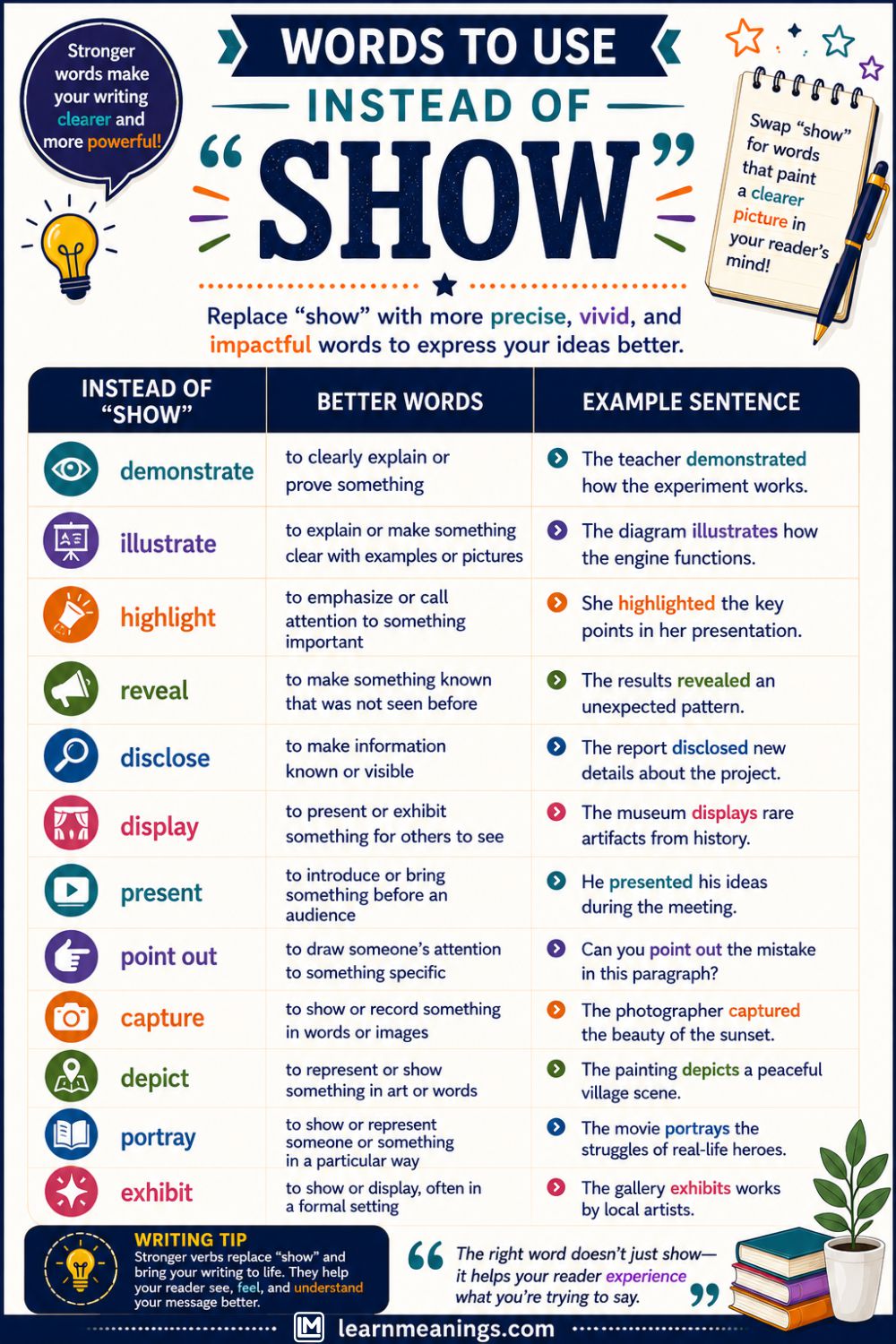
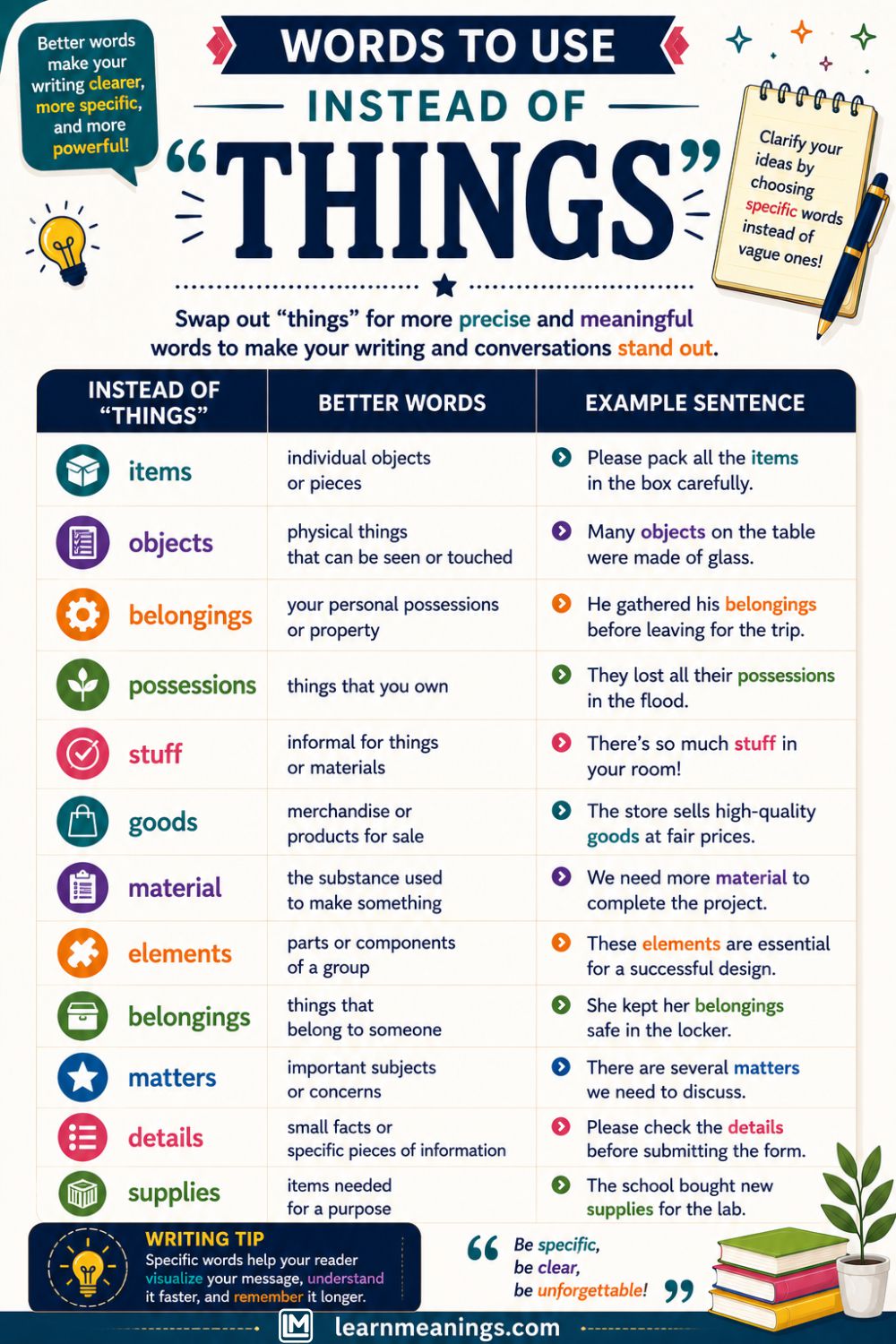


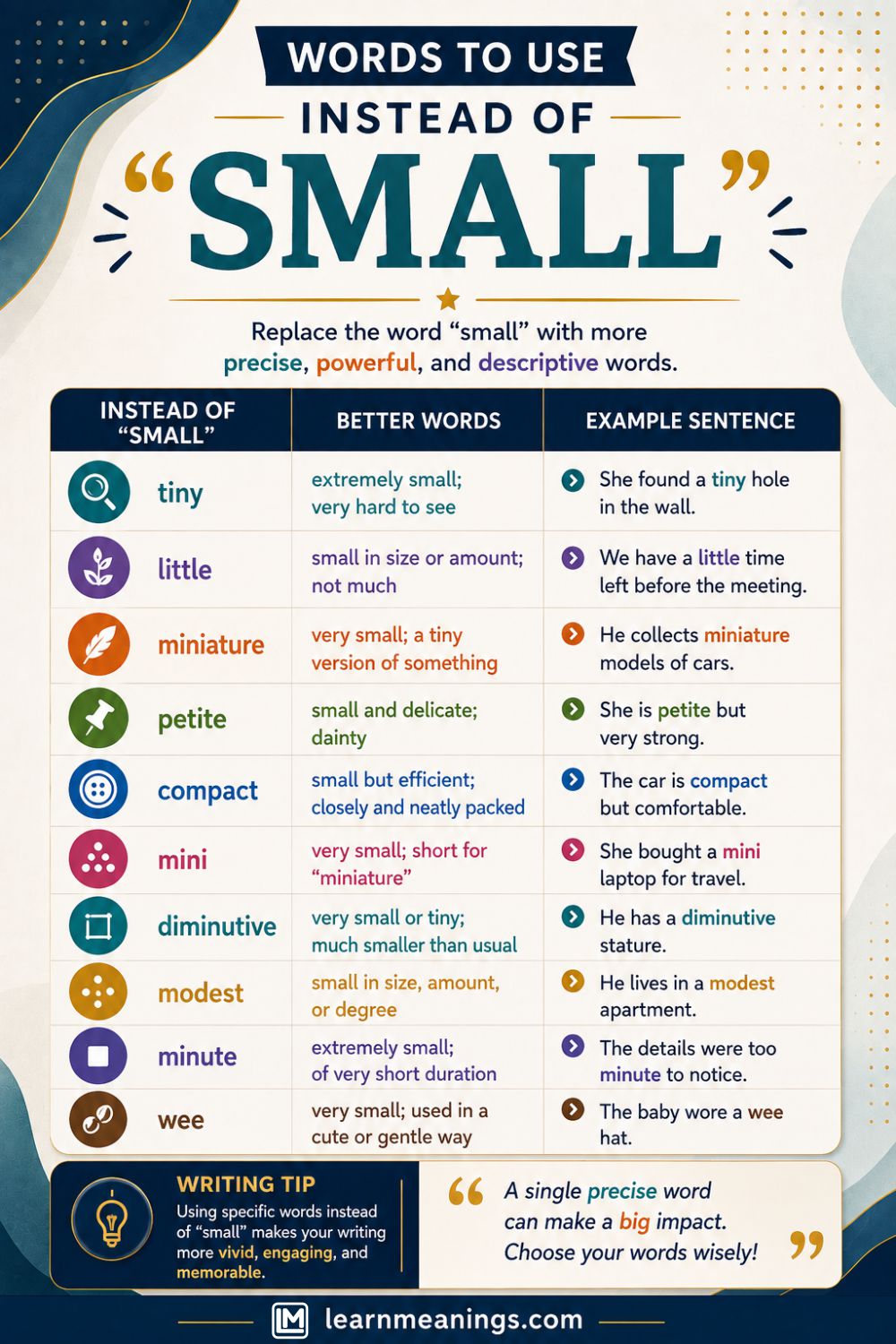
Explore our extensive dictionary using different filters and categories.
Take this 50-question quiz to test your vocabulary knowledge.
1. Which word is a modern slang term meaning 'to ask someone for a favor or money'?
2. Which word shares a root with the concept of 'meditation' and deep spiritual thought?
3. Which word describes physically blocking a path or stopping progress?
4. If a person is 'tardy', what did they do?
5. Which word shares a root with 'comprehend' and relates to mental grasping?
6. What is the main problem with writing: '"I'm sorry," he apologized.'?
7. Which word is a modern slang term meaning 'to attempt something informally'?
8. Which word describes doing dull, menial, and tedious work?
9. If a feeling is 'fervent', how is it felt?
10. Which of the following is a common confusion with the word 'poor'?
11. If a boss wants to express professional approval in a formal email, which word is the best replacement for 'nice'?
12. Which synonym for 'really' has historical roots in emphasizing luck or chance?
13. If a manager wants to describe an employee who doesn't share personal information, which word is the best replacement for 'quiet'?
14. Which synonym best describes a deep, long-lasting, and reflective form of sadness?
15. Which word implies a deeper, almost official form of coming together for a meeting?
16. If a boss wants to express that an employee's work met the minimum standard, which word is the best replacement for 'good'?
17. Which sentence uses a synonym for 'keep' incorrectly?
18. What is the best synonym for finding something by chance?
19. If a chemist creates a new compound, what is the best verb to use?
20. Which word is a casual slang term for finding information?
21. If something 'ensues', how does it compare to just 'coming'?
22. Which word is a casual replacement for 'very'?
23. Which synonym best describes a machine serving its intended purpose properly?
24. If you want to say you 'got' an email in a formal business setting, which word is the best replacement?
25. Which of these phrases is an informal way to say you 'used' something by trying it?
26. Which word describes a bright, energetic, and eye-catching form of greatness?
27. In an academic paper, why is 'use' sometimes considered a weak word?
28. Which word implies a playful, mischievous, or silly form of fun?
29. Which word describes a person who is friendly, practical, and easy to talk to?
30. What is a common misspelling of 'colleagues'?
31. Which of the following is used to completely deny a previously stated fact?
32. What is a common misspelling of 'yearn'?
33. Which sentence correctly uses a strong synonym for 'tell'?
34. Which phrase implies making something hastily from available scrap parts?
35. Which word describes something that is clear or obvious to the eye or mind?
36. Why might a writer use 'metamorphose' instead of 'change' in a fantasy novel?
37. If software is 'updated,' how does it compare to just being 'new'?
38. Which word is casual slang meaning 'an exceptionally intelligent person'?
39. What is the best synonym for walking slowly and leisurely in a park?
40. Which casual phrase means to start working immediately and energetically?
41. What is the difference between 'slight' and 'tiny'?
42. In a professional context, why is 'rig up' considered a weak choice?
43. If a company grew 'significantly', how did it grow?
44. In writing, why is 'very start' considered a weak phrase?
45. Which word describes asking questions in a deep, investigative way to uncover hidden information?
46. Which synonym for 'run' is best used to describe a person running away from a crime?
47. What is a common mistake when using the word 'fast'?
48. Which word implies a lustful or malicious way to 'look' at someone?
49. If a piece of clothing is obnoxiously bright and tasteless, what is it?
50. If someone is 'grappling' with a problem, how do they feel compared to just 'feeling' it?
'Words Instead Of' refers to using more descriptive, advanced, or specific vocabulary to replace basic, overused words in your writing or speech. For example, using 'exhausted' instead of 'very tired', or 'whispered' instead of 'said quietly'.
Using alternative words helps you avoid repetition, makes your writing more engaging, and demonstrates a stronger grasp of the English language. It allows you to express your thoughts more precisely and sound more professional.
Instead of using 'very' before an adjective, you can use a single strong adjective. For example, instead of 'very cold', use 'freezing'; instead of 'very big', use 'enormous'; and instead of 'very happy', use 'thrilled'.
To find better words, you can use a thesaurus, read regularly to expose yourself to new vocabulary, and practice substituting common words with their synonyms. Our 'Words Instead Of' lists above provide ready-to-use alternatives for your writing.
A synonym is a word with the exact or nearly exact same meaning as another word. An alternative word is a broader term that includes synonyms but also covers words that provide better context, tone, or imagery, even if the meaning isn't perfectly identical.
